A pivotal question in geology has long lingered: when did Earth's tectonic plates begin their movement? Did this dynamic process start shortly after the planet's formation 4.5 billion years ago, or did it emerge later? A groundbreaking study from Harvard University offers a compelling answer.
Published in the journal Science on March 19, the research presents the earliest direct evidence of tectonic activity, dating back 3.5 billion years. This study reveals that early plate motion, while differing from contemporary systems, significantly influenced the planet's development.
Lead researcher Alec Brenner, a PhD candidate in the Department of Earth and Planetary Sciences, emphasizes the significance of this finding: "We can confirm that 3.5 billion years ago, tectonic plates were indeed in motion across the Earth's surface."
Insights from Ancient Rocks
The team's breakthrough stems from ancient, well-preserved rocks located in the Pilbara Craton of western Australia, which formed during the Archean Eon--a period characterized by early microbial life and numerous extraterrestrial impacts.
This region contains some of the earliest evidence of life, including stromatolites and microbialite formations created by single-celled organisms like cyanobacteria.
Professor Roger Fu, a specialist in paleomagnetism at Harvard, has been investigating the East Pilbara area since 2017. His work utilizes the magnetic records preserved in rocks to reconstruct the planet's geological history, including evidence of ancient meteor impacts.
Paleomagnetism: A Geological Timekeeper
Paleomagnetism enables scientists to analyze Earth's magnetic field and track crustal movements over time. The magnetic signals embedded within mineral grains serve as a historical record of the rocks' formation locations.
By studying these signals, researchers can ascertain both the orientation and latitude of rocks at the time of their formation, effectively providing a form of ancient GPS.
"The unique characteristics of Earth are fundamentally linked to plate tectonics," Fu states. "At some point, Earth transitioned from being just another planet to a unique one, likely due to the onset of plate tectonics."
Analyzing Rock Samples
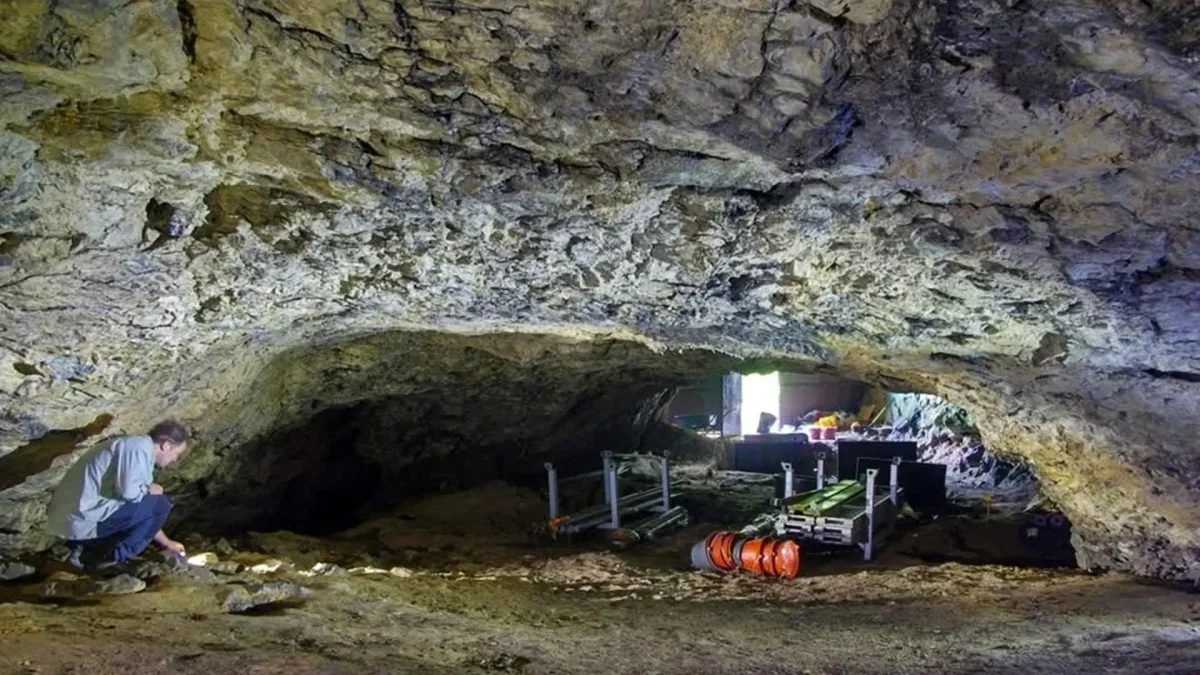
The research team meticulously examined over 900 rock samples from more than 100 sites in the North Pole Dome region. They drilled cylindrical cores from these rocks, documenting each sample's position using specialized tools.
In the laboratory, the cores were sliced and analyzed with a sensitive magnetometer, capable of detecting faint magnetic signals. The process involved heating the samples to separate magnetic signals from various historical periods, taking nearly two years to complete.
Brenner reflects on the endeavor: "Demagnetizing thousands of cores was a significant challenge, but the results exceeded our expectations."
Evidence of Early Plate Movement
The researchers discovered that part of the East Pilbara region shifted in latitude from 53 degrees to 77 degrees, indicating a drift of several centimeters annually over millions of years, along with a clockwise rotation exceeding 90 degrees. This suggests that Earth's crust was already dynamic long before the modern tectonic system emerged.
Today's tectonic plates continue to shift slowly, with the North American and Eurasian plates separating at approximately 2.5 centimeters per year.
Revisiting Plate Tectonics Origins
While scientists are still piecing together the origins of Earth's active plate tectonics, this study challenges the notion of a stagnant lid, indicating that the surface was already segmented into moving pieces. Ongoing research aims to clarify the nature of early tectonic behavior.
Additionally, the team identified the oldest geomagnetic reversal, suggesting that such events occurred less frequently 3.5 billion years ago than today, hinting at a different regime of Earth's dynamo activity.
As we continue to uncover the complexities of our planet's geological history, these findings may reshape our understanding of Earth's evolution and the mechanisms that have shaped its surface.