During a routine swim off the Mediterranean coast of Israel, archaeology student Shlomi Katzin stumbled upon an intriguing sight: the hilt of a sword partially buried in the sand.
Before this remarkable find, Katzin had noticed other divers nearby with metal detectors, raising concerns about potential antiquities theft. After successfully diverting them, he turned his attention to the unusual shape beneath the shifting sand.
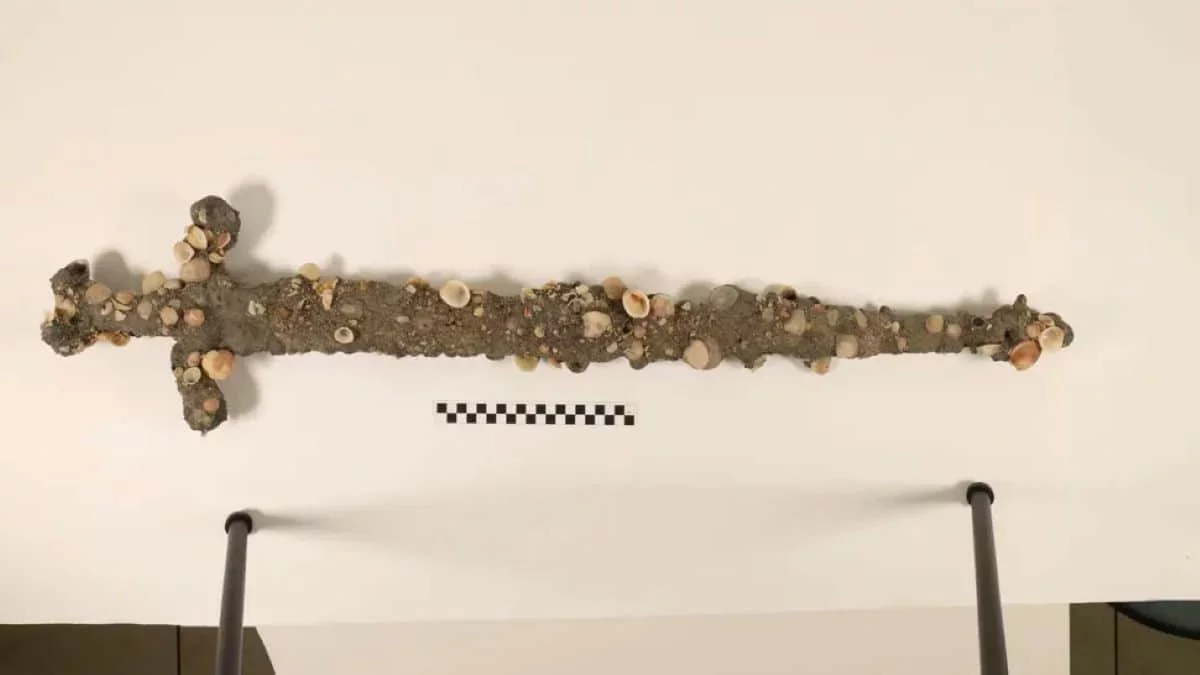
The sword, measuring approximately one meter (three feet) in length, had lain submerged near Dor Beach south of Haifa for centuries, becoming encrusted with shells, sand, and marine growth.
This discovery was not Katzin's first encounter with Crusader-era artifacts. In 2021, he unearthed a similar sword in the vicinity while scuba diving. Drawing on his previous experience, he quickly recognized the significance of the object and reached out to Deborah Tsveikal, a professor at the University of Haifa's Department of Maritime Civilizations.
Tsveikal informed the Israel Antiquities Authority, which granted permission for archaeologists to retrieve the sword from the seabed. The artifact was subsequently transported to the Leon Recanati Institute of Maritime Studies for conservation and analysis.
Unveiling the Past
Researchers employed advanced medical imaging technology to examine the sword without causing any damage. A CT scan conducted at a local hospital revealed that the blade had experienced significant corrosion during its time in saltwater, with much of the original iron eroded away.
Despite this degradation, the scan provided valuable insights, indicating that the sword likely belonged to a Frankish Crusader warrior. The internal structure suggests it was crafted by European blacksmiths and brought eastward. Given the value and craftsmanship of swords during that era, losing such a weapon would have been a significant event, possibly due to a battle or shipwreck.
"Swords were precious items, meticulously maintained," noted Sára Lantos from the University of Haifa. "In the Middle Ages, they symbolized knighthood and religious faith."
Historical Significance
Artifacts from the Crusader period are surprisingly rare in Israel, with only a few swords recovered to date. Tsveikal emphasized the importance of this find, stating, "This is an extremely rare discovery that enhances our understanding of the Crusader presence along the coast."
The discovery also underscores the historical significance of the coastline where Katzin made his find. Dor Beach has served as a natural harbor for thousands of years, crucial for armies arriving from Europe during the Crusades.
The presence of two Crusader swords in close proximity suggests that the area may hold more relics from this tumultuous time. Archaeologists are now intensifying their surveys of the seabed, hoping to uncover additional artifacts that could shed light on the movements of medieval warriors in the Mediterranean.
Katzin's extraordinary find serves as a reminder that sometimes, remarkable discoveries can occur in the most unexpected moments, simply by being observant in our surroundings.