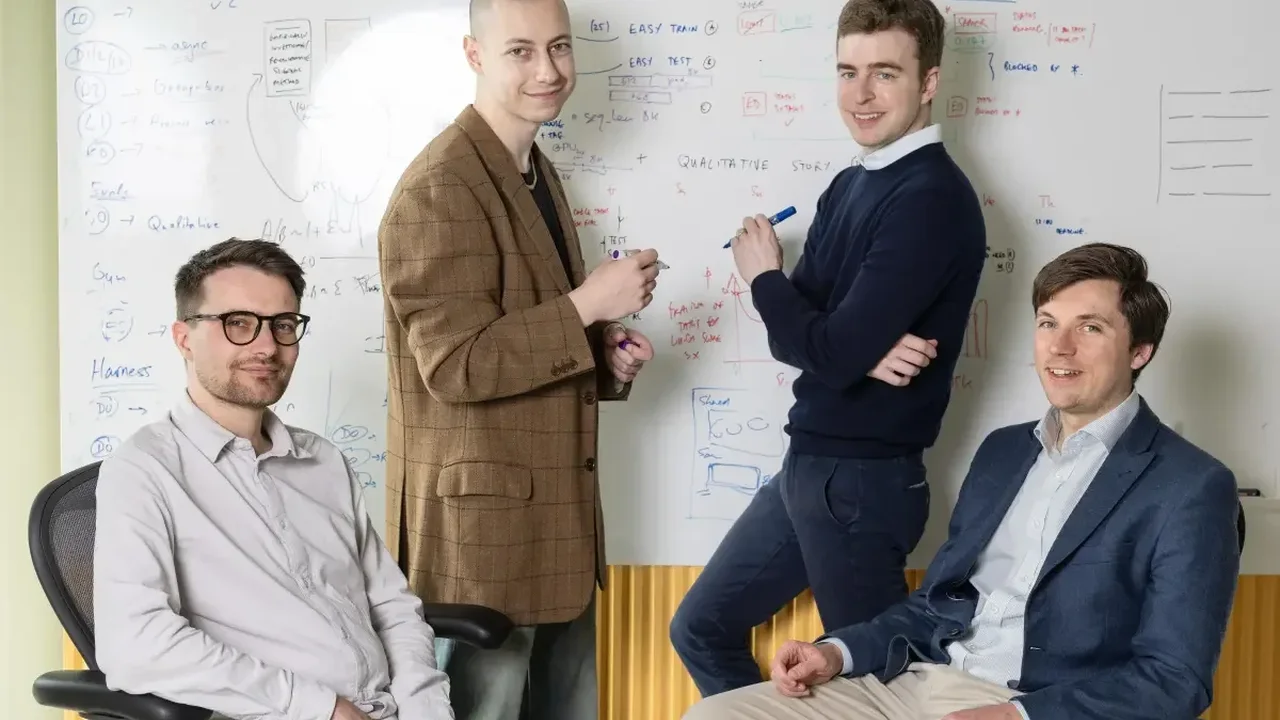
London-based AI lab Inherent, founded by former Google DeepMind researchers, says its new agent Faraday has surpassed larger systems from Anthropic and OpenAI on a focused scientific task: independently reproducing the results of published research papers.
The company says the achievement is notable not only because of the outcome, but because of the scale behind it. Faraday is built on a relatively compact model with 27 billion parameters, far smaller than frontier systems typically associated with this kind of work. Inherent says the agent was evaluated on more than simple accuracy, with an added emphasis on "research taste" -- the ability to choose worthwhile experiments and design them well.
According to cofounder and chief scientist Edward Hughes, that capability is central to the startup's broader mission: creating an AI scientist that can help generate new knowledge, not just confirm existing findings. To train this behavior, Inherent relies heavily on reinforcement learning, a method that rewards strong outcomes instead of relying only on fixed instructions.
The company also takes a collaborative approach to product design. Rather than building every tool from scratch, Faraday can work with existing systems when useful, reflecting how human researchers often combine specialized tools in real projects. Inherent says this helps the agent behave more like a thoughtful teammate than a passive assistant.
Based in King's Cross, the startup plans to expand its team in the coming months as it continues developing AI systems aimed at scientific discovery. If this direction continues to mature, it could help shape a new generation of research tools that accelerate how science is explored, tested, and applied.