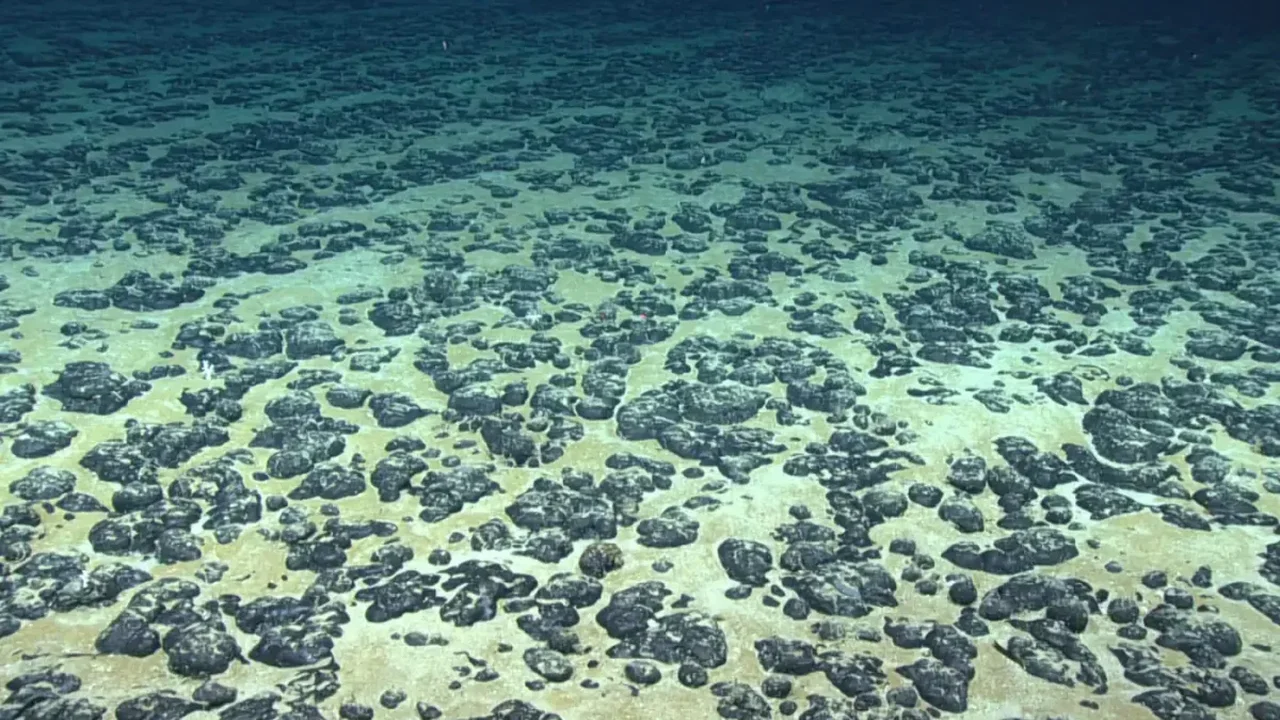
Polymetallic nodules on the Pacific seafloor are more than mineral-rich rocks: their internal pores and cracks shelter diverse microscopic life, according to a study published in Scientific Reports.
Researchers examined 244 nodules from the Clarion-Clipperton Zone, a vast area between Hawaii and Mexico. They found 4,139 organisms--an average of 17 per nodule, with one containing 245. The rock structures had an estimated 23% pore space, creating room for animals smaller than a millimetre.
Life within the rock
The organisms included nematodes, tiny crustaceans called copepods, polychaete worms and single-celled foraminifera. The communities differed from those found in the surrounding seafloor mud, suggesting the nodules provide distinct habitats rather than serving as temporary shelter.
While larger nodules tended to contain more organisms overall, smaller ones supported more life relative to their volume. Researchers also found similarities among nodule communities from sampling sites separated by hundreds of kilometres.
Why the discovery matters
These nodules attract interest because they contain metals such as nickel, cobalt and copper, used in batteries and electronics. The findings add ecological detail to discussions about deep-sea mineral exploration: collecting a nodule would also remove a habitat whose communities are still being studied.
By revealing how much life can exist within seemingly solid rocks, the research can help inform future assessments of deep-sea environments and the choices made about their resources.