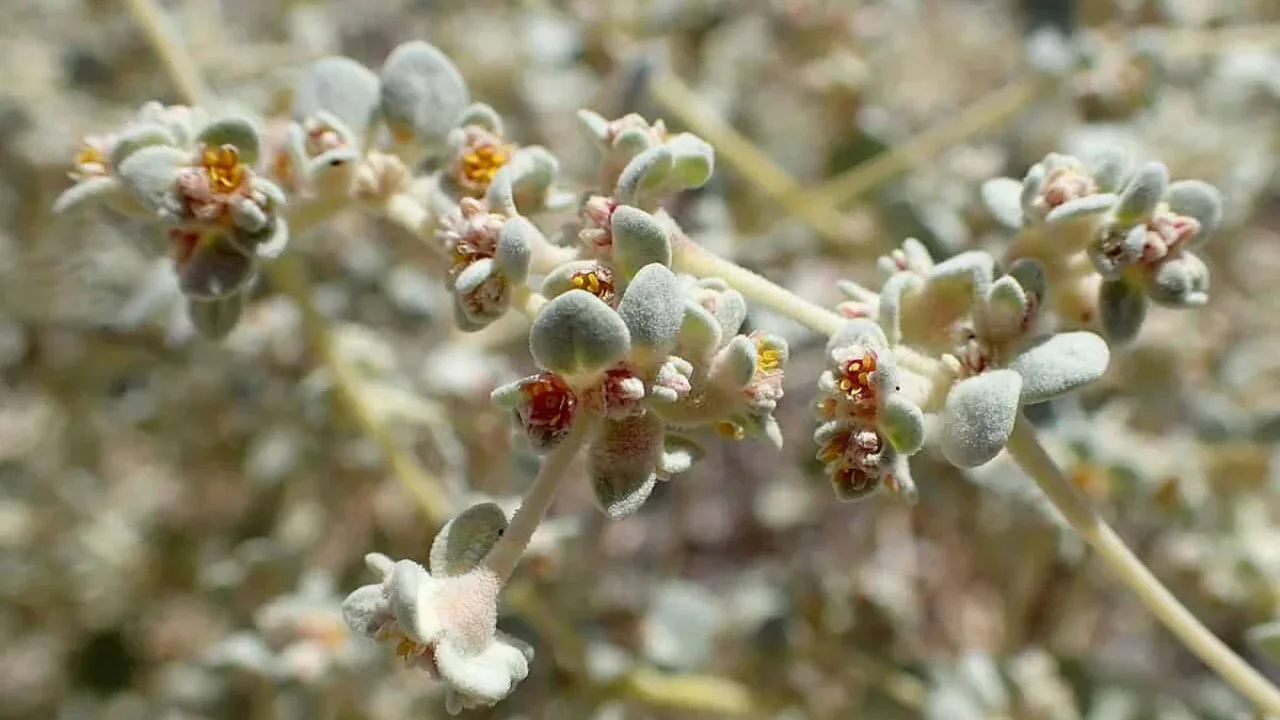
A desert plant known as Tidestromia oblongifolia, or Arizona honeysweet, is offering scientists a striking example of heat adaptation. In controlled experiments designed to mirror Death Valley conditions, the species did not slow down under intense heat; it accelerated growth.
A Living Cooling System
Researchers from Michigan State University and Carnegie Science have now uncovered part of the mechanism behind that performance. The plant appears to protect itself by pushing water through its leaves and releasing it through microscopic pores, creating a natural evaporative cooling effect.
In the study, seedlings collected from 223 plants across the species' range were grown and gradually exposed to extreme temperatures. More than 1,200 seedlings were tested, and some survived air heated to 60°C for hours each day over more than a week. Among the strongest survivors, leaf temperatures stayed far below the surrounding air, with one measurement showing a leaf running 13.03°C cooler than the environment.
The key seems to be transpiration, the same basic process that helps plants regulate temperature. When stomata remain open, water escapes as vapor and carries heat away. The team found that the coolest leaves showed signs of open stomata, while leaves that closed down were less effective at cooling.
To test the idea, the researchers used abscisic acid, a hormone that closes stomata. Those leaves lost their cooling ability more quickly and declined sooner, reinforcing the role of water-based heat control.
The findings also point to a broader lesson for agriculture: future crops may need traits that balance water use with heat defense. If scientists can translate this desert plant's strategy, it could inform more resilient plants for a warming world. The next generation of crop science may draw inspiration from nature's most efficient cooling systems.