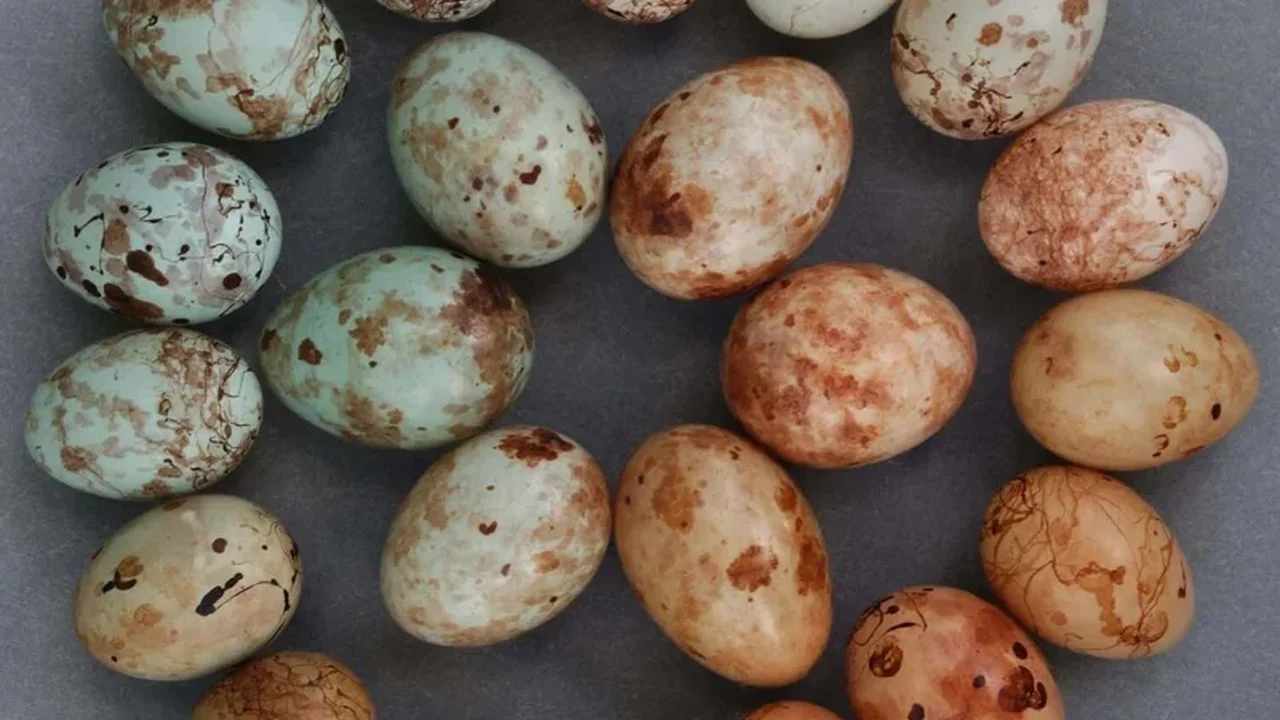
The African cuckoo finch, Anomalospiza imberbis, relies on other birds to raise its young. It slips eggs into their nests, and its best chance of success is laying eggs that resemble those of the host species.
Female cuckoo finches inherit egg-colour and pattern traits through the maternal line. This helps different lineages specialize in mimicking different hosts. The traits are associated with the birds' W chromosome, which passes from mothers to daughters and undergoes little ordinary genetic recombination.
The genomic trade-off
An international team led by Michael Sorenson of Boston University compared cuckoo finch genomes with those of related brood-parasitic birds. The researchers found that 17 genes on the cuckoo finch's W chromosome had been lost or damaged, compared with three in the relatives. Some remaining genes were also evolving unusually quickly, a pattern consistent with linked genetic changes accumulating together.
The chromosome had also gained copies of two genes associated with eggshell pigmentation in other birds. These additions could be connected to the finch's convincing egg colours, although their role has not yet been confirmed.
The findings do not establish whether the genomic changes harm the birds. Some lost genes may have working counterparts on another chromosome, and many of the changes may date to an earlier stage in the species' evolution.
Published in Nature Ecology & Evolution, the study highlights how an adaptation that helps a species succeed can also leave lasting marks elsewhere in its genome. Understanding such trade-offs may help researchers build a clearer picture of how evolutionary strategies shape biodiversity over time.