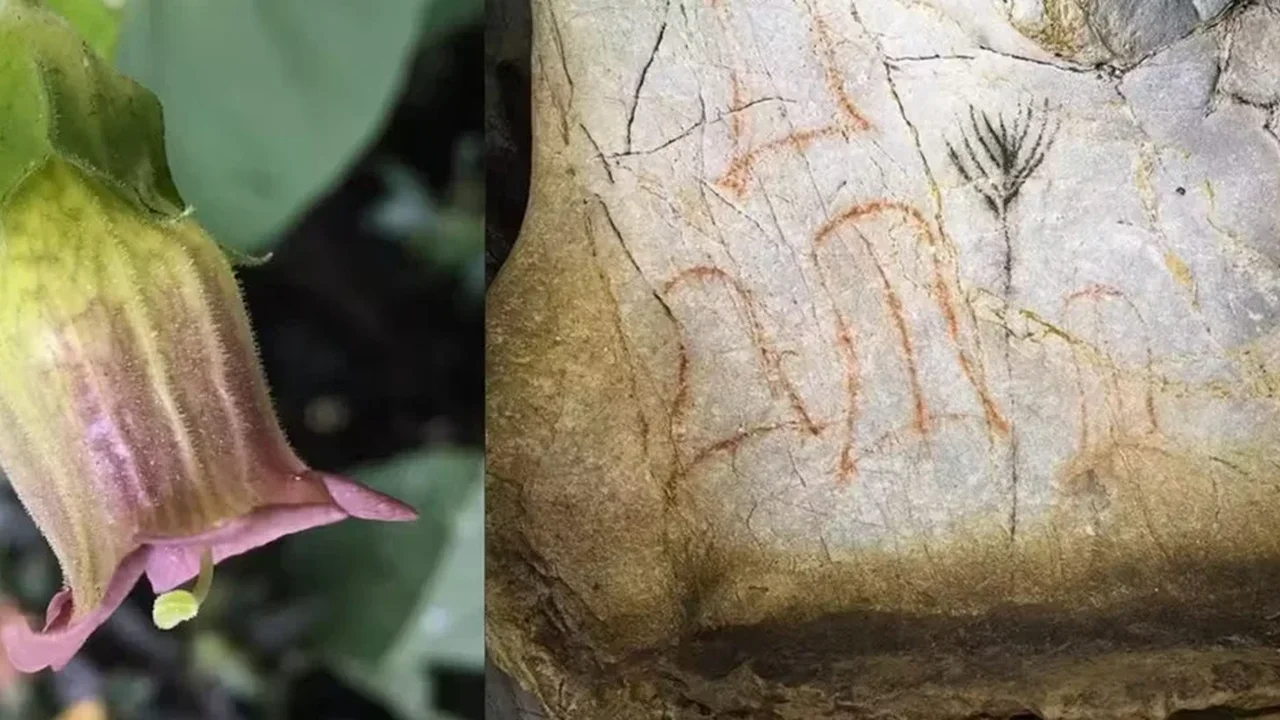
Researchers are reexamining a small painted panel inside Spain's El Castillo Cave, where five red bell-like signs have sat for thousands of years as one of prehistoric art's quiet mysteries. Dated to roughly 17,000 to 15,000 years ago, the marks were long treated as abstract symbols.
Now, a new interpretation suggests they may depict the flower of a psychoactive nightshade, most likely belladonna or local henbane. The shapes, their drooping form, and a central line on several of the signs all echo the structure of the plant's bell-shaped bloom. If confirmed, this would push the visual history of mind-altering plants far deeper into the Ice Age than previously known.
The idea also fits a broader pattern in prehistoric research. Europe's nightshades are among the most documented psychoactive plants in historical records, and later evidence shows they were used in ritual contexts, including Bronze Age remains from Es Càrritx in Menorca, where chemical traces revealed compounds such as atropine and scopolamine.
The proposal remains cautious and testable. Plant imagery is extremely rare in European Paleolithic caves, and many forms may have been catalogued as abstract signs for decades. Still, the El Castillo panel's placement beside a stone ledge adds to the case that it may have carried special meaning. Future sediment DNA analysis could help clarify whether nightshade family traces are present at the site.
Whether the panel proves to be a flower, a symbol, or something in between, it highlights how much prehistoric art may still be waiting to be read with fresh eyes. Such discoveries could reshape how we understand the earliest links between creativity, ritual, and the human imagination.