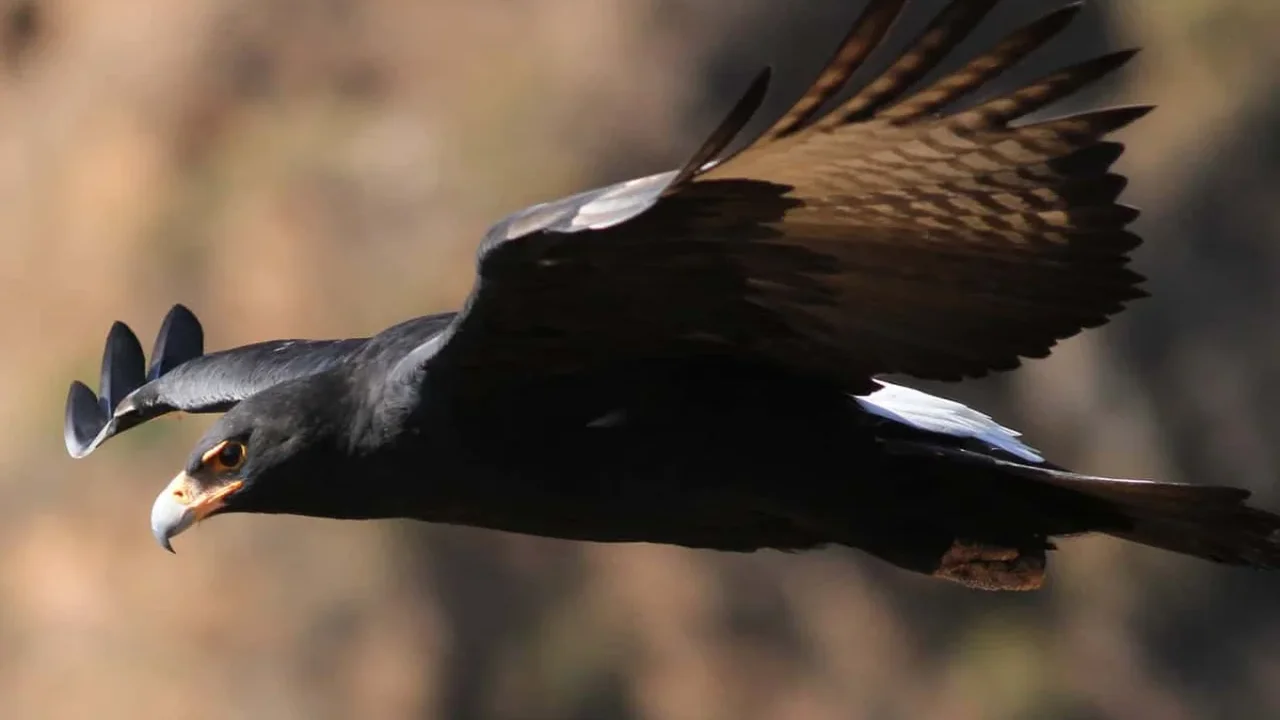
Evidence from the Ennedi Plateau in Chad suggests that large eagles may have attacked adult baboons--raising the possibility that similar predators posed a risk to some of our early human relatives.
Researchers led by primatologist Catherine Hobaiter of the University of St Andrews examined the remains of nine olive baboons found beneath the plateau's cliffs. Several adult male skulls had puncture marks near the eye sockets, while shoulder bones bore scratches resembling injuries associated with eagle talons.
Based on thighbone measurements, the team estimated that one baboon weighed about 26.2 kilograms. That is considerably heavier than primates previously documented as eagle prey. Verreaux's eagles, which inhabit the region, usually hunt smaller animals, but may use steep terrain to their advantage: an attack could send prey tumbling rather than requiring the bird to carry it away.
Clues to ancient risks
The researchers did not witness an eagle attacking an adult baboon, and the bones cannot establish how the animals died. Eagles may also scavenge. Still, the pattern of marks and the number of adult males among the remains make predation a possible explanation.
The findings may also prompt a closer look at early hominin fossils. A 2006 study proposed that an eagle attacked the Taung Child, a young Australopithecus africanus fossil with similar skull punctures. Because the child was small, researchers have generally considered adult hominins less vulnerable to aerial predators. The baboon evidence suggests that assumption merits further investigation, but does not show that eagles hunted adult human ancestors.
Published in the American Journal of Biological Anthropology, the research also offers a possible avenue for exploring how predator threats shaped primate group behavior, including alarm calls and collective defense. Further comparisons of fossils and modern animal remains could refine what scientists know about those ancient pressures.
Future research may reveal more about how predators influenced the survival strategies and social behavior of our distant relatives.