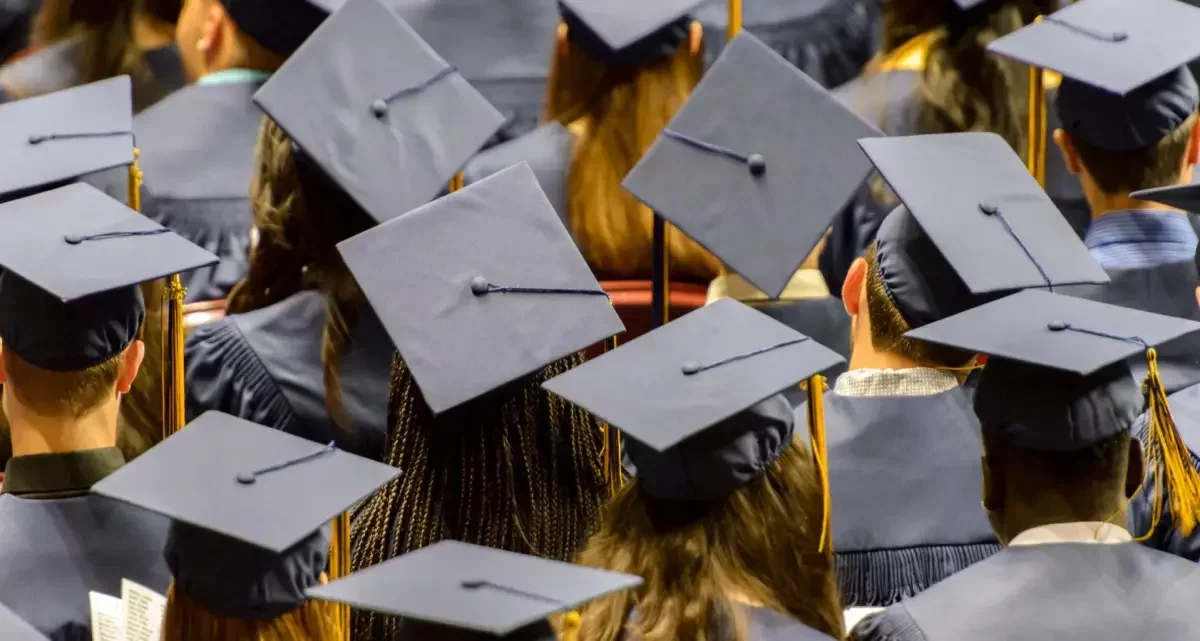
As commencement ceremonies unfold across American universities, speakers are finding it challenging to engage graduates regarding a future influenced by artificial intelligence.
Recently, Gloria Caulfield, an executive from Tavistock Development Company, delivered a speech at the University of Central Florida, highlighting the era of "profound change" that is both "exciting" and "daunting." However, her mention of AI as the "next industrial revolution" sparked a wave of boos from the audience, forcing her to acknowledge the unexpected response.
"I struck a chord," Caulfield remarked, attempting to regain the crowd's attention. She noted that AI was once absent from their lives, only to be met with cheers from the audience.
Similarly, former Google CEO Eric Schmidt encountered a mixed reception when he addressed students at the University of Arizona. Prior to his speech, some student groups voiced their opposition to his participation due to a lawsuit involving allegations of sexual misconduct, which he has denied. The discontent continued as he discussed AI, prompting loud boos as he encouraged students to embrace their role in shaping this technology.
Despite these reactions, not all discussions of AI at graduation ceremonies have met with resistance. Nvidia CEO Jensen Huang spoke at Carnegie Mellon's commencement without facing any significant backlash when he stated that AI has "reinvented computing."
The mixed reactions from students may reflect a broader sense of uncertainty. A recent Gallup poll revealed that only 43% of Americans aged 15 to 34 feel optimistic about job prospects, a significant decline from 75% in 2022. This sentiment of pessimism extends beyond AI, with some critics arguing that the technology represents the harsh realities of a rapidly changing job market.
In light of this, resilience emerged as a recurring theme in many commencement speeches this year. Schmidt himself acknowledged the fears that students harbor about their futures, including concerns about job security and environmental challenges.
Caulfield's speech may have also misjudged her audience, as some graduates felt her initial remarks were too generic and disconnected from their experiences. One student expressed that the collective booing stemmed from a broader dissatisfaction with the direction of their futures.
As discussions around AI continue to evolve, the reactions from these graduates highlight a crucial dialogue about the intersection of technology and the workforce. The future may hinge on how effectively society can navigate these changes, ensuring that emerging technologies serve to empower rather than intimidate.