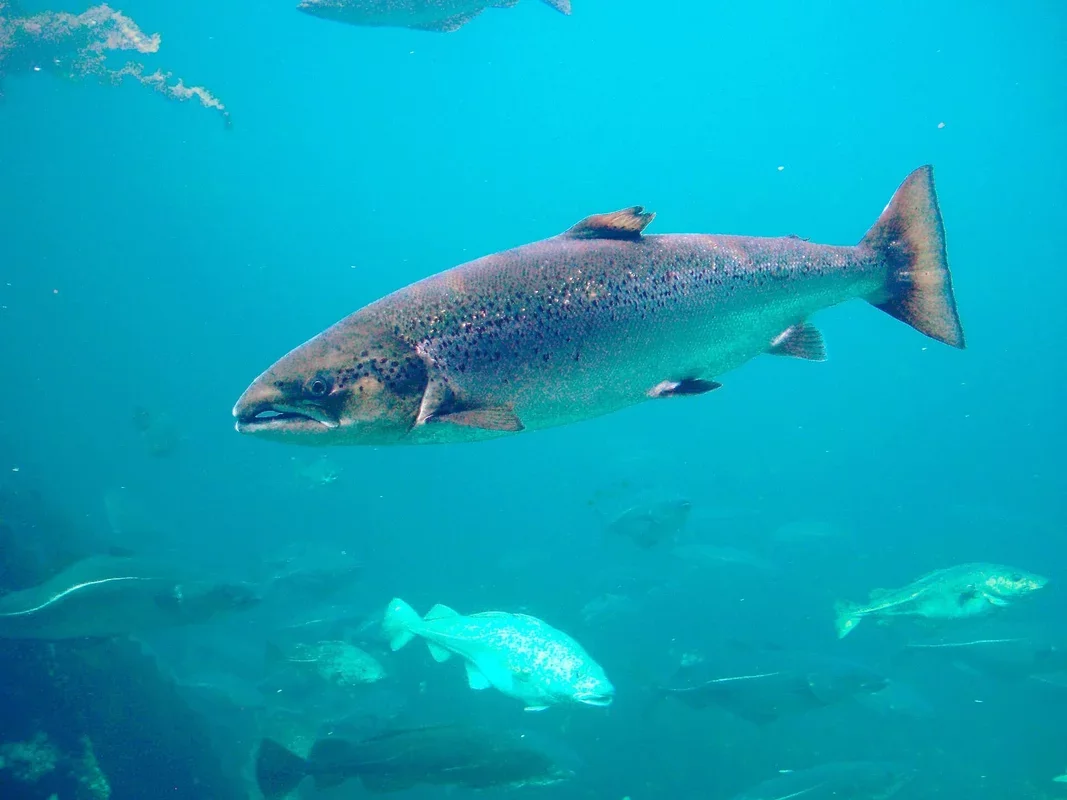
Recent research has uncovered a fascinating twist in the lives of young salmon: their behavior is being altered by traces of cocaine found in polluted waters. This unexpected phenomenon has sparked interest among scientists, who have long suspected that drug pollution could impact animal behavior but struggled to demonstrate it in real-world ecosystems.
A groundbreaking study conducted in Lake Vättern, Sweden, has provided compelling evidence of how cocaine contamination affects fish behavior. Researchers divided 105 juvenile Atlantic salmon into three distinct groups: one that remained untreated, another exposed to cocaine, and a third exposed to benzoylecgonine, a common metabolite of cocaine often found in wastewater.
Instead of contaminating the lake directly, the team utilized slow-release implants inserted into the fish, allowing for controlled exposure to these substances over time. This innovative method mimicked the concentrations typically detected in polluted environments, enabling scientists to observe realistic effects without disrupting the ecosystem.
Using acoustic telemetry, the researchers tracked the movements of the salmon over an eight-week period. Initially, all fish exhibited similar behaviors as they acclimatized to their surroundings. However, as the study progressed, significant differences emerged.
Insights from the Experiment
Salmon exposed to benzoylecgonine showcased remarkable changes in their movement patterns. By the end of the study, these fish swam nearly 1.9 times farther per week compared to their unexposed counterparts, covering distances up to 12.3 kilometers from their starting points. While all fish gradually slowed down as they adapted, those exposed to the metabolite remained significantly more active.
Interestingly, the metabolite had a more pronounced effect than cocaine itself, highlighting the importance of considering breakdown products in environmental risk assessments. Researchers confirmed the exposure levels by measuring chemical concentrations in the fish's brains, which aligned with expectations for polluted habitats.
The Ecological Implications
While increased movement might seem innocuous, it plays a crucial role in survival. Fish movement influences feeding habits, predator exposure, and population distribution across habitats. Thus, if pollution is indeed modifying these behaviors, it could create unforeseen ripples throughout entire ecosystems.
The study's authors emphasized that cocaine-derived pollutants could significantly alter fish spatial ecology, impacting habitat use and population dispersal patterns. However, they noted that further research is needed to explore finer behavioral responses, such as predator avoidance and depth selection.
As cocaine and similar compounds continue to be found in waterways worldwide, the implications of this study are profound. The findings serve as a reminder of the hidden ecological consequences of pollution and the urgent need for innovative solutions to protect aquatic ecosystems.
Published in the journal Current Biology, this research paves the way for future studies that could illuminate the broader impacts of environmental pollutants on wildlife behavior and ecosystem health.