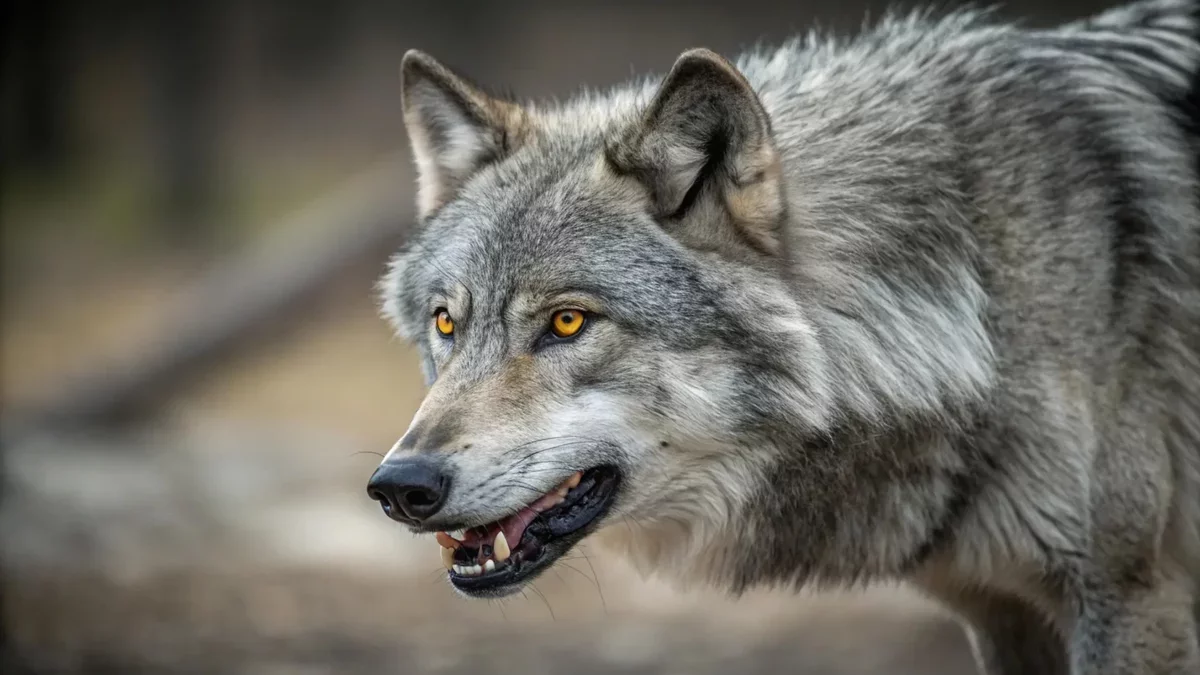
Through an innovative blend of methodologies, including analysis of wolf dental samples and trail cameras, researcher Bailey is investigating the reliance of coastal gray wolves on marine food sources. This exploration aims to shed light on their hunting techniques and how these coastal populations differ from their inland counterparts.
Bridging Terrestrial and Aquatic Ecosystems
Gray wolves are renowned for their significant role in terrestrial food webs, where they help maintain prey populations and shape ecosystems. Bailey posits that similar interactions may exist between land and sea environments. "Our understanding of the linkages between aquatic and terrestrial food webs is still developing, but we suspect these connections are more common than previously thought," Bailey states, working within Sarah Kienle's CEAL Lab in the Department of Natural Resources Science. "Given the dramatic impact wolves have on land ecosystems, we may observe analogous patterns in marine settings."
Teeth as a Window into Diet
Sea otters, now recognized as an endangered species, once flourished along the Pacific Coast until the fur trade significantly diminished their populations. As these otters gradually rebound, wolves may be re-establishing a predator-prey dynamic reminiscent of the past. Researchers are keen to understand how this interaction influences wolf behavior and the recovery of sea otters.
To explore these dynamics, Bailey is examining gray wolf teeth from museum collections and recently deceased specimens using stable-isotope analysis. Teeth, much like tree rings, accumulate layers that reflect dietary changes over time. "If the samples are sufficiently large, we can analyze each growth ring to trace an individual wolf's feeding habits," he explains. "By collecting enough data across various individuals, we can identify prevalent dietary trends within a population."
Kienle highlights that hunting in marine environments poses unique challenges compared to terrestrial hunting. "Capturing and consuming prey in the ocean is fundamentally different from doing so on land," she notes. "We are eager to discover if these coastal wolves exhibit behavioral adaptations distinct from their land-based relatives."
Despite two decades of documented wolf interactions with aquatic prey, many aspects remain unexplored. "What I am particularly interested in is how wolves manage to catch sea otters," Bailey shares.
Innovative Technology for Deeper Insights
Previous footage of wolf hunts lacked the resolution necessary for thorough analysis, but newly installed trail cameras are expected to provide clearer insights. Bailey has positioned these cameras on the island to capture detailed behaviors during the summer. "We have confirmed that these wolves are preying on sea otters," he states, "and we are now prepared to document the finer details that have previously been elusive." A team of seven students from the University of Rhode Island is assisting in reviewing over 250,000 images collected since last December.
Researching wolves in such challenging conditions is no small feat. Bailey notes that their intelligence and elusive nature complicate the study, especially in a remote setting. "The combination of their cleverness and the rugged landscape makes research quite demanding," he remarks.
Prince of Wales Island has been selected as the primary research site through collaboration with biologist Gretchen Roffler from the Alaska Department of Fish and Game and local technician Michael Kampnich. Bailey underscores their invaluable contributions to the project. "I cannot stress enough how instrumental they have been to my research," he emphasizes. "This project would not have been feasible without their guidance."
Kampnich's insights have been particularly beneficial in navigating the island's ecology and terrain. "His extensive knowledge of the island and its unique ecology has been an incredible asset," Bailey adds. "Engaging with local experts is crucial, as they possess invaluable experience that outside researchers may lack."
Mercury Accumulation and Food Chain Implications
Recent findings from Roffler raise concerns regarding another potential consequence of marine hunting. Her research indicates that sea otters can accumulate significant levels of methylmercury, a toxic form of mercury. This raises the concern that wolves consuming otters may also face exposure. Liver samples from coastal gray wolves show mercury levels significantly higher than those in inland wolves--up to 278 times greater--potentially leading to severe long-term health issues. "Accumulation of methylmercury can lead to various problems affecting reproduction, physical condition, and behavior," Bailey explains.
Future Research Directions
While the current focus remains on Alaska, Bailey aspires to expand his research scope in the future. Due to limited resources, his work is concentrated in areas promising for data collection, but he plans to include the eastern coast as well.
"I am incorporating historical data on eastern wolves in a separate chapter of my dissertation, which compares skull morphology between coastal and inland populations," he notes. He is currently analyzing skull specimens from regions in Canada, including Newfoundland and Labrador, provided by the Harvard Museum of Comparative Zoology.
For now, data collection will continue, with research anticipated to last several more years. Bailey also intends to return to Prince of Wales Island next summer to further his fieldwork.