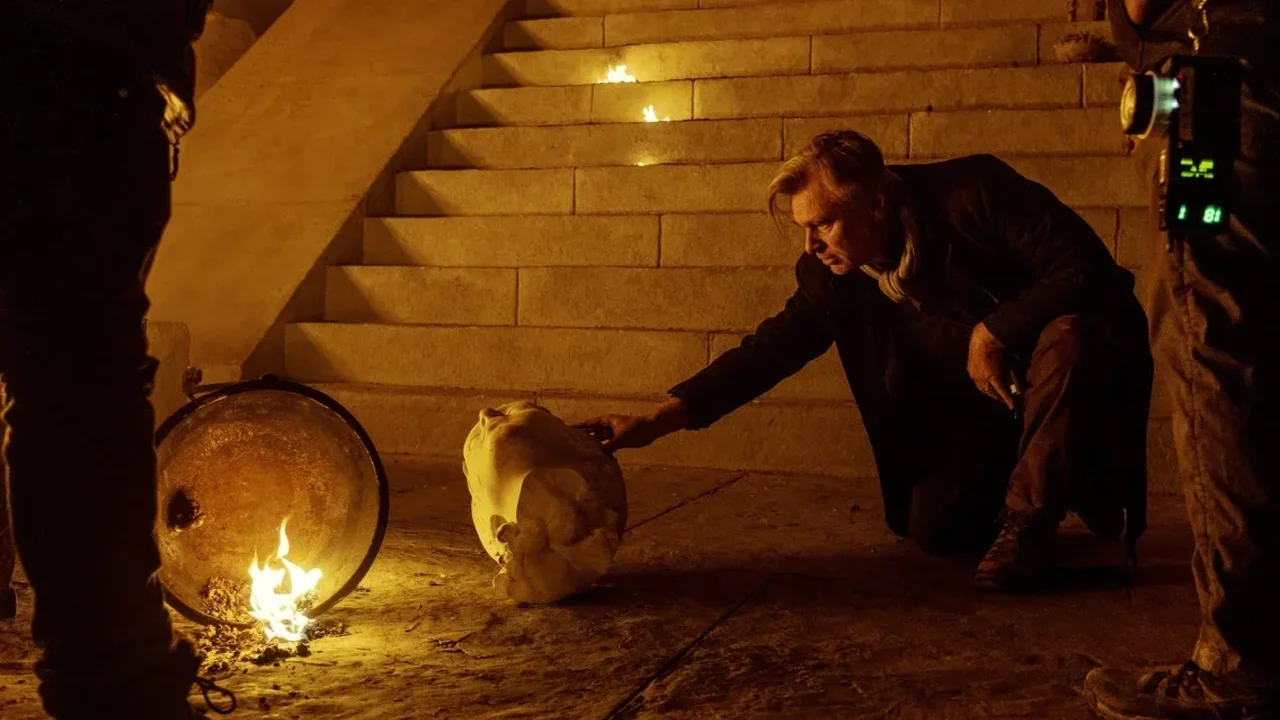
Christopher Nolan's The Odyssey (2026) offers a bold cinematic reinterpretation of Homer's epic, compressing a vast ancient journey into a tightly structured three-hour film. Rather than reproducing the poem scene by scene, the adaptation reshapes the material for a contemporary audience while preserving its core themes of return, memory, and identity.
Myth, image and modern storytelling
One of the film's most striking qualities is its use of visual storytelling. In the Circe sequence, the transformation of Odysseus's companions into pigs becomes a vivid example of how cinema can translate myth into physical experience. The film also leans on sound, scale and movement to build atmosphere, while keeping dialogue deliberately direct and accessible.
The narrative is framed through flashbacks and a ring structure that begins before the Trojan War, then gradually reconnects past and present. This approach helps viewers follow a story that originally depended on shared cultural knowledge. Matt Damon's Odysseus is presented as a more modern, psychologically burdened hero, shaped by war, memory loss and the challenge of homecoming.
Anne Hathaway's Penelope, Zendaya's Athena, Charlize Theron's Calypso and Tom Holland's Telemachus add to a cast that gives the ancient tale a contemporary screen presence. The film also emphasizes the emotional cost of return, showing that homecoming can be as complex as the voyage itself.
While Nolan's version simplifies some of Homer's ambiguity, it still highlights the enduring power of the Odyssey as a story about human choice, consequence and reinvention. By turning an epic poem into a large-scale visual experience, the film shows how classical literature can continue to evolve through modern filmmaking. Its influence may shape how future audiences encounter ancient stories in new cinematic forms.