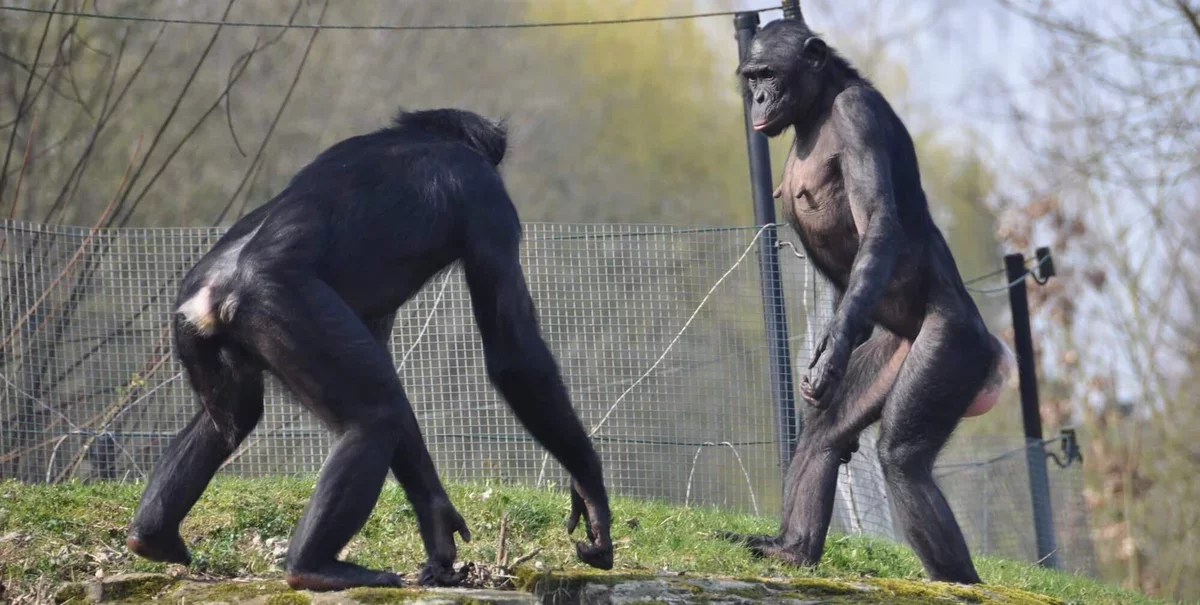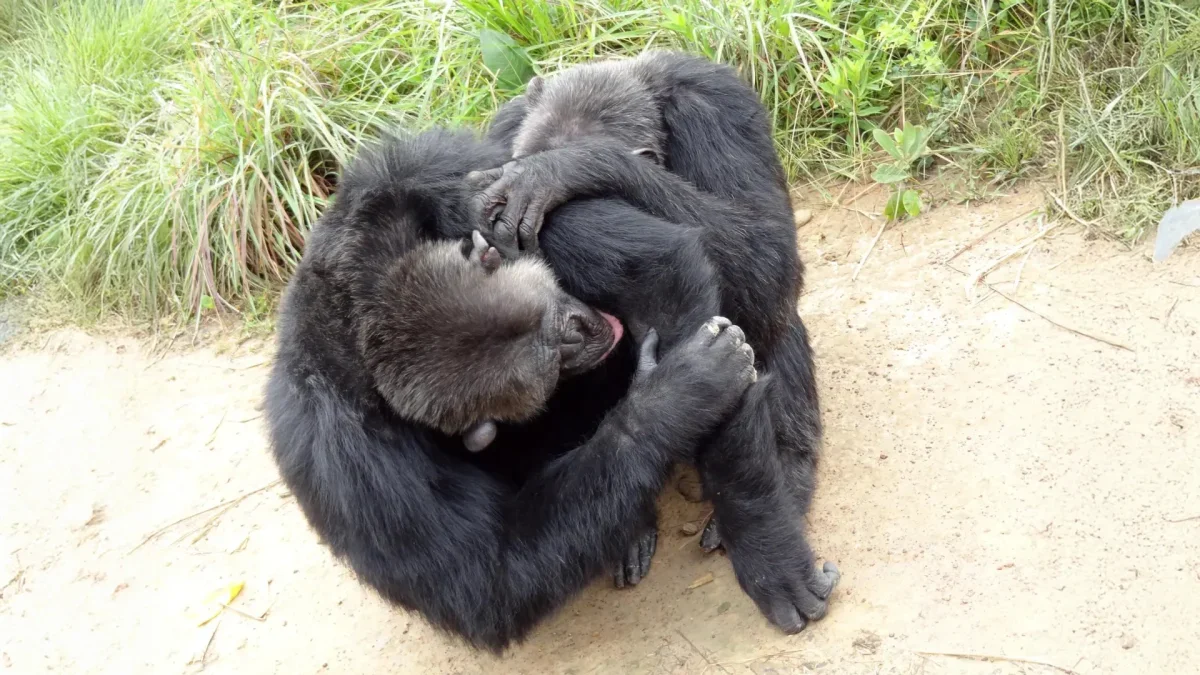
Researchers from Utrecht University and Universidad Carlos III de Madrid have uncovered that chimpanzees and bonobos, our closest living relatives, develop social networks akin to human friendship circles. This groundbreaking discovery sheds light on the evolution of complex social relationships.
Exploring Social Dynamics Among Great Apes
To delve into the social behaviors of these great apes, the study examined grooming habits across 24 groups of chimpanzees and bonobos. Grooming serves as a crucial social activity, reinforcing bonds and nurturing relationships within these communities.
Employing a mathematical model, the researchers assessed how individuals allocated their limited grooming time and social efforts among group members. The findings revealed a familiar trend: most apes dedicated a significant portion of their grooming time to a select few partners, while maintaining less intense connections with a broader range of others. This layered approach mirrors the organization of human social circles.
Interestingly, the study also indicated that apes in larger groups exhibited greater selectivity in their social investments, a behavior that parallels trends seen in human networks.
Diverse Approaches to Social Connections
While both species displayed human-like social frameworks, their relationship management differed. Bonobos tended to distribute their grooming time more evenly, fostering a more egalitarian network. In contrast, chimpanzees concentrated their efforts on a smaller group of preferred companions, highlighting distinct social behaviors between the two species.
Friendship Dynamics Across Ages
Similar to humans, chimpanzees become increasingly selective with their friendships as they age, investing more in a smaller circle of close connections. Conversely, bonobos did not exhibit this trend, maintaining a broader network of social ties.
"This could be attributed to their more egalitarian social structures," explains lead researcher Edwin van Leeuwen. "Bonobos tend to form fluid relationships that often transcend group boundaries, a behavior less common among chimpanzees."
Insights into the Evolution of Friendship
The research suggests that fundamental principles guiding social relationship formation and maintenance are shared across various species. "Our findings indicate that the rules governing social effort allocation are consistent across species," notes Van Leeuwen. "This highlights a profound evolutionary continuity in the organization of complex societies."
Moreover, the differences between chimpanzees and bonobos suggest multiple evolutionary strategies for managing social connections. Understanding these patterns may enhance scientists' insights into cooperation, social learning, and emotional well-being in both humans and animals.