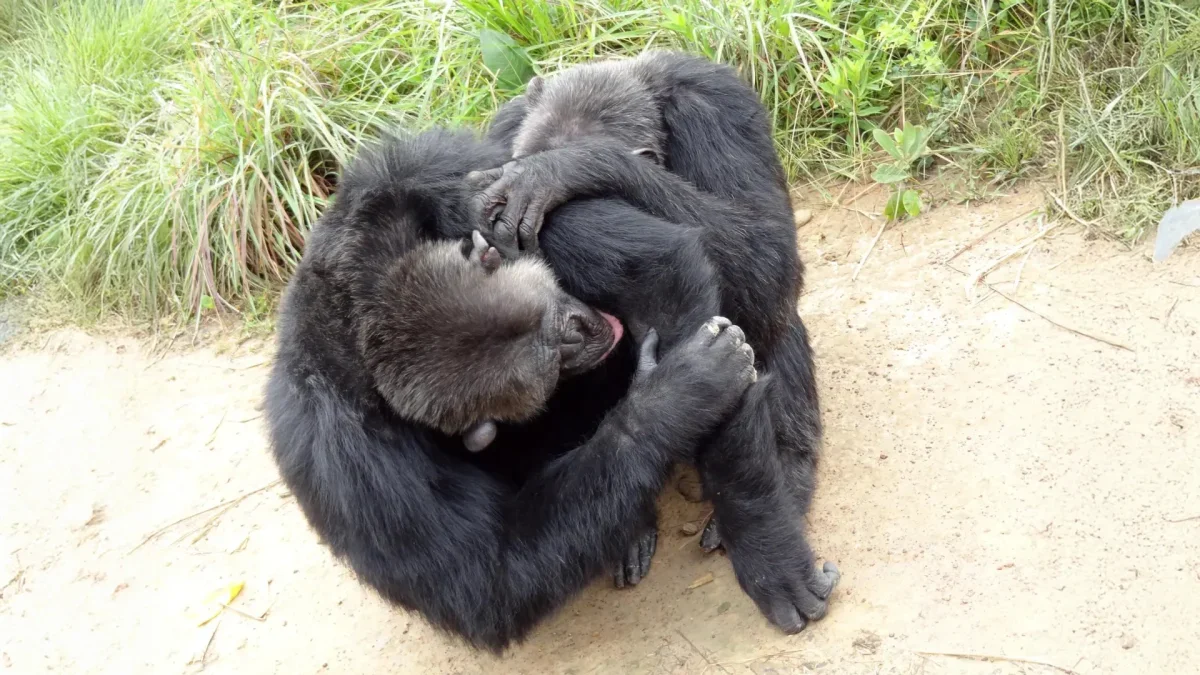
Recent research sheds new light on the behavior of bonobos, one of our closest living relatives, suggesting that they may not be as peaceful as previously believed. A study led by Emile Bryon from Utrecht University explored the aggression levels of bonobos (Pan paniscus) compared to chimpanzees (Pan troglodytes) within controlled zoo environments.
Bonobos are native to the Democratic Republic of Congo, where resources are abundant, while chimpanzees inhabit various regions across Africa where food sources can be scarce. These differing ecological conditions have historically shaped their social structures. Chimpanzee societies are typically male-dominated and territorial, while bonobo communities are characterized by female alliances that often mitigate male aggression.
However, new findings challenge the notion of bonobos as the "peaceful apes." A comparative analysis indicated that bonobos exhibit aggression levels comparable to those of chimpanzees when in captivity. The study, published in Science Advances, assessed various aggressive behaviors across nine groups of chimpanzees and 13 groups of bonobos housed in 16 European zoos.
The research revealed no significant differences in overall aggression rates between the two species. Interestingly, while male chimpanzees displayed greater aggression than their female counterparts, bonobo males and females exhibited similar levels of aggressive behavior. This suggests a more complex social dynamic within bonobo groups.
"Our findings illustrate that chimpanzee males are aggressive towards all, whereas bonobos display aggression but primarily target other males," Bryon explained. He also noted that female-to-female aggression was low in both species, which is intriguing given that dominant female bonobos could be expected to compete more fiercely for resources.
Despite the overall findings, some groups within zoos displayed varying levels of aggression, prompting further investigation into the factors influencing these behaviors. Takeshi Furuichi, an emeritus professor at Kyoto University, emphasized the importance of interpreting these results with caution, highlighting that the study focused on behavior within individual zoo groups rather than broader intergroup dynamics.
This research not only contributes valuable data to our understanding of primate behavior but also invites a reevaluation of the social structures and aggression patterns in both bonobos and chimpanzees. As we continue to study these fascinating species, we may uncover deeper insights into their social interactions and the evolutionary paths that have shaped their behavior.
Ultimately, this research could redefine our understanding of primate societies, influencing conservation efforts and our approach to studying animal behavior in both natural and controlled environments.