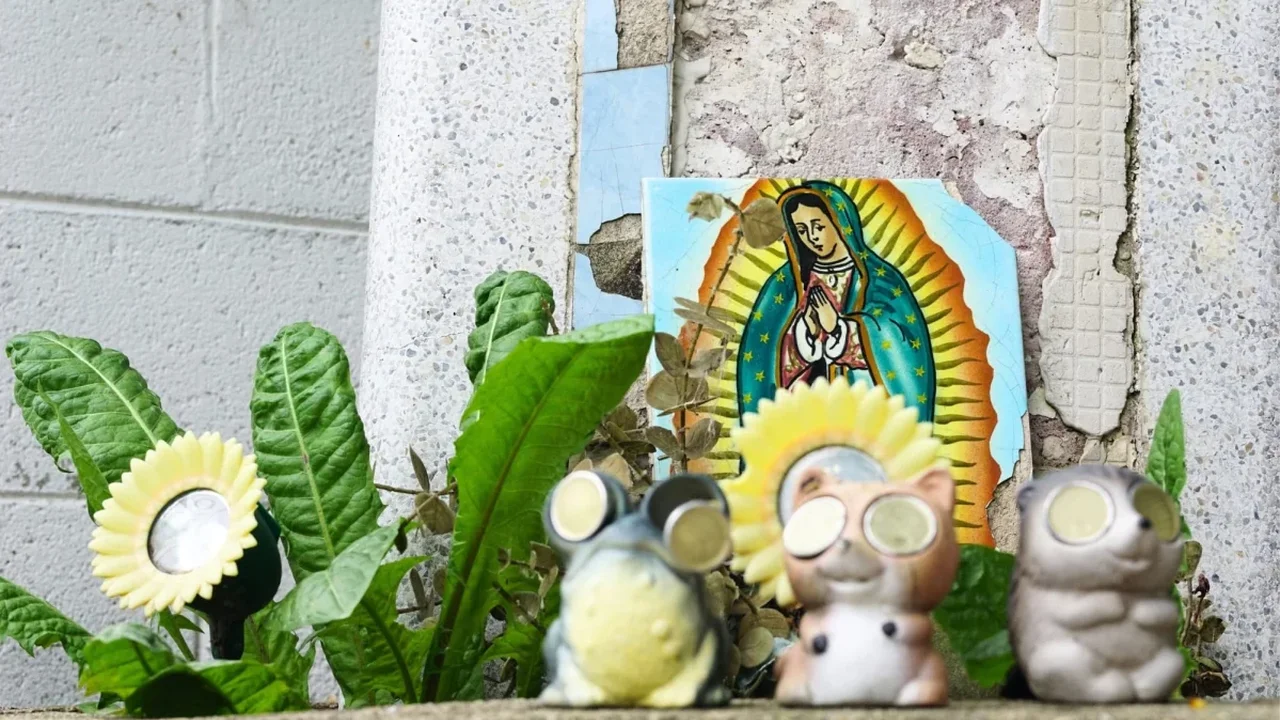
Across Chicago's Mexican-American neighborhoods, devotional altars are shaping a living language of craft, memory and belonging. Created for homes, gardens, storefronts and shared streets, these spaces dedicated to La Virgen de Guadalupe carry inherited traditions into everyday urban life.
Altar-making reflects the Mexican concept of artesanía: skill rooted in the hands, where utility, spirituality and artistic expression can coexist. Materials, colors, symbols and carefully arranged objects become markers of family history and cultural continuity.
Craft as a way of rebuilding home
For communities shaped by migration, an altar can become more than a devotional setting. It can serve as a personal archive, connecting generations through familiar gestures, religious iconography and handmade details. Each arrangement brings together memories of place with the realities of a new environment.
In areas including Pilsen and South Chicago, these altars demonstrate how traditional knowledge evolves while remaining recognizable. Their presence in public-facing spaces also turns individual acts of care into a wider cultural landscape.
Chicago's National Museum of Mexican Art has helped bring related traditions into cultural programming through its long-running Día de Muertos presentations. Yet many everyday neighborhood altars remain outside formal collections, despite their importance as examples of contemporary folk craft.
These works highlight how cultural practices can stay dynamic through daily use rather than preservation alone. By combining devotion, design and domestic creativity, Mexican-American altar makers continue to redefine what home can mean across generations.
As interest in community-based craft grows, these altars may inspire broader recognition of living heritage as an essential part of cities' cultural futures.