On December 13, a remarkable mission commenced as a rocket launched from the Jiuquan Satellite Launch Center in northwestern China, carrying a unique passenger: a butterfly in the midst of its transformation.
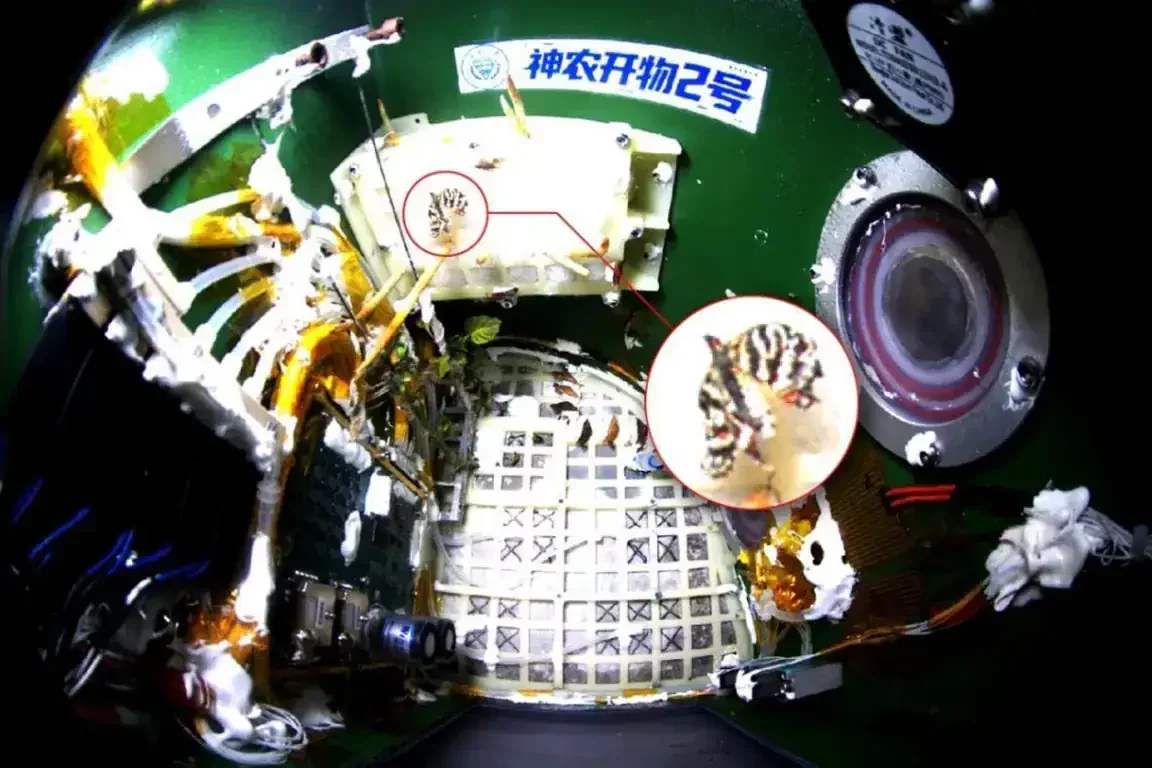
Weeks later, images sent from orbit confirmed that the butterfly had successfully undergone its metamorphosis. It emerged from its chrysalis, spread its wings, and navigated within a compact sealed chamber.
This innovative experiment was conducted by a research team from Chongqing University, which developed a small "space ecosystem payload" known as ShennongKaiwu 2. This payload was launched aboard a Kuaizhou-11 Y8 carrier rocket, entering low-Earth orbit to initiate its "biotest mission," according to the researchers.
Inside the sealed payload, thermal controls maintained a temperature close to 30 °C, enabling the pupa to complete its transformation. The adult butterfly thrived for several days in a 14.2-liter chamber weighing 8.3 kilograms, moving freely, fluttering its wings, and occasionally resting on leaves provided in its miniature habitat.
While the outcome may seem enchanting, the researchers emphasize the practical implications of their work. Their objective was to assess whether a small, closed-loop ecosystem could remain stable in orbit long enough to support such a complex life transformation.
Developing Ecosystems for Space Exploration
ShennongKaiwu 2 was designed to replicate the essential cycling processes that sustain life on Earth. The plants within the capsule produced oxygen and could serve as nourishment, while microorganisms managed waste and helped stabilize the air quality. Sensors monitored various environmental factors such as oxygen, carbon dioxide, pressure, light, and humidity.
Professor Xie Gengxin, director of Chongqing University's Space Science and Technology Research Institute and the chief designer of the payload, noted that the butterfly's behavior challenged common assumptions.
"Many believed the butterfly wouldn't be able to fly in microgravity, but we observed that it adapted swiftly to its new environment," he stated.
Microgravity alters the physical conditions essential for living organisms. The team reported challenges including changes in body-fluid distribution, material transport disruptions, and radiation exposure, all of which posed significant hurdles for both the butterfly and its ecosystem. In orbit, regulating air movement, moisture, and nutrient flow can also be challenging.
The engineers faced structural challenges as well. Xie explained that they needed to prevent oxidation and corrosion in magnesium-alloy components of the sealed capsule due to high humidity, an issue that had previously limited the operational duration of such habitats. Their solutions contributed to creating a "safety barrier" that safeguarded the miniature ecosystem and ensured its functionality in orbit.
To simulate authentic spaceflight conditions, the team operated the capsule without additional radiation shielding, active temperature control, or full-spectrum lighting. Qiu Dan, the deputy chief designer of the payload and head of its biological system, emphasized that the experiment was entirely autonomous. "The transformation process was completely unmanned, unlike previous experiments conducted aboard the International Space Station," she remarked.
Preparing for Future Deep Space Missions
Space agencies have traditionally focused on studying plants and microbes to support systems that remove carbon dioxide, generate oxygen, and recycle water for astronauts. Upcoming deep-space missions aim to advance this by developing self-sustaining ecosystems where living organisms contribute to these vital functions.
The butterfly experiment enhances this trend by demonstrating that an organism can complete a full developmental stage while adapting to altered gravity conditions.
China has been gaining experience with closed ecosystems in orbit. In 2024, zebrafish thrived for 43 days aboard the Tiangong space station within a closed aquatic ecosystem. Additionally, four laboratory mice were sent into orbit, with two later giving birth on Earth, marking China's first spaceflight study on mammalian reproduction following orbital exposure.
"The successful emergence of the butterfly signifies more than just having an insect in space," Xie noted. "It represents a significant advancement in verifying the feasibility of long-term operation of complex life support systems in orbit."
Xie has previously explored life in unconventional environments. In 2019, he was the chief designer for an experiment where a cotton seed briefly germinated within a sealed biosphere carried by China's Chang'e 4 mission.
He envisions a future where ecosystems accompany astronauts on their journeys. "True 'space farming' aims to utilize space resources for agricultural production," Xie stated, imagining butterflies pollinating plants in space farms. "Lunar and Martian farms will become a reality in the future," he added.