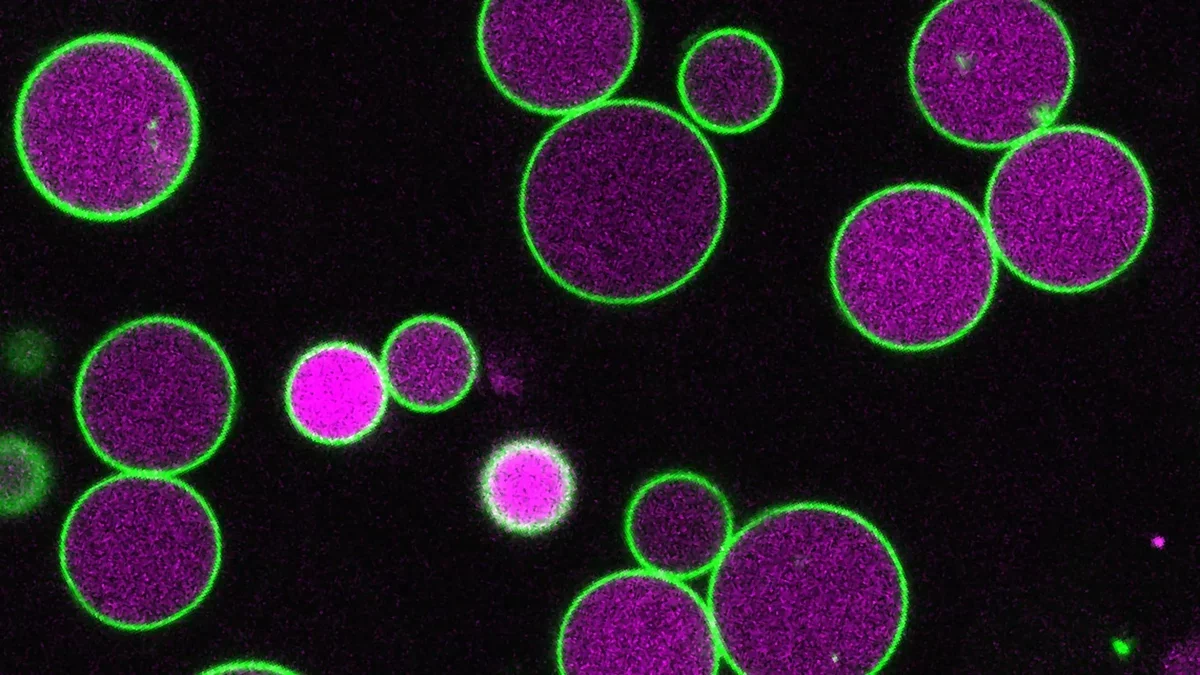
Researchers at Rice University have made a significant discovery regarding plant cell growth, focusing on the model organism, Arabidopsis. Bonnie Bartel, the Ralph and Dorothy Looney Professor of Biosciences, highlighted the remarkable size of peroxisomes in these cells, which become particularly large during the transition from seed to seedling as the plant utilizes fatty acids for energy. Once the plant begins photosynthesis, these peroxisomes reduce back to their standard size.
PEX11: A Protein Integral to Peroxisome Regulation
The research team concentrated on the protein PEX11, known for its role in peroxisome division. Recent findings published in Nature Communications reveal that PEX11 is also crucial for regulating the expansion and contraction of peroxisomes during early plant development.
According to Nathan Tharp, the first author of the study and a graduate student at Rice, peroxisomes are linked to various human diseases and have applications in bioengineering, making their study essential yet challenging.
Innovative CRISPR Techniques Unravel Protein Complexity
To explore the function of PEX11, the researchers faced a unique challenge: PEX11 is encoded by five distinct genes. Disabling a single gene had minimal impact, while knocking out all five resulted in plant mortality. This complexity hindered the understanding of the protein's role.
To address this, Tharp employed advanced CRISPR methods to selectively disable combinations of the five genes. "By using recent CRISPR advancements, I could disrupt specific gene combinations," explained Tharp. "This approach allowed us to confirm that PEX11 significantly influences peroxisome growth during the critical seed to seedling phase."
Insights from Mutant Plants on Growth Regulation
Tharp created two mutant plant varieties, each lacking specific PEX11 genes. While peroxisomes expanded as expected during development, some mutants exhibited uncontrolled growth, with peroxisomes stretching across the entire cell. These mutants also showed a deficiency in vesicles--tiny compartments that typically form within peroxisomes during fatty acid processing, which are crucial for regulating peroxisome size.
"The formation of these vesicles could be key to managing peroxisome growth," Tharp noted. "In our PEX11 mutants, vesicles did not form or were unusually small, leading to the formation of oversized peroxisomes."
Broader Implications Beyond Plant Biology
Curious about the implications of their findings, Tharp tested whether the yeast version of PEX11 could normalize peroxisome size in mutant plant cells. Remarkably, introducing yeast Pex11 restored normal peroxisome function, suggesting a conserved role for this protein across different species, including potential relevance to human cells.
As Bartel stated, "The conservation of PEX11's function across species indicates its importance, and our findings in this accessible model organism may extend to applications in human biology and bioengineering."