Physical AI is moving into a new phase where the challenge is no longer only building smarter models, but capturing better real-world training data. In San Leandro, California, Encord is testing that idea with a hands-on robotics setup built around a classic Jenga tower.
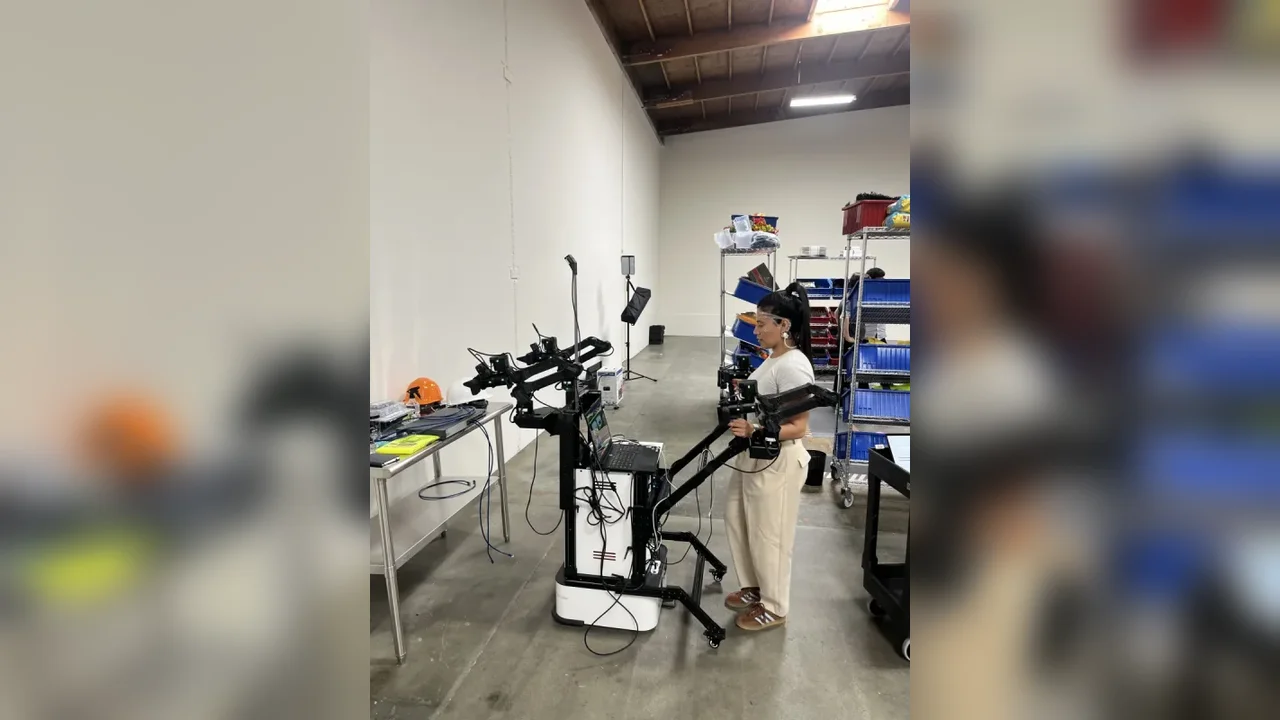
At the center of the experiment is a human operator wearing a headset that tracks both vision and brain activity while handling robotic training tasks. The goal is to understand more than movement alone: Encord and German neuroscience startup Zander Labs are exploring whether signals linked to intent, surprise, and error can help robots learn with greater precision.
Encord says the project is part of a broader effort to solve the robotics data bottleneck. As humanoid and warehouse robots become more advanced, companies are realizing that high-quality physical training data is harder to find than text or images. Instead of simply organizing existing data, teams are now building new datasets from scratch.
The company is combining several approaches, including first-person video, remote robot operation, and sensor-based measurements from the human body. In its facility, pilots practice tasks such as pouring, stacking, and cable handling, while annotated labels describe each motion in detail. The aim is to create richer datasets that can support more capable robot learning systems.
Researchers involved in the trial believe this kind of dense, multimodal data could help models decide when to act quickly and when to use more advanced reasoning. Encord also sees value in understanding which data methods are gaining traction across the robotics sector, giving it a strategic view of where physical AI is heading next.
As robotics moves closer to everyday work and household tasks, brain-wave-informed training could become one of the tools shaping the next generation of intelligent machines. The future of physical AI may depend as much on better data design as on better algorithms.