Bir Tawil stands out as the planet's only unclaimed habitable land, but its narrative is rich with intrigue and complexity.
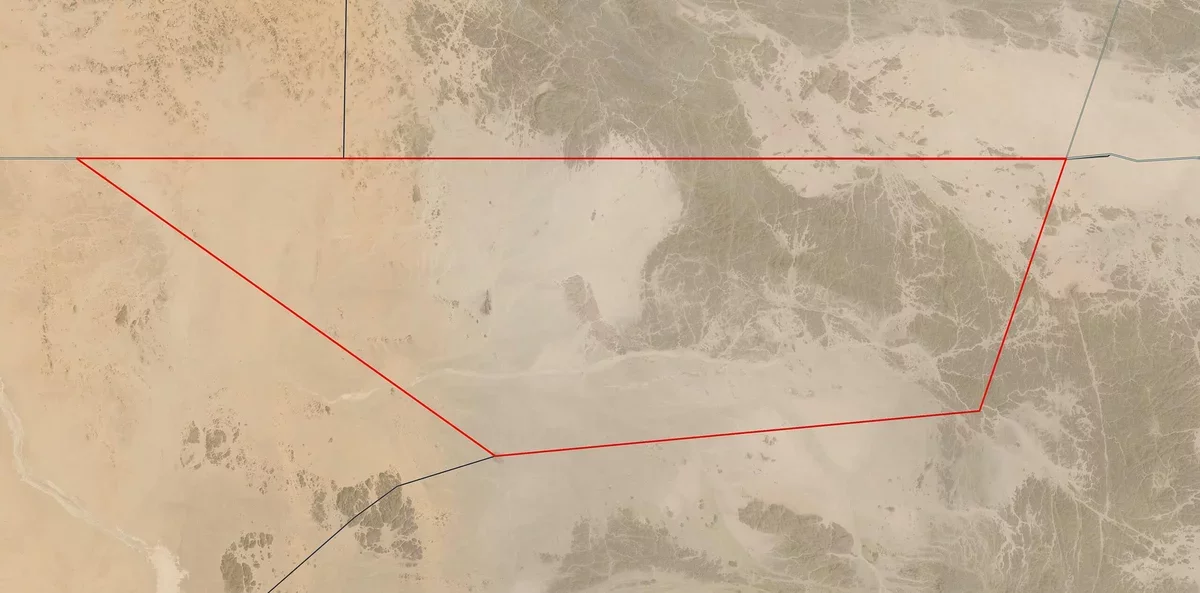
This 2,060-square-kilometer expanse, nestled between Egypt and Sudan, is traversed by the Ababda and Bishari nomadic tribes. It has become a focal point for artisanal gold mining and attracts micronationalists who view it as a blank canvas for new beginnings. Its status as "unclaimed" arises from a colonial border paradox: both Egypt and Sudan desire the more lucrative Hala'ib Triangle, and claiming Bir Tawil would undermine their respective claims to this territory.
Colonial Legacy
In typical territorial disputes, nations vie for the same land. However, in the case of Bir Tawil, the situation is unique; both Egypt and Sudan are reluctant to claim it. The origins of this predicament trace back to colonial-era border delineations. In 1899, British officials established a boundary along the 22nd parallel, designating the Hala'ib Triangle to Egypt and Bir Tawil to Sudan. A subsequent adjustment in 1902 shifted administrative control without resolving the underlying value disparity.
With independence in 1956, both nations have clung to their respective claims, leading to a stalemate where neither can assert ownership of Bir Tawil without jeopardizing their claim to Hala'ib.
This has rendered Bir Tawil a curious case of terra nullius, a land claimed by no recognized state, while local inhabitants continue to assert their rights to the land.
Desert Yet Inhabited
Despite its harsh climate, with temperatures soaring above 40 degrees Celsius and scarce rainfall, Bir Tawil is not devoid of life. The Ababda and Bishari tribes have inhabited this region for centuries, utilizing their knowledge of grazing routes and water sources. The name "Bir Tawil" translates to "tall water well," reflecting the significance of water in this arid landscape.
Estimates suggest around 5,000 resilient individuals reside in this area, though verifying such numbers is challenging.
Mining in No Man's Land
Bir Tawil may lack formal governance, but it is rich in history and potential resources. Recent reports indicate that the area contains valuable minerals, particularly gold, attracting miners amid a broader artisanal mining boom across the Egypt-Sudan border.
Sudan's gold mining sector has flourished over the past two decades, predominantly through small-scale operations that often employ environmentally damaging methods involving mercury. Unfortunately, the ongoing civil conflict in Sudan has led to an influx of illicit activities, including smuggling and unregulated mining.
The Allure of Bir Tawil
Bir Tawil has also captured the imagination of micronationalists. Notable figures have attempted to establish their own kingdoms, such as Jeremiah Heaton, who sought to crown his daughter as a princess, and Suyash Dixit, who proclaimed the "Kingdom of Dixit." While these endeavors have garnered media attention, none have received official recognition.
Looking Ahead
Bir Tawil's future remains intricately tied to the broader territorial disputes surrounding Hala'ib. A potential shift could arise if Sudan formally accepts the border, allowing for the possibility of Sudanese sovereignty over Bir Tawil. However, ongoing civil unrest complicates enforcement of any legal changes.
As new proposals for sustainable development emerge, including the concept of a microstate or special economic zone, Bir Tawil continues to be a land of opportunity and innovation. The future could see this unclaimed territory evolve into a hub of creativity and resourcefulness.