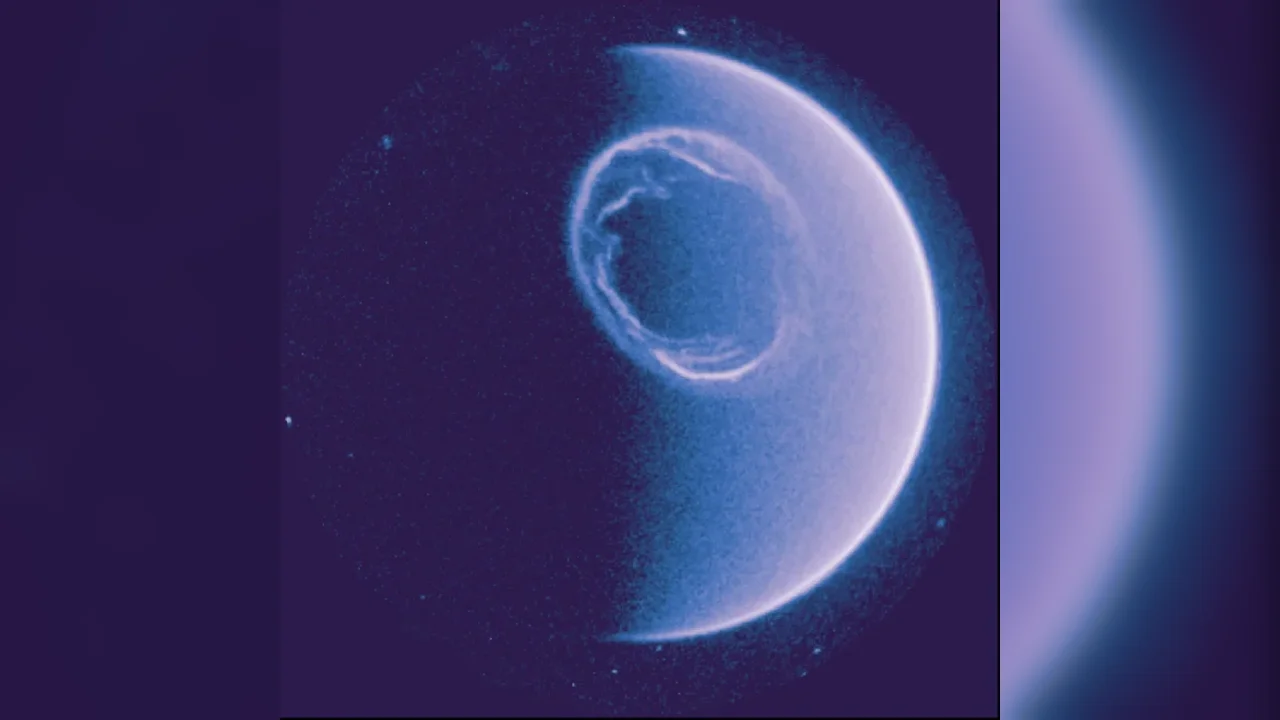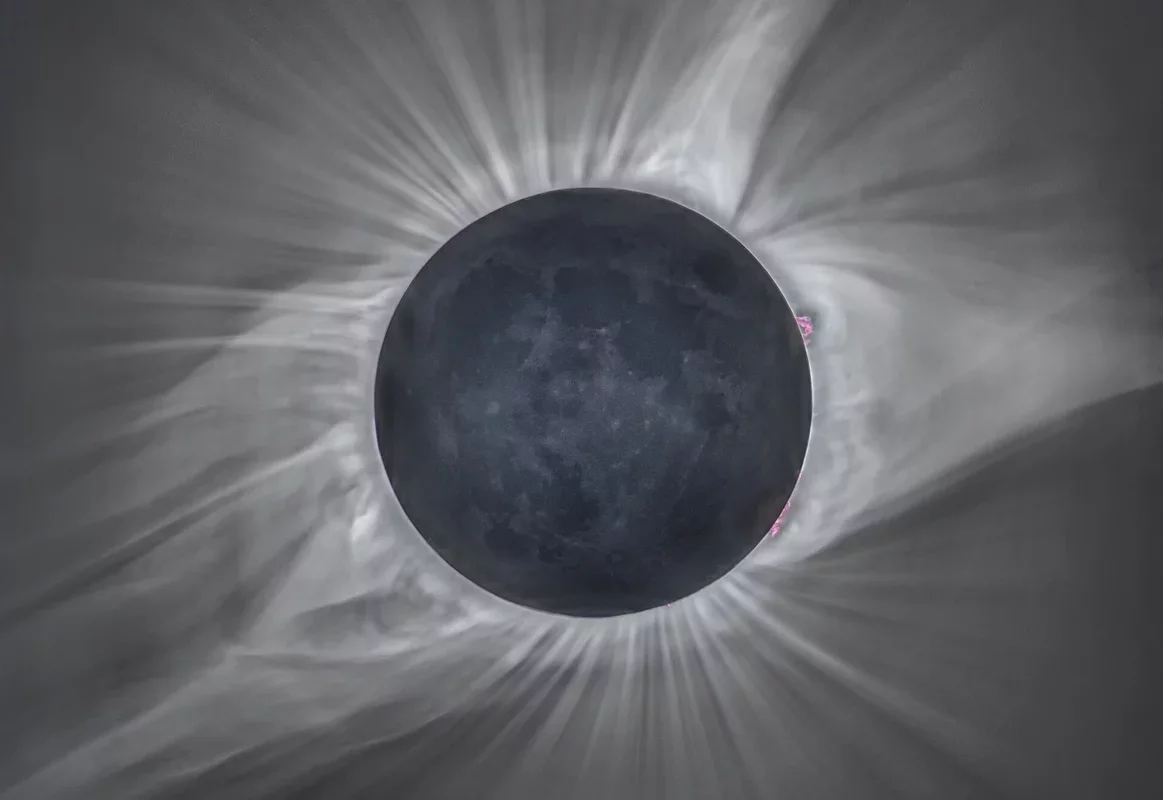
In December 2032, the Moon could become the site of an extraordinary event as a 60-meter-wide asteroid, designated 2024 YR4, has a 4.3% chance of colliding with its surface. While this may seem like a small probability, in the vastness of space, it is significant enough to warrant attention and discussion about whether to intervene or observe.
NASA has confirmed that there is no threat to Earth from this asteroid. Observations, including infrared data from the James Webb Space Telescope, have refined the asteroid's characteristics and trajectory, indicating it is moving closer to the Moon. This data has also improved understanding of its orbital path by nearly 20%, slightly increasing the chances of a lunar impact.
If the asteroid does collide with the Moon, it would be the most powerful impact recorded with contemporary instruments.
A Unique Scientific Opportunity
Asteroids frequently strike the Moon, but the scale and timing of 2024 YR4 make it particularly noteworthy. Traveling at approximately 14 kilometers per second, the asteroid could unleash energy equivalent to around 6.5 million tons of TNT, creating a crater potentially one kilometer wide and hundreds of meters deep, depending on various factors.
Previous impacts have been much smaller; for instance, a meteoroid weighing a few hundred kilograms struck the Moon in 2013, resulting in a brief flash and a modest crater. The impact from 2024 YR4 would be exponentially more powerful.
Such impacts are vital for understanding planetary and lunar evolution, yet most theoretical models rely on simulations. This event would provide a rare opportunity to observe a real-time collision and test existing hypotheses.
A recent study led by researchers from Tsinghua University has modeled the entire sequence of the impact, detailing how scientists can observe the event through its light, heat, ground vibrations, and debris.
The impact is expected to produce a bright optical flash, followed by a glow lasting several minutes, visible from telescopes in the Pacific region before dawn. The newly formed crater could reach temperatures around 2,000 Kelvin, allowing infrared telescopes to track heat retention and release, offering insights into lunar geology.
Seismic waves generated by the impact could be equivalent to a magnitude 5 moonquake, surpassing any recorded during the Apollo missions. This would enable researchers to use the vibrations to probe the Moon's interior, a rare opportunity for planetary scientists.
Potential Risks and Considerations
While the asteroid poses no threat to Earth, some debris from the impact could escape the Moon's gravity. A small fraction of this material might enter the space between Earth and the Moon, potentially endangering satellites.
According to astronomer Paul Wiegert, while the impact poses no risk to Earth's surface, it could threaten lunar equipment and satellites in orbit. Fragments traveling at 10 kilometers per second could damage spacecraft and lead to cascading collisions among satellites, known as Kessler Syndrome, which could disrupt navigation and communication systems.
Some debris may eventually reach Earth's atmosphere, with most pieces burning up, while larger fragments could survive as lunar meteorites, providing geologists with fresh samples of lunar material.
Should We Intervene?
Space agencies have shown they can alter an asteroid's path, and a small deflection mission could divert 2024 YR4 away from the Moon. While this would mitigate risks to satellites, it would also eliminate the chance to witness a significant scientific event.
As planetary scientist Richard Binzel states, the key lies in obtaining more precise measurements to determine whether the asteroid will hit or miss. Fortunately, there is time to gather more data, as the asteroid will return to visibility in 2028, allowing for further trajectory refinement.