A new MIT-led analysis of gravitational-wave data suggests that about 14% of merging black-hole pairs may include at least one black hole formed in an earlier collision. These so-called second-generation objects appear to grow through repeated mergers rather than a single stellar collapse.
The research team examined 155 black-hole mergers recorded by the LIGO, Virgo, and KAGRA observatories. By studying spin and orbital behavior in the signals, the scientists found a consistent pattern: black holes created through previous mergers tend to spin faster and show a distinctive wobble before coalescing.
A cosmic family tree in motion
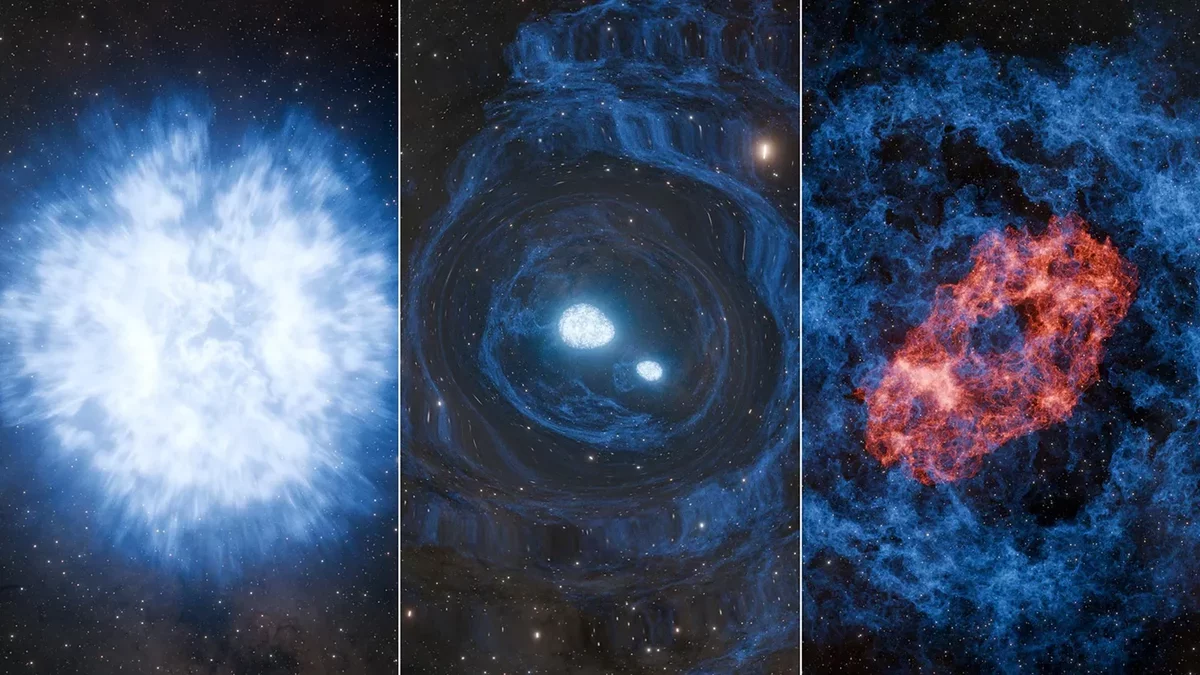
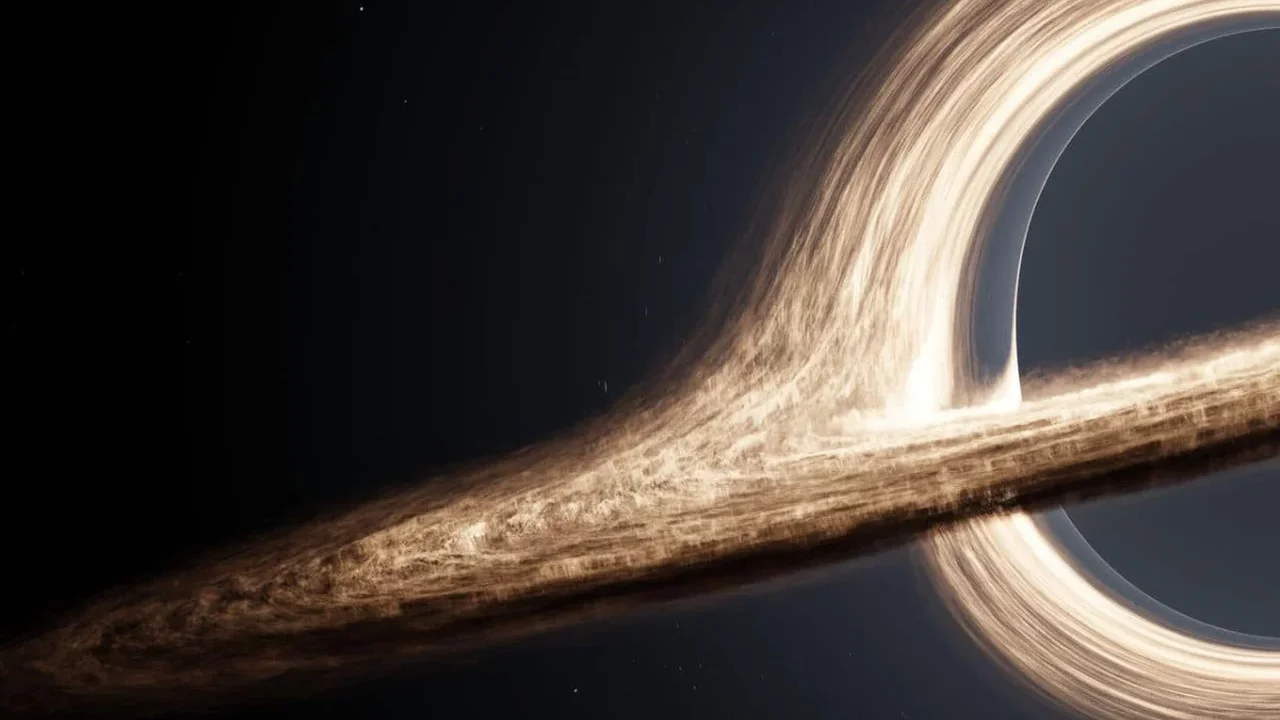
According to the study, first-generation black holes usually form when massive stars collapse. But in dense environments, a black hole can merge, survive the recoil, and later collide again. That process, known as a hierarchical merger, may help explain unusually massive black holes that are difficult to produce through stellar collapse alone.
The researchers also identified a mass transition point. Below roughly 46 solar masses, the population shows a mixed pattern. Above that level, the data strongly favors hierarchical mergers, suggesting that repeated collisions become the dominant growth path for the heaviest systems.
The method relies on subtle features in gravitational-wave signals, especially how the black holes' spins align with their orbit. Faster spin and precession create a measurable signature that can reveal whether a black hole has a past.
The findings offer one of the clearest statistical views yet of black holes building themselves through repeated encounters in crowded regions such as star clusters and galactic centers. As gravitational-wave astronomy advances, it may soon map the hidden lineage of these extreme objects with even greater precision, opening a new era in our understanding of cosmic evolution.