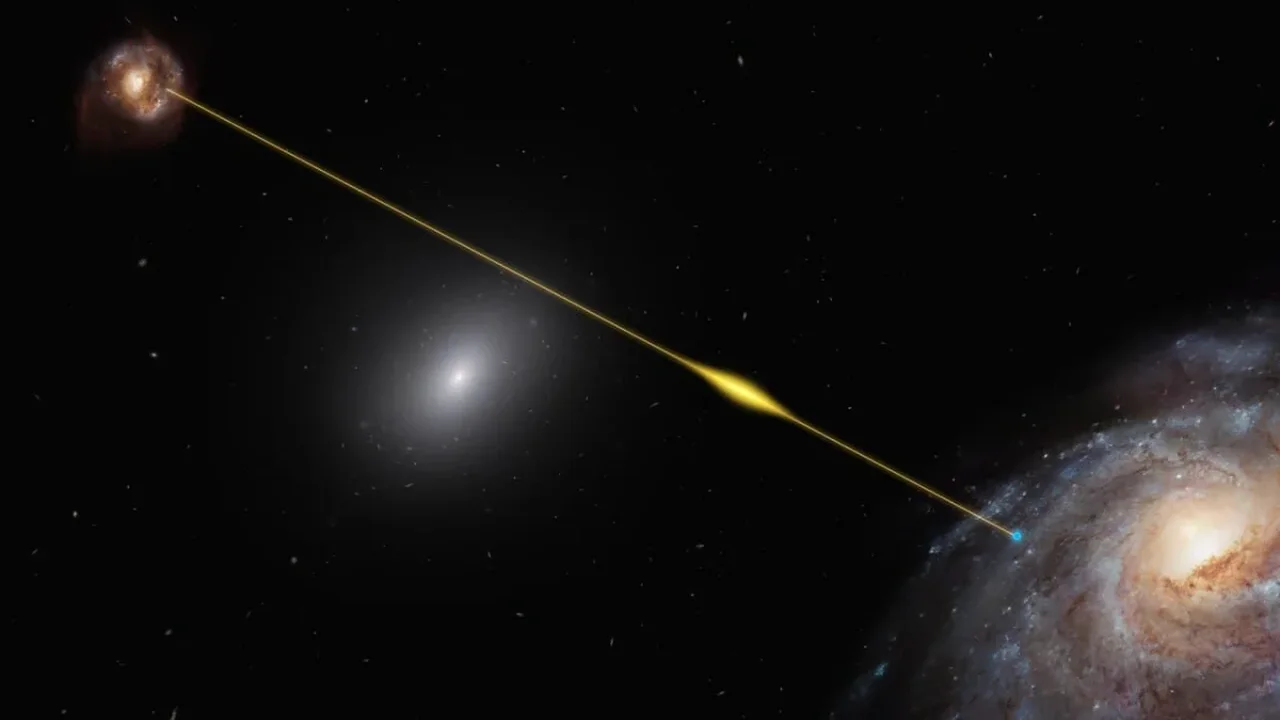
Scientists have confirmed only one clear instance of a kilonova, marked by the 2017 event GW170817, which resulted from the merger of two neutron stars. This collision produced both gravitational waves and light, enabling researchers to observe it through multiple channels. The gravitational waves were detected by the National Science Foundation's Laser Interferometer Gravitational-Wave Observatory (LIGO) and its European counterpart, Virgo, while telescopes worldwide captured the light from this groundbreaking explosion.
A New Cosmic Phenomenon Emerges
Astronomers are now investigating what could be a second kilonova, designated AT2025ulz, though the situation is intricate. This candidate event appears to be associated with a supernova that occurred just hours prior, potentially obscuring critical details and complicating interpretation.
"Initially, for about three days, the eruption resembled the first kilonova from 2017," explains Mansi Kasliwal, a professor of astronomy at Caltech and director of the Palomar Observatory. "While many lost interest as it began to resemble a supernova, we remained committed to studying it."
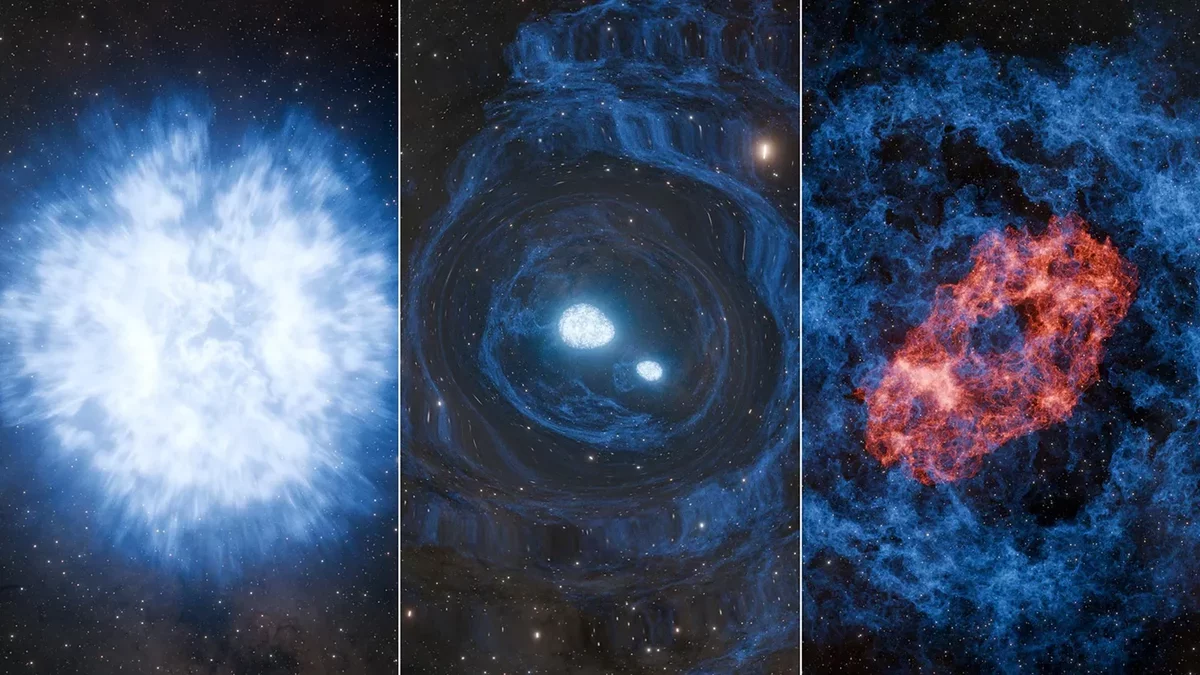
Kasliwal's research, published in The Astrophysical Journal Letters, suggests that this peculiar event might signify a new phenomenon: a superkilonova, which is a kilonova triggered by a supernova. Although this concept has been theorized, it has never been observed until now.
Gravitational Waves Indicate Unusual Activity
The first indication of this rare event emerged on August 18, 2025, when LIGO and Virgo detected a gravitational-wave signal. An alert was promptly dispatched to astronomers globally, signifying that the signal likely originated from two merging objects, one of which appeared to be unusually small.
"While we are not entirely confident, this event captured our attention as a compelling candidate," remarked David Reitze, executive director of LIGO and a research professor at Caltech. "Preliminary analysis indicates that at least one of the colliding objects has a mass smaller than a typical neutron star."
Shortly after, the Zwicky Transient Facility (ZTF) at Palomar Observatory identified a fading red source approximately 1.3 billion light-years away, later designated AT2025ulz.
Evolution of the Signal
Observations from around a dozen telescopes, including the W. M. Keck Observatory in Hawaiʻi and the Fraunhofer telescope in Germany, began almost immediately. Initial findings indicated the object was rapidly fading and glowing red, akin to the 2017 kilonova, where heavy elements like gold absorbed blue light, allowing red wavelengths to pass through.
However, AT2025ulz's characteristics evolved. Days later, it brightened again, shifting to bluer light and revealing hydrogen in its spectra, traits typical of a supernova rather than a kilonova. This led some astronomers to conclude it was likely an ordinary supernova.
Hints of a Superkilonova
Kasliwal and her team observed that AT2025ulz did not conform neatly to either a classic kilonova or a typical supernova. The gravitational-wave data suggested that at least one merging object had a mass smaller than the Sun, hinting at the involvement of two unusually small neutron stars.
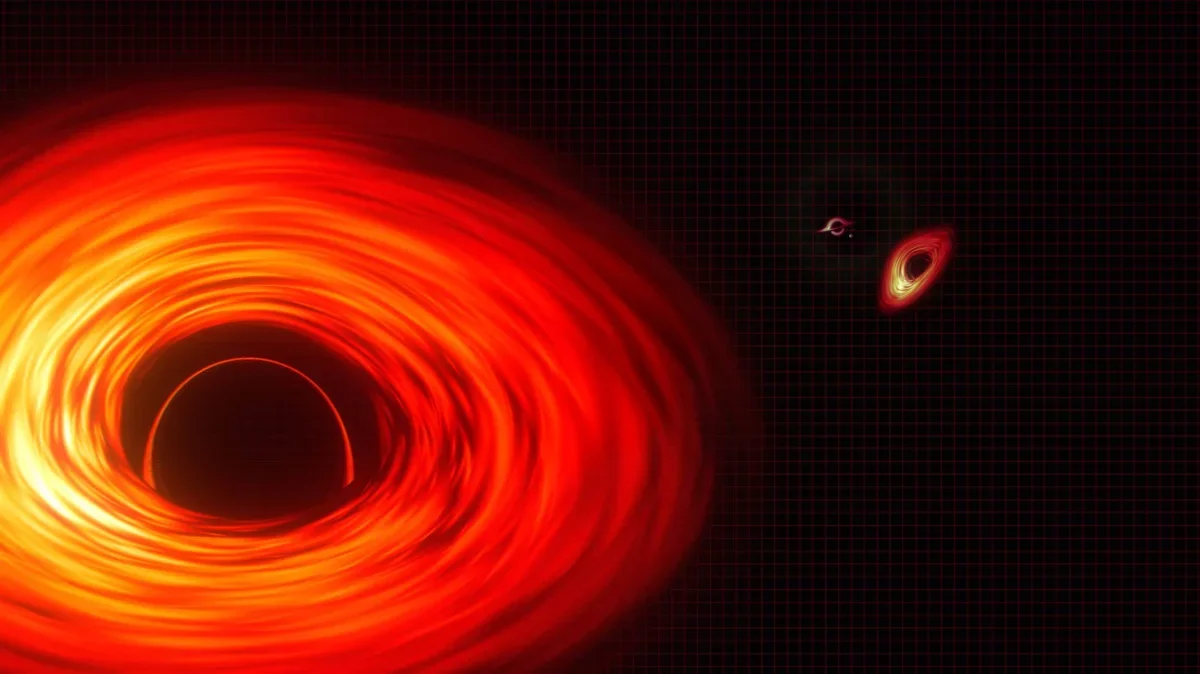
These dense remnants are formed after massive stars explode and are about 25 kilometers in diameter, with masses ranging from 1.2 to three times that of our Sun. Theories suggest that smaller neutron stars could exist, but none have been directly observed.
Future Implications
Although the findings are intriguing, researchers stress that further evidence is needed to confirm the nature of AT2025ulz. Future observations may reveal more about kilonovae, which could redefine our understanding of cosmic explosions. As new technologies and telescopes come online, including NASA's upcoming missions, the potential for groundbreaking discoveries in astrophysics continues to grow.