A new exhibition at David Nolan Gallery in Manhattan revisits the legacy of Brazilian artist Chico da Silva through a broader Amazonian lens. Curated by Simon Watson, the show places da Silva's work alongside pieces by Joseca Yanomami and Kuenan Mayu, creating a dialogue across generations, communities, and artistic languages.
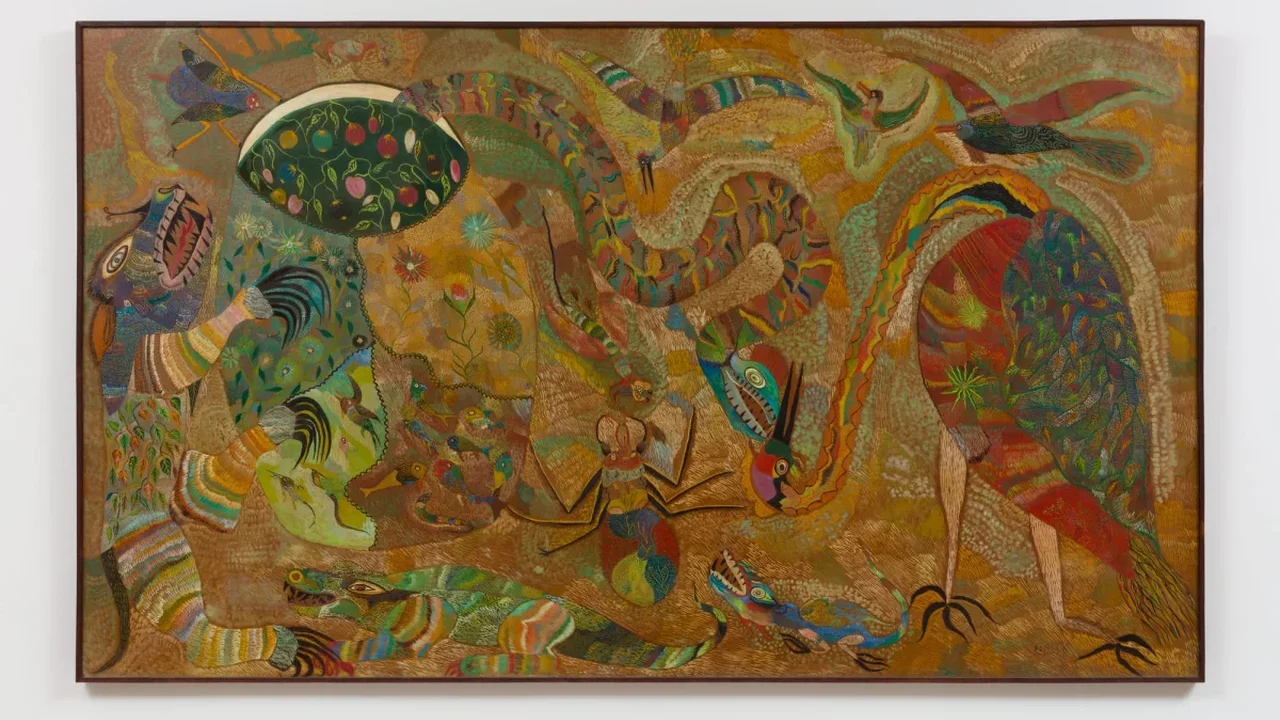
Da Silva, born in the Amazon in 1910 and later based in Fortaleza, became known for vivid murals and paintings filled with mythic creatures, dense patterns, and tropical imagination. His early visibility grew after Swiss critic Jean-Pierre Chabloz introduced his work to wider audiences, and his art later reached the Brazilian pavilion at the 1966 Venice Biennale.
The exhibition brings together more than 50 works, with each artist occupying a separate gallery space. Da Silva's canvases and paper works reveal a vivid ecosystem of serpents, birds, and fantastical beings. Yanomami's compositions, built with graphite, colored pencil, marker, and acrylic, reflect a world shaped by spirit and landscape. Mayu, one of the youngest artists in the show, uses natural pigments and tururi bark to create scenes rooted in Indigenous knowledge and material tradition.
Rather than presenting the artist as a lone genius, the exhibition highlights shared heritage, collective memory, and the living force of Amazonian visual culture. It also underscores how Indigenous art continues to expand contemporary conversations about identity, ecology, and artistic authorship. In that sense, the show points toward a future where cultural narratives are seen through wider, more connected perspectives.