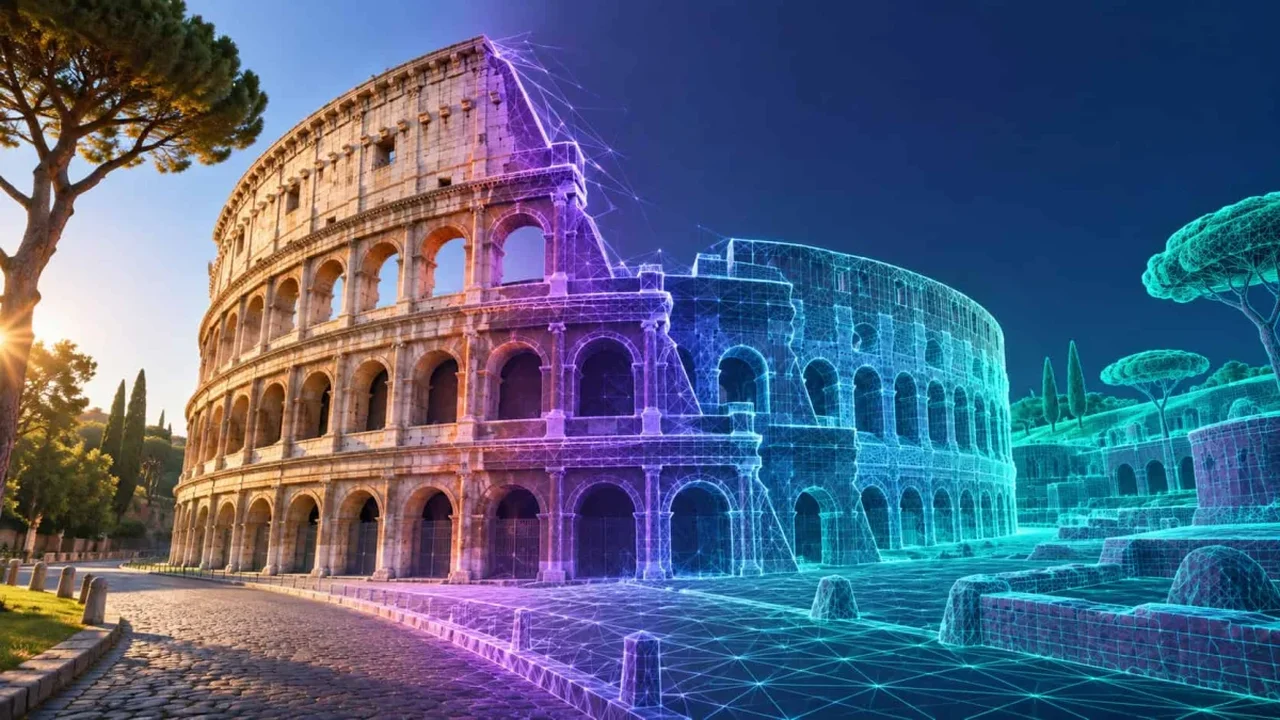
A single photograph may soon be enough to create a navigable 3D environment. Researchers from Applied Intuition and three US universities have developed an AI system that builds digital scenes ranging from furnished rooms to large outdoor spaces.
Unlike a flat image, the result is a 3D mesh that can be viewed from different angles. The system estimates the position and depth of visible surfaces, then divides the scene into overlapping sections. It uses smaller sections for nearby details and larger ones for distant structures, helping it manage complex environments efficiently.
Filling in the unseen
The AI distinguishes between visible surfaces, open space and areas hidden from the camera. It combines the information in the photograph with patterns learned during training to estimate what lies behind obstacles such as trees or walls. Because those areas are not visible, the generated details are informed guesses rather than verified representations.
To improve its understanding of outdoor environments, the team trained the system with 4,000 AI-generated virtual scenes. In one test, it reconstructed a landscape extending 280 metres in about five minutes, using 15 sections. The researchers also reported lower geometric error than seven competing methods in their evaluations.
The approach is still developing. Its models can lack realistic textures, contain gaps or misrepresent distances, and a single image cannot confirm the true shape of hidden spaces. It is therefore not yet a precise digital twin of a landmark such as the Colosseum.
From photographs to virtual worlds
Potential uses include creating environments for video games and building virtual spaces where robots can be trained. By generating scene geometry directly, the system offers a way to turn ordinary images into interactive spaces without first capturing every corner.
As reconstruction improves, this kind of AI could make creating useful 3D environments faster and more accessible, while human verification remains important wherever accuracy matters.