Recent research, published in MNRAS, reveals the discovery of over 100 new planets through an extensive analysis of data from more than 2.2 million stars collected by the TESS mission during its initial four years. The study specifically targeted planets that orbit closely to their stars, completing their orbits in less than 16 days, resulting in one of the most accurate assessments of the prevalence of these short-period planets.
Dr. Marina Lafarga Magro, a Postdoctoral Researcher at the University of Warwick and the study's lead author, stated, "With our innovative RAVEN pipeline, we validated 118 new planets and identified over 2,000 high-quality candidates, nearly 1,000 of which are entirely new. This represents one of the most thoroughly characterized collections of close-in planets, paving the way for future investigations."
Identification of Unique Planet Types
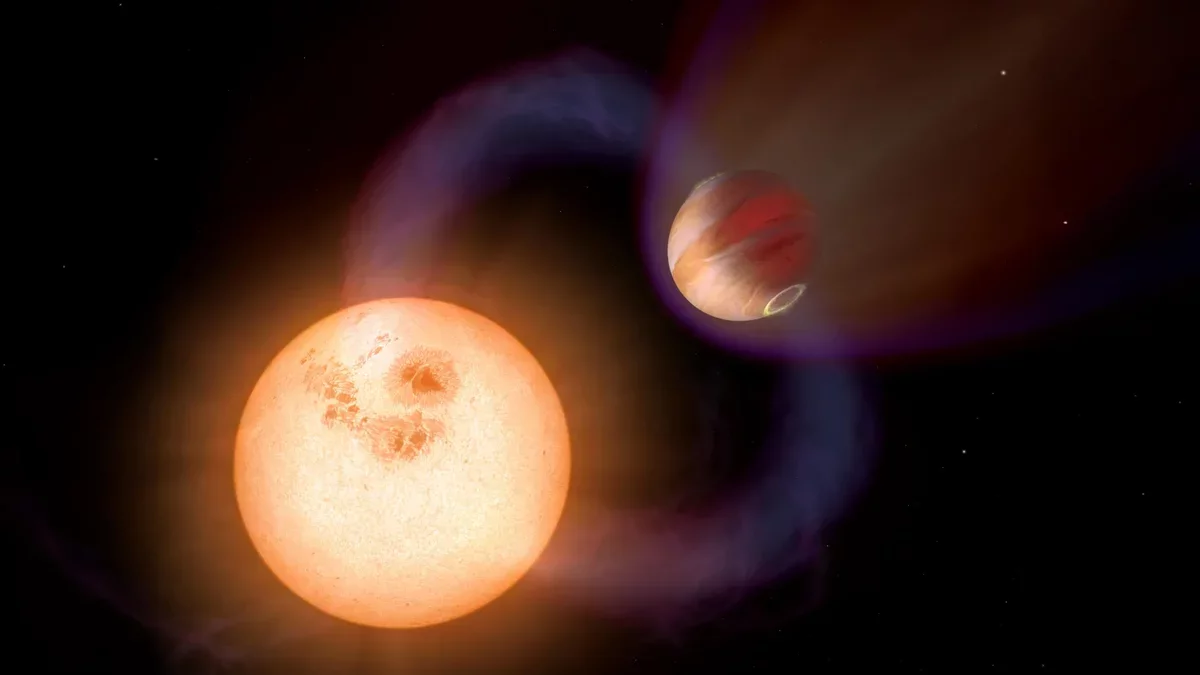
The confirmed planets include several intriguing categories. Some are ultra-short-period planets that orbit their stars in under 24 hours, while others belong to the 'Neptunian desert,' an area where current theories suggest few planets should exist. The study also uncovered tightly clustered multi-planet systems, including previously unknown pairs orbiting the same star.
Enhancements in Planet Detection with RAVEN
Modern planet-hunting initiatives often detect thousands of potential planets, yet distinguishing genuine signals from false ones remains a challenge. Many false signals can resemble planets, such as those caused by eclipsing binary stars.
Dr. Andreas Hadjigeorghiou from Warwick, who spearheaded the development of RAVEN, explained, "The challenge is to determine whether the dimming is due to a planet orbiting a star or another phenomenon like eclipsing binaries. RAVEN addresses this issue by utilizing a meticulously crafted dataset of hundreds of thousands of simulated planets and astrophysical events that can mimic planets. Our machine learning models identify patterns in the data to ascertain the nature of the detected events, a task where AI excels."
Additionally, RAVEN streamlines the entire process from signal detection to statistical validation, offering an advantage over existing tools that focus on specific workflow segments.
Dr. David Armstrong, an Associate Professor at Warwick and a senior co-author of the RAVEN studies, emphasized, "RAVEN enables us to analyze vast datasets with consistency and objectivity. The pipeline's rigorous validation makes it a reliable tool for mapping the prevalence of various types of planets around Sun-like stars."
Assessing Planetary Commonality
This carefully validated dataset allowed researchers to explore broader patterns beyond individual discoveries. In a related MNRAS study, they quantified the occurrence of close-in planets around Sun-like stars, revealing that approximately 9-10% host such planets. This aligns with prior findings from NASA's Kepler mission, although the new analysis significantly reduces uncertainties.
The team also provided the first direct measurement of the rarity of 'Neptunian desert' planets, discovering they exist around only 0.08% of Sun-like stars. "For the first time, we can accurately quantify the scarcity of this 'desert,'" remarked Dr. Kaiming Cui, a Postdoctoral Researcher at Warwick and first author of the population study.
A New Era in Planet Discovery
These studies underscore how advancements in artificial intelligence are reshaping the field of astronomy. By leveraging extensive datasets alongside machine learning, researchers can uncover new planets and enhance their detection methodologies through real-world data challenges. The team has also made interactive catalogs and tools available for other scientists to explore these findings and identify promising targets for future observations.
RAVEN serves as an automated system designed to turn vast amounts of space telescope data into reliable discoveries, filtering out false signals and confirming the most promising candidates. This innovative approach not only accelerates the discovery of new worlds but also yields cleaner datasets for answering broader questions about planetary prevalence across the galaxy.