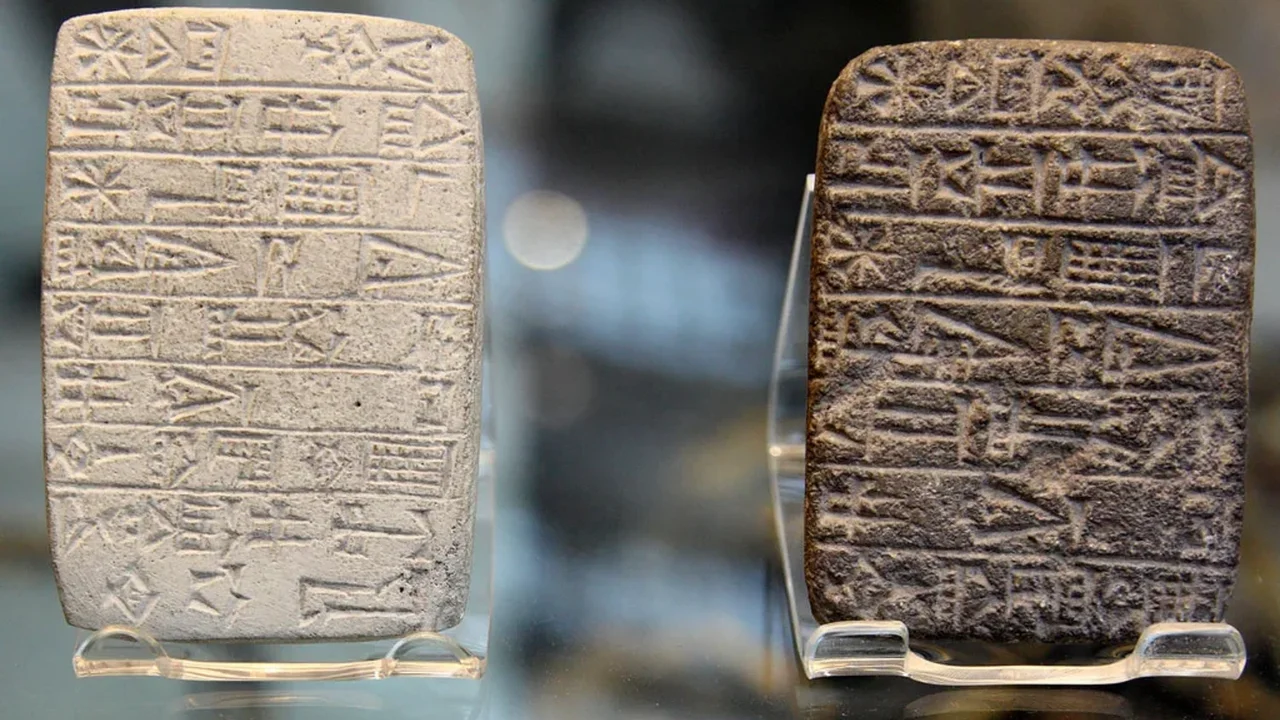
Artificial intelligence is opening a new chapter in the study of ancient writing. Researchers have developed a neural network that can translate digitized Akkadian cuneiform into English, helping scholars work through texts that date back more than 5,000 years.
A breakthrough for ancient languages
Cuneiform is among the earliest writing systems ever used, and it appeared in multiple languages across Mesopotamia. Akkadian, one of the oldest Semitic languages, was written in cuneiform on clay tablets and used for administration, literature, and science. Sumerian, another foundational language of the ancient world, also relied on the same script.
In the new study, Shai Gordin and colleagues at Ariel University trained two AI models: one worked from transliterated Akkadian, while the other translated directly from Unicode cuneiform signs into English. The transliteration-based model performed best, reaching a BLEU4 score of 37.47, a strong result for such a complex historical language task.
How the system helps researchers
The model works especially well with short and medium-length sentences. Like many language systems, it can struggle with longer passages and may occasionally produce fluent but inaccurate output. Even so, it offers a valuable first pass for scholars, students, and digital archives handling large tablet collections.
Since the original research, AI tools have expanded beyond translation. New systems are being used to identify signs, match broken fragments, and reconstruct damaged passages. Projects such as SumTablets and TabletCraft show how machine learning can support both academic research and public engagement with ancient texts.
By combining AI speed with human expertise, this field is turning scattered clay fragments into readable history, and it may soon make more of humanity's earliest records accessible to the world.