As the Met Gala approaches in less than three weeks, a wave of activism has emerged across New York City. Posters advocating for a boycott of the 2026 event, led by Amazon mogul Jeff Bezos and Lauren Sánchez, have been prominently displayed throughout the city. This year's gala has sparked particular scrutiny due to its high-profile sponsors and the ongoing debates surrounding their business practices.
The posters criticize Amazon for its treatment of warehouse and delivery workers, as well as its connections to Immigration and Customs Enforcement (ICE) through its cloud computing service, Amazon Web Services (AWS). The campaign, spearheaded by the British activist group Everyone Hates Elon, has made these designs available for public use, encouraging widespread dissemination of their message. In just one week, the group successfully raised over $10,000 to fund their efforts to "expose and embarrass Jeff Bezos" in the lead-up to the gala.
One spokesperson for the organization stated, "While critical global issues persist, it is troubling that major institutions like Vogue and the Met Museum choose to honor individuals tied to controversial practices." The campaign has previously targeted other high-profile figures, including Elon Musk and Mark Zuckerberg, advocating for increased taxation on the wealthy.
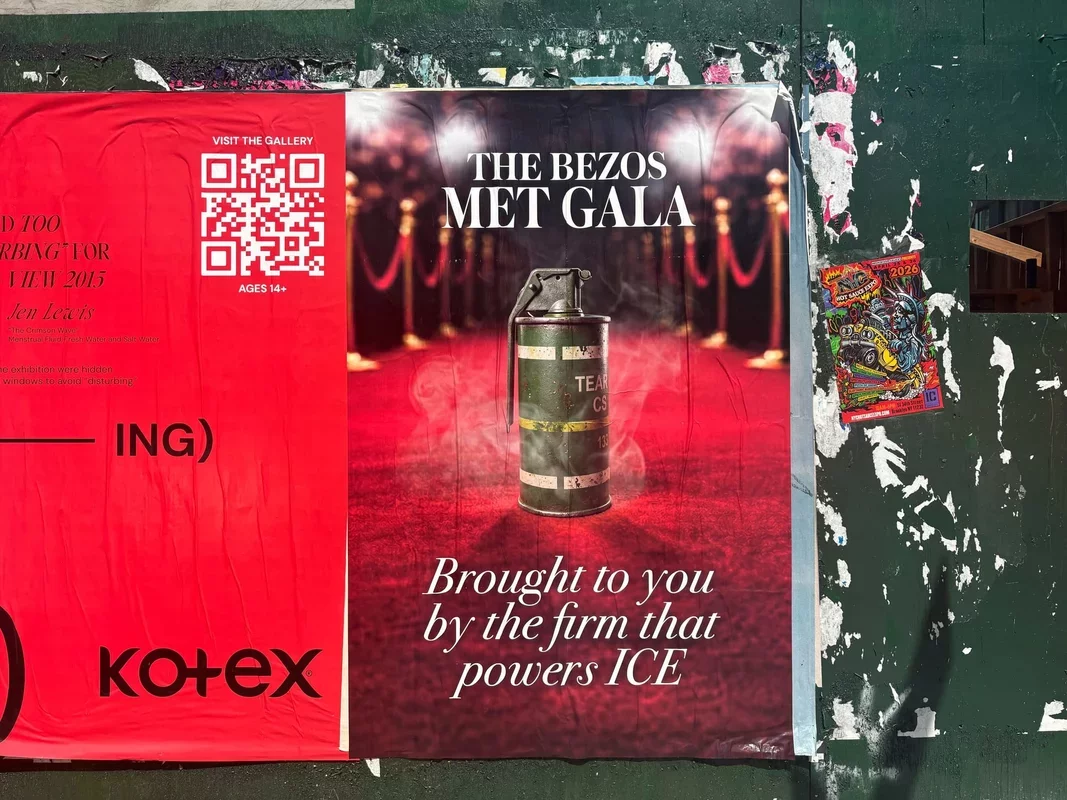
The posters feature striking imagery, including a red carpet juxtaposed with a plastic water bottle or a tear gas canister. This symbolism highlights the serious concerns regarding the working conditions of Amazon delivery drivers, who have reportedly faced extreme pressures to meet delivery quotas, sometimes resorting to using bottles as makeshift toilets.
In addition to the focus on Bezos, the imagery also references the troubling relationship between Amazon's cloud services and ICE, which utilizes AWS for its data management in immigration enforcement. The tagline "brought to you by the firm that powers ICE" serves as a stark reminder of the ethical implications of corporate partnerships.
While the effectiveness of the boycott remains to be seen, past actions during the Met Gala have demonstrated that public sentiment can influence the event. In 2024, protests against the gala led to significant discussions about celebrity influence and social responsibility.
Critics of the boycott also emphasize that in order for the movement to resonate, it must extend beyond the gala to encompass a broader call to action against Amazon itself. This development reflects a growing trend of activism aimed at holding corporations accountable for their societal impact.
As the landscape of corporate responsibility continues to evolve, the outcome of this campaign could signal a shift in how influential events like the Met Gala are perceived in relation to social justice issues. The future may see an increasing convergence of culture and activism, reshaping public events to align with ethical considerations.