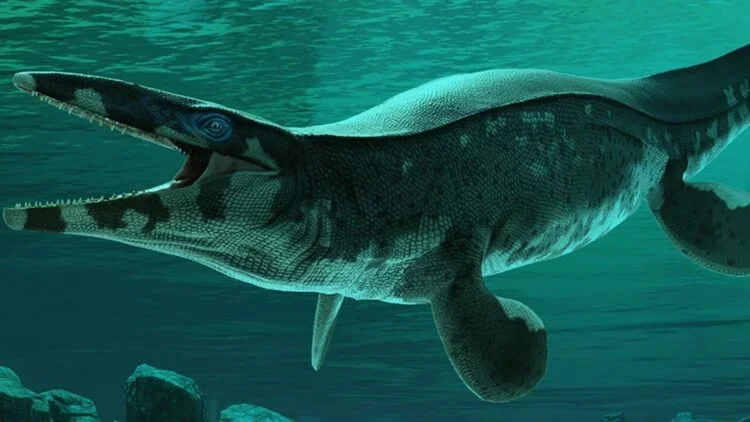
Scientists have unveiled a remarkable discovery in paleontology: a new marine reptile named Tylosaurus rex, or "T. rex," which ruled the ancient seas approximately 80 million years ago in what is now Texas.
This fascinating creature is not a dinosaur but a member of the mosasaur family, known for its impressive size and predatory nature. The identification of T. rex came not from new excavations, but through a detailed reevaluation of existing fossils that had been misclassified for years. Researchers found that these specimens exhibited distinctive characteristics, including larger size, serrated teeth, and evidence of aggressive interactions among themselves.
The Discovery Journey
Previously, many fossils from Texas were attributed to Tylosaurus proriger, a more commonly recognized species. However, Amelia Zietlow, a researcher at the American Museum of Natural History, noticed inconsistencies in the fossils during her studies. Upon closer examination, she and her team determined that the Texas specimens were not merely larger adults of the same species, but represented a distinct species altogether.
Through comparisons with the holotype of T. proriger at Harvard and other specimens, they confirmed that the Texas fossils were indeed different, leading to the formal naming of Tylosaurus rex.
Characteristics of the Sea Tyrant
The name "T. rex" pays homage to a historical hypothesis by Texas paleontologist John Thurmond, who suggested a separate species for these giant tylosaurs in the 1960s, informally dubbing them "Tylosaurus thalassotyrannus," or "sea tyrant." With lengths reaching up to 13.2 meters (43 feet), T. rex rivals the famous land predator, the Tyrannosaurus rex.
What sets T. rex apart are its finely serrated teeth and robust jaw structure, indicating a powerful bite. Researchers suggest that this creature was not only large but also exhibited aggressive behavior, as evidenced by fossils showing injuries likely inflicted by other Tylosaurus of similar size.
Revising the Mosasaur Family Tree
The study of Tylosaurus rex also prompts a reevaluation of how mosasaurs have been classified and studied. By incorporating new anatomical traits and refining existing classifications, researchers aim to enhance our understanding of these ancient marine reptiles. This discovery emphasizes the importance of revisiting long-held assumptions in paleontology.
With the introduction of Tylosaurus rex, Texas adds a significant chapter to its prehistoric narrative, showcasing a formidable marine predator that once dominated its aquatic environment.
The findings were published in the Bulletin of the American Museum of Natural History, paving the way for future research that may reshape our understanding of marine life in the Cretaceous period.