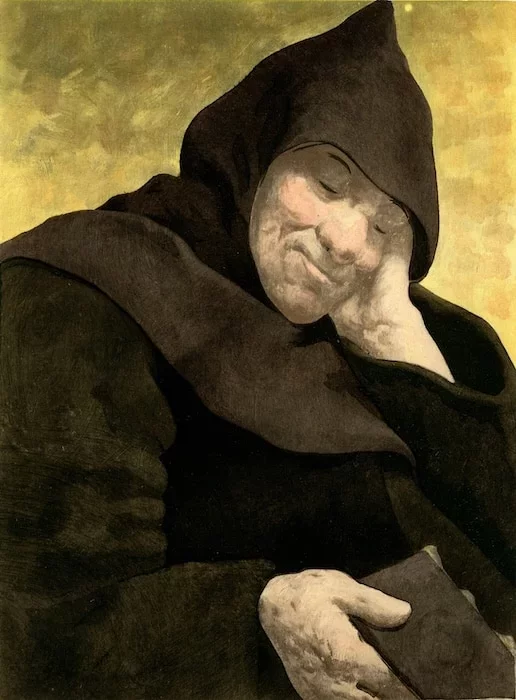
Thomas Merton, a renowned Trappist monk and influential spiritual writer of the 20th century, dedicated his life to exploring solitude and the depths of the inner self. His acclaimed autobiography, The Seven Storey Mountain, chronicles his transformative journey from a restless youth to a committed Catholic.
In revisiting Merton's work, I discovered a practical technique he employed to achieve restful sleep--a method that can benefit anyone struggling with insomnia.
Thomas Merton's Sleep Technique
During his college years at Columbia University in the 1930s, Merton faced the common challenges of self-discovery. He explored various philosophies, including Eastern thought, which ultimately led him to a simple yet effective method for falling asleep.
Merton describes this technique in his autobiography: you lie flat on your back without a pillow, arms at your sides and legs extended. As you relax your body, you mentally repeat, "Now I have no feet, now I have no legs," visualizing each body part fading away into air. This process continues upward, creating a sensation of lightness until you gently drift into sleep.
Merton found this method effective, often succumbing to sleep before reaching his head. He humorously noted that if he remained awake until that point, the reality of his body would return with frustrating vigor.
The Science Behind the Technique
Merton theorized that this approach worked through a combination of auto-suggestion and muscle relaxation. When the body is relaxed, sleep often follows. The mind, however, can be a barrier to rest, fixating on various thoughts and worries. Merton's technique redirects this mental energy by providing a repetitive task that occupies the mind without stimulating it excessively.
Variations of Merton's method exist, such as a technique from childhood where one imagines each body part becoming heavier, promoting relaxation through a different lens. Another approach, used by WWII Naval aviators, involves relaxing the body starting from the head and moving downward, ensuring a comprehensive release of tension.
Regardless of the method chosen, the goal remains the same: achieving a tranquil state conducive to sleep. With a little experimentation, individuals can find the technique that resonates best with them, leading to serene nights reminiscent of a monk's peaceful slumber.
As we continue to explore the intersection of mindfulness and modern living, techniques like Merton's remind us of the value of simple practices in enhancing our well-being and fostering restful sleep.