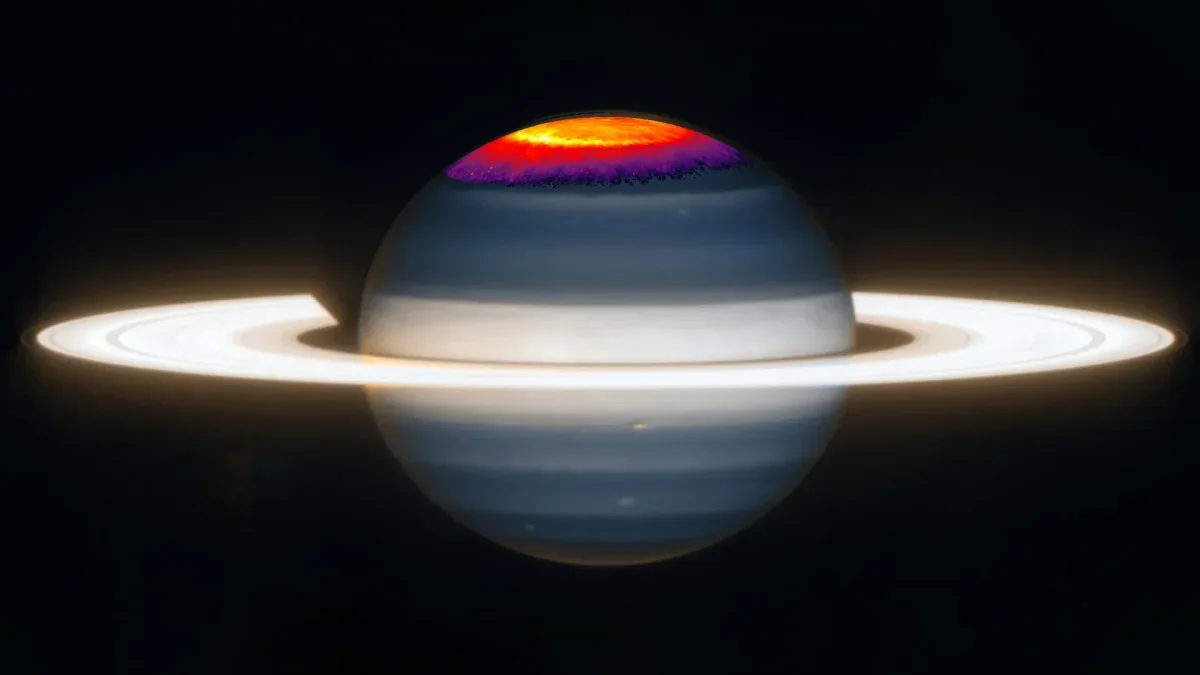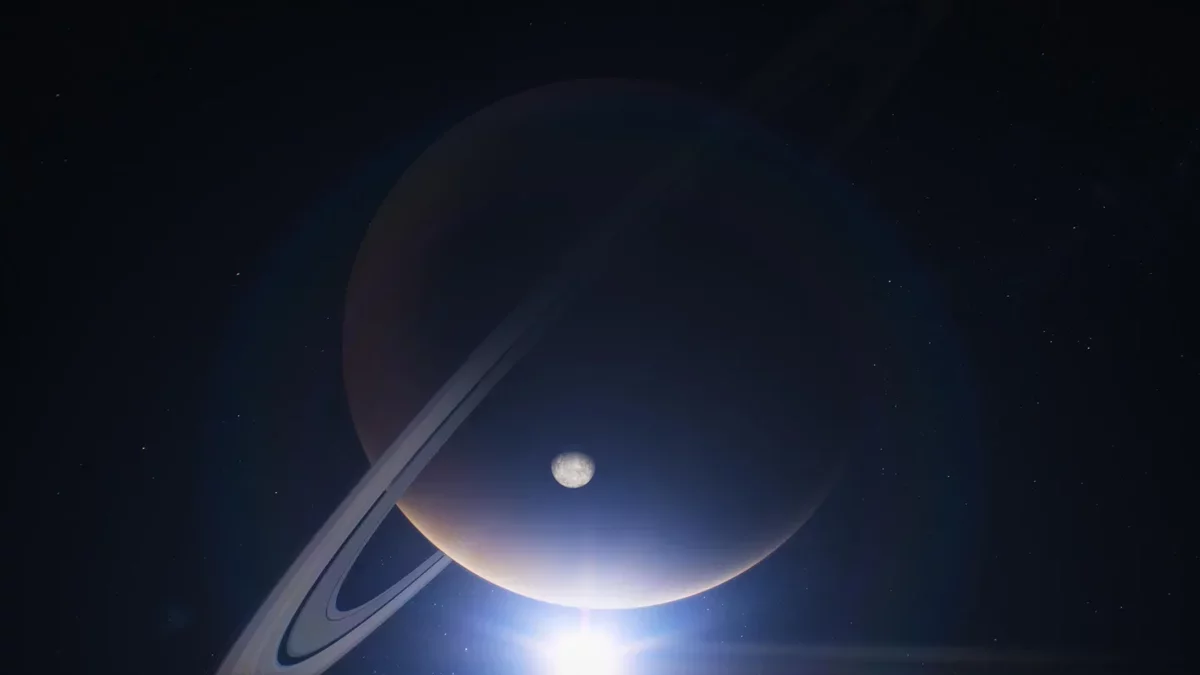
In the twilight of its mission, the Cassini spacecraft provided critical insights into Saturn's internal structure, revealing how mass is distributed within the planet. This internal configuration influences Saturn's gradual wobble in space, known as precession. For years, scientists theorized that Saturn's precession was in sync with Neptune's, leading to a gradual tilt that made Saturn's rings more prominent from our vantage point on Earth.
However, Cassini's final data indicated that Saturn's mass is more centrally concentrated than previously thought, altering its precession rate and disrupting the alignment with Neptune. To explain this discrepancy, researchers from MIT and UC Berkeley proposed that Saturn may have once possessed an additional moon. They theorized that this moon was ejected following a close encounter with Titan and subsequently disintegrated, resulting in the formation of Saturn's iconic rings.
Hyperion's Role in the Mystery
The SETI Institute team explored the possibility of this hypothetical moon's proximity to Saturn and its potential to contribute to the rings. Their computer simulations suggested that rather than forming rings directly, the most likely scenario involved a collision between this extra moon and Titan.
A significant clue arises from Hyperion, one of Saturn's smaller, irregular moons, which exhibits a chaotic tumbling motion. Its orbit is gravitationally locked with Titan's, providing insights into their historical interactions.
According to researcher Ćuk, "Hyperion, being one of Saturn's smallest moons, has provided critical insights into the history of the system." The simulations indicated that when the extra moon became unstable, Hyperion was often lost, surviving only in rare instances. The Titan-Hyperion orbital lock is believed to be relatively recent, dating back a few hundred million years, coinciding with the disappearance of the extra moon. This suggests that Hyperion may have formed from debris resulting from the merger of Titan with another moon.
The Collision of Proto Moons
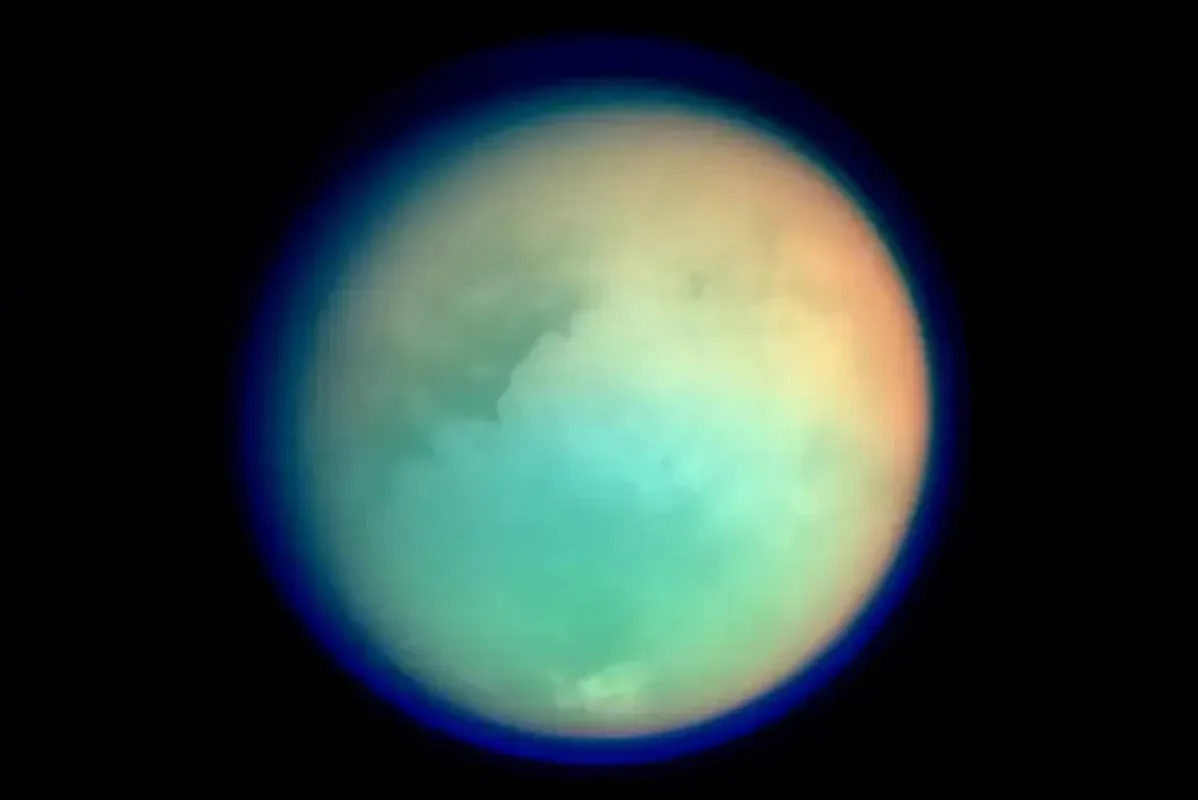
The current model posits that Titan emerged from the collision of two earlier moons: a large body termed "Proto-Titan" and a smaller counterpart known as "Proto-Hyperion." This merger could clarify why Titan has a relatively low number of impact craters, as such a significant collision would have resurfaced the moon.
Prior to the collision, Proto-Titan might have resembled Callisto, one of Jupiter's moons, characterized by heavy cratering and a lack of atmosphere. Additionally, Proto-Hyperion may have influenced the orbit of Saturn's distant moon Iapetus, potentially resolving another long-standing enigma of the Saturnian system.
Origins of Saturn's Rings
If Titan's formation resulted from a moon merger, the origins of Saturn's rings remain a question. Over a decade ago, SETI Institute researchers proposed that the rings originated from debris generated by collisions among medium-sized moons closer to Saturn. Subsequent simulations supported this idea, showing that while some debris would coalesce into moons, other materials would scatter inward to form the rings.
Recent findings suggest that Titan's merger may have triggered this sequence of events. Titan's elongated orbit can disrupt the orbits of inner moons, enhancing the likelihood of collisions. This process likely occurred after Titan's merger, aligning with estimates that Saturn's rings are approximately 100 million years old.
Future Insights from the Dragonfly Mission
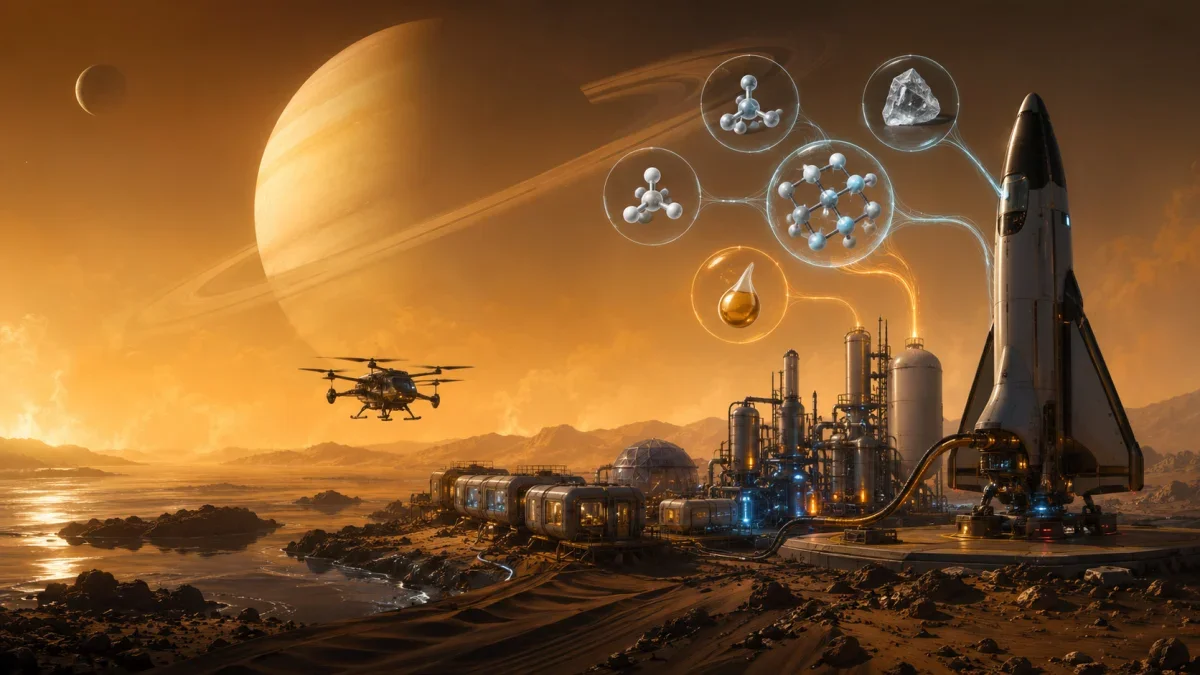
NASA's upcoming Dragonfly mission, set to reach Titan in 2034, aims to provide further evidence. This innovative octocopter will investigate Titan's surface geology and chemistry. Discovering signs of large-scale resurfacing or other indicators linked to a significant collision could bolster the theory of Titan's dramatic formation history.