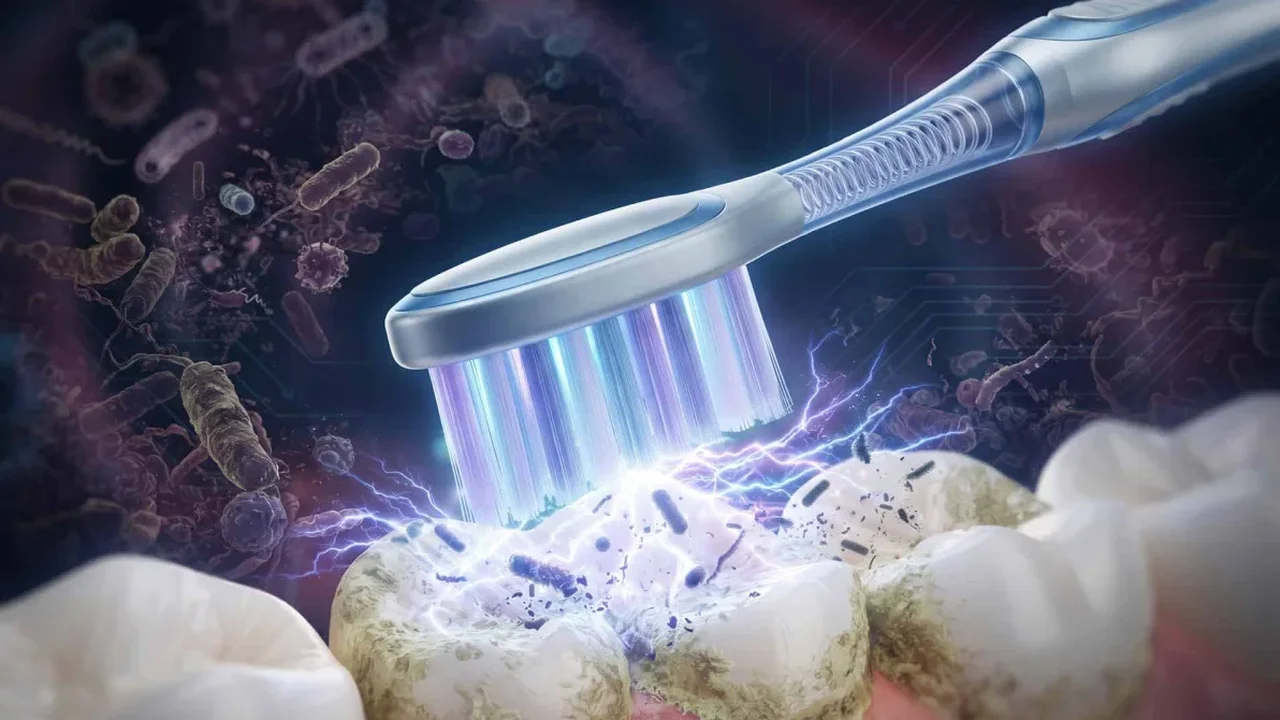
Researchers at Peking University have developed a manual toothbrush that converts the movement of brushing into electricity, using it to help disrupt bacteria linked to plaque.
How the brush works
The bristles contain polyvinylidene fluoride (PVDF), a material that generates electrical charges when bent. As the bristles flex against teeth, those charges interact with saliva and water to produce reactive molecules that can damage bacterial cells. The design needs no battery or external power source.
In laboratory tests, the PVDF bristles reduced levels of two oral bacteria more effectively than standard nylon bristles. In a separate test on biofilm grown on cow-tooth enamel, three minutes of brushing removed more than 99% of the film, compared with about 80% using conventional bristles.
Early human results
A three-month trial involving 115 adults found greater reductions in plaque, gum inflammation and bleeding among participants using the piezoelectric brushes than among those using ordinary nylon brushes. Plaque samples also showed shifts in the oral bacterial community.
The findings, published in Science Advances, are promising but preliminary. Larger, longer studies are needed to assess lasting benefits and compare the brush with modern electric and sonic models. The research points toward a future in which everyday oral-care tools could use movement itself to support more effective cleaning.