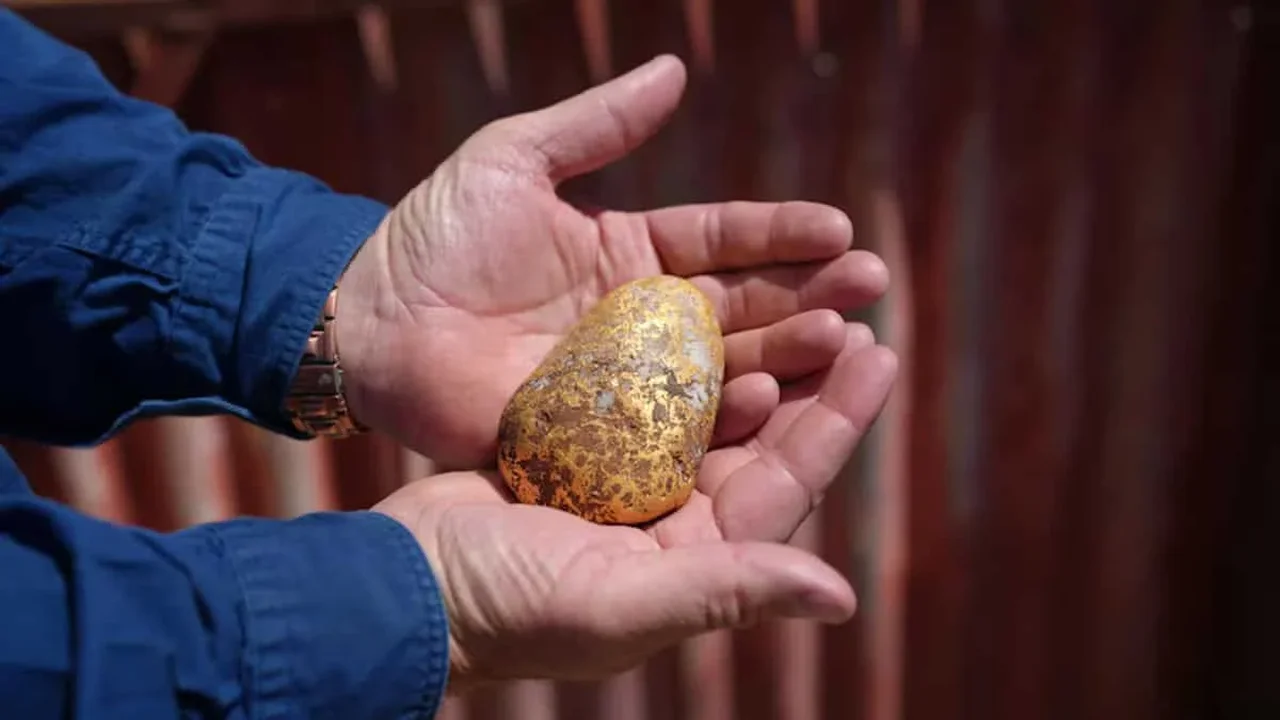
A faint signal from a metal detector led an anonymous prospector to a remarkable find near Tibooburra, in northwestern New South Wales. Discovered in October 2026, the nugget weighs 1.218 kilograms and contains about 940 grams of gold. Its finder named it the Tibooburra Spud; the gold alone is estimated to be worth around A$150,000.
How gold becomes concentrated in such a large mass is the subject of a review in Earth-Science Reviews, co-authored by Rory McNab of Monash University. Gold is usually dispersed in tiny amounts through rock, but geological processes can gather it over vast periods.
From underground fluids to nuggets
Heat and pressure drive hot fluids through cracks and faults in Earth's crust. These fluids can carry gold extracted from surrounding rocks. Changes in temperature, pressure or chemistry may then cause the metal to settle out. Earthquakes can reopen fractures, bringing in fresh gold-bearing fluids.
Quartz may also help. When stressed, it generates an electrical charge--a property known as piezoelectricity. A 2024 study in Nature Geoscience found that gold can accumulate on stressed quartz, with existing gold grains acting as sites for further deposits. Repeated geological activity may gradually build up larger concentrations.
Gold can also move through underground fluids as nanoparticles, which may cluster together. Other processes--including the movement of gold through mineral imperfections and its capture by molten metal droplets--can add to the concentration. The review suggests that multiple mechanisms may work together.
Over time, erosion can expose deposits and release gold into soil and river sediments. Gold resists chemical weathering, allowing it to remain after much of the surrounding rock breaks down. The specific geological history of the Tibooburra Spud is unknown, but its formation may have taken millions of years. Understanding these processes could help scientists better interpret how Earth's mineral resources form.