A groundbreaking advancement in the field of valleytronics has been achieved, promising to accelerate innovations in computing speed, energy efficiency, and quantum technologies. Researchers from the Monash School of Physics and Astronomy have developed a pioneering chip that merges sophisticated nanotechnology with state-of-the-art materials, effectively addressing a long-standing limitation in the field.
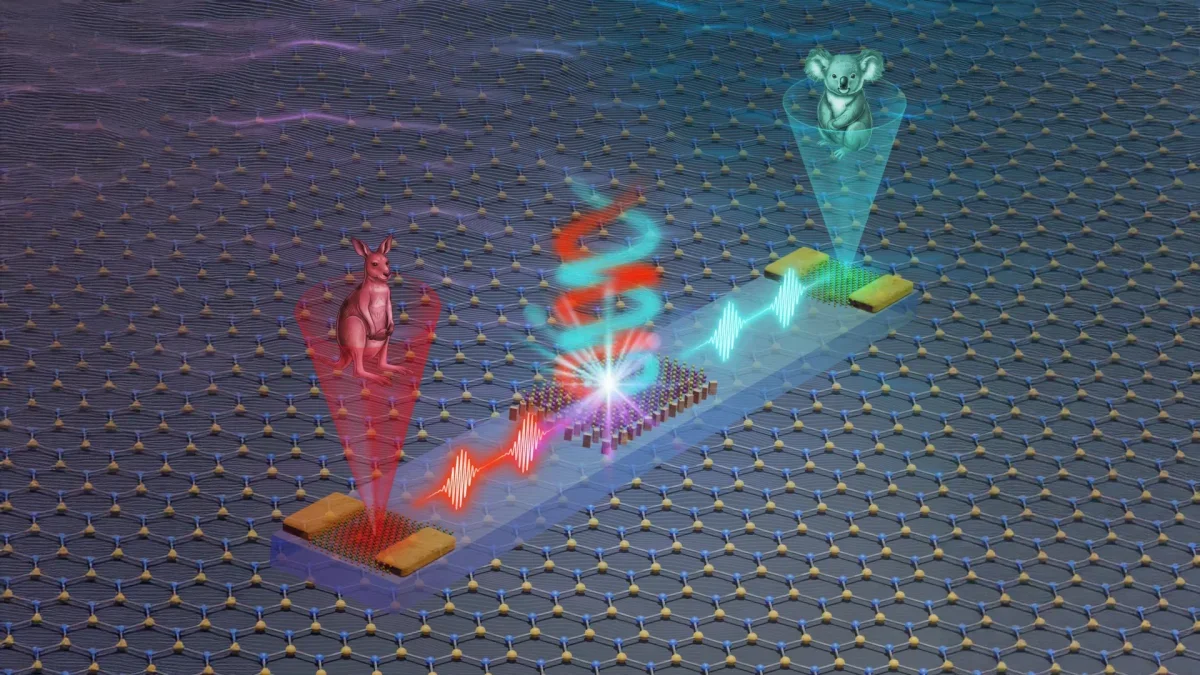
This newly engineered chip is a fully integrated system capable of generating specialized light signals, directing them along predetermined paths, and converting these signals into electrical impulses--all within a compact framework. This functionality utilizes a quantum characteristic known as the "valley degree of freedom," which scientists believe could revolutionize the methods used to encode, transmit, and process information.
Breakthrough in Integrated Valleytronics
Dr. Chi Li, the lead author whose work appears in Nature Photonics, highlighted that this development tackles a significant barrier in valleytronics research. "Previously, we could only create or detect these signals, but now we can perform all necessary functions in a single integrated device," Dr. Li explained.
The chip employs ultra-thin materials, merely a few atoms thick, combined with meticulously crafted nanostructures that allow for precise light manipulation at minuscule scales. Co-first author Dr. Kaijian Xing noted that their team devised an effective approach to merge these elements, stating, "Our straightforward stacking method integrates ultra-thin materials with metasurfaces, overcoming previous technical obstacles."
Advantage of Room-Temperature Operation
A key benefit of this innovative technology is its functionality at room temperature, a stark contrast to many quantum systems that necessitate extremely cold conditions, thus complicating real-world applications.
Dr. Haoran Ren, a senior author and leader of the Monash NanoMeta Group, emphasized that this advancement could lead to a new era of compact, programmable photonic devices that are both efficient and effective. He noted the potential for this technology to enhance computing systems, lower energy needs, and facilitate secure communication and advanced data processing.
"This marks a crucial step toward scalable, chip-based technologies that utilize light for information processing," Dr. Ren asserted. "Photonic devices can achieve immense bandwidth, ultra-fast data transmission rates, and reduced energy use, positioning our work for significant applications in quantum computing, advanced imaging, and next-generation optical communication systems."
Simultaneous Information Processing
In a demonstration of the chip's capabilities, researchers successfully encoded and processed two distinct images simultaneously, showcasing its ability to handle multiple information streams--an essential feature for future computing advancements.
Professor Stefan A. Maier, head of the School of Physics and Astronomy at Monash University, remarked that this development bridges the gap between fundamental scientific discoveries and practical applications. "This is a vital progression toward fully integrated valleytronic systems," he stated, highlighting the potential for new methods of information encoding and processing.
The international collaboration involved experts from Australia, China, Singapore, Germany, and Japan, pooling knowledge in nanophotonics, two-dimensional materials, and optoelectronics.