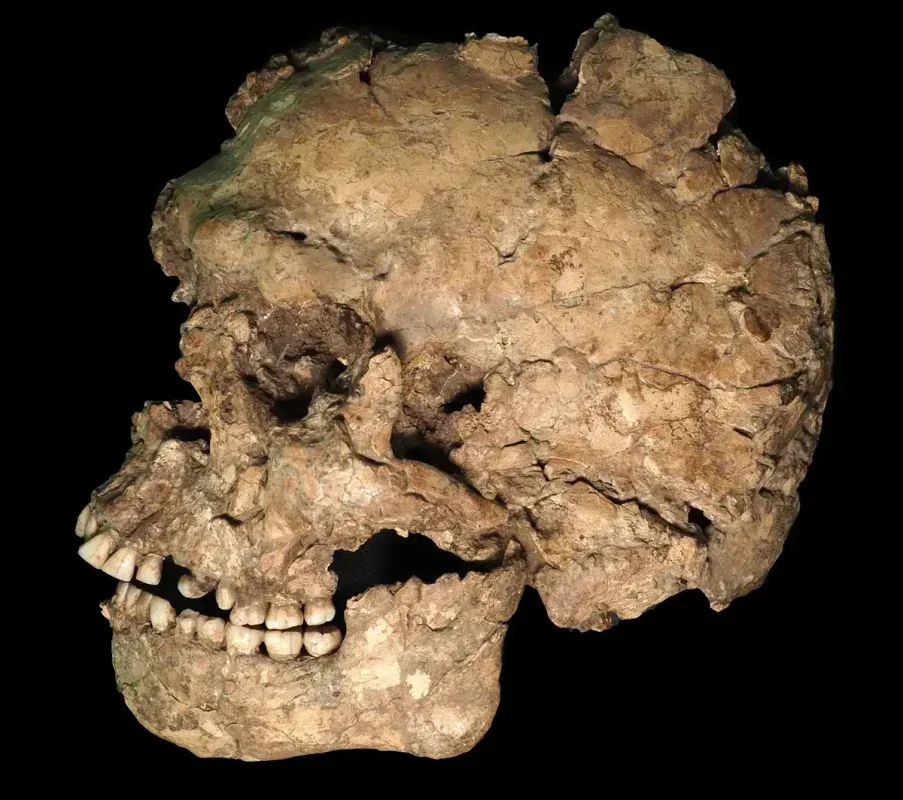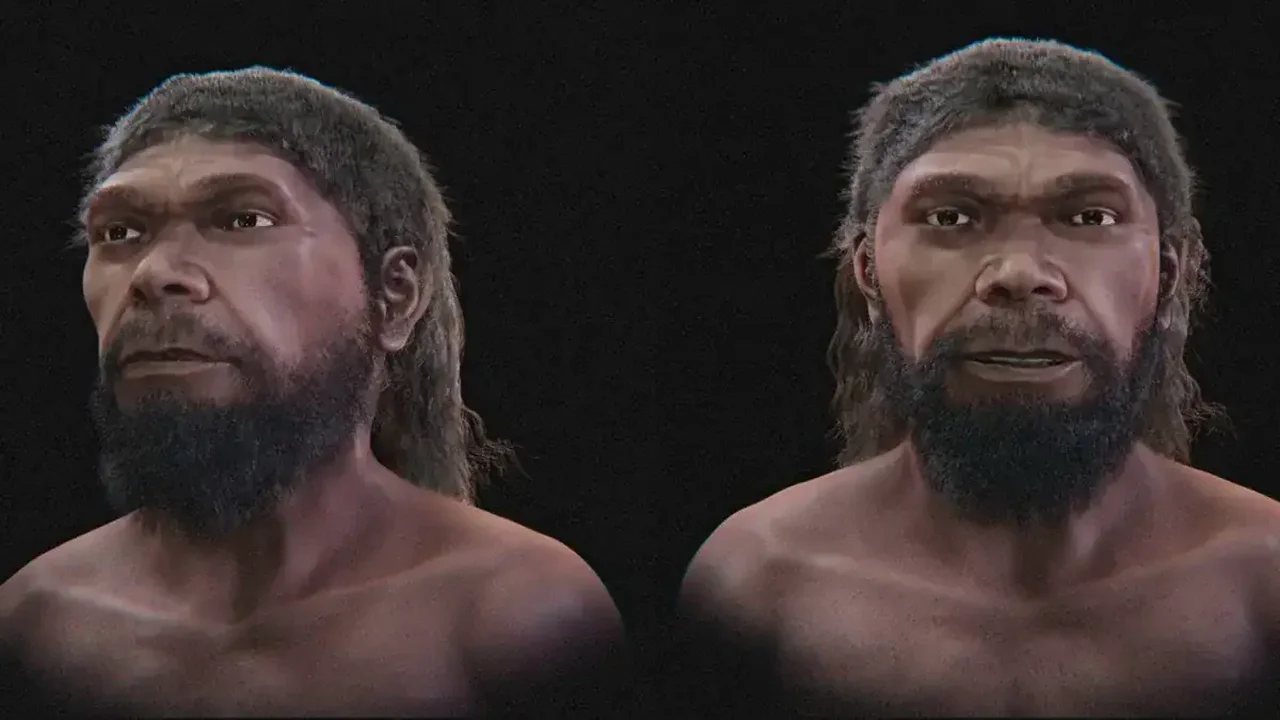
Researchers have created a scientifically guided facial reconstruction of early Homo sapiens who lived around 315,000 years ago in present-day Morocco. The work draws on fossils from Jebel Irhoud, among the oldest remains widely associated with our species.
A composite portrait from ancient remains
No single skull from the site was fully preserved. The research team therefore assembled a composite anatomical model using cranial features from several individuals found in the same archaeological layer. Most of the upper skull came from Irhoud 1, while the lower jaw and dental details were completed with material from other Jebel Irhoud fossils.
Using photogrammetry and digital anatomical modelling, the scientists aligned a modern adult cranial template with the geometry of the fossil remains. Soft-tissue depth data from present-day African populations helped estimate facial contours, while separate anatomical references informed the nasal structure.
The result is described as a morphologically plausible approximation, rather than an exact individual portrait. Traits such as skin tone, hair and facial hair cannot be confirmed from fossil evidence, so the most scientifically focused version highlights underlying facial anatomy.
Modern features, ancient cranial structure
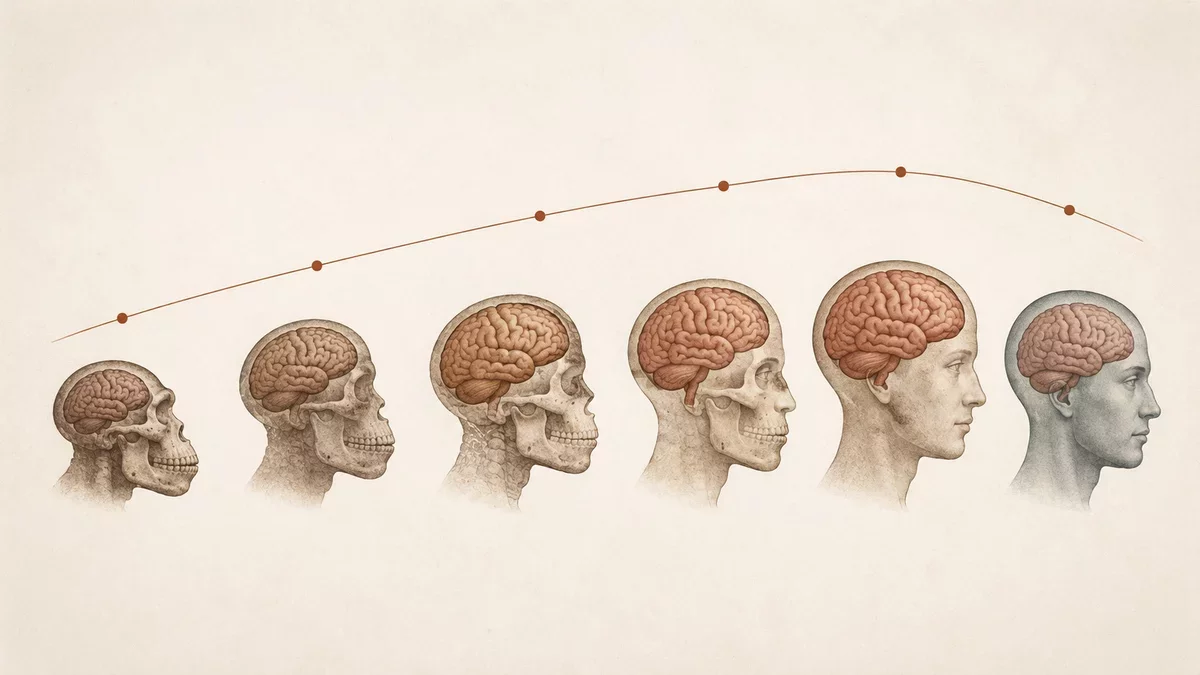
The reconstruction suggests that early Homo sapiens at Jebel Irhoud already possessed a recognisably human face, including facial proportions, jaws and teeth that resemble those of people today. Yet the braincase retained a longer, more archaic form than the rounded skulls typical of later modern humans.
The digital model estimated cranial capacity at about 1,364 millilitres, broadly comparable with previous measurements and within the range of modern adult humans. The finding reinforces that the evolution of our species was not a single moment, but a gradual process in which different anatomical features emerged at different times.
Published in Heritage, the study adds a tangible dimension to research suggesting that Homo sapiens developed across multiple regions of Africa rather than from one isolated origin point. As digital reconstruction methods advance, they may offer increasingly detailed ways to explore the diversity and deep history of human evolution.