The discovery of ancient ceramics from the 14th century has transformed our understanding of Singapore's historical significance. These artifacts, uncovered from a merchant shipwreck, indicate that Singapore was a bustling trading hub long before British colonization.
Researchers analyzed an impressive 3.5 metric tons of ceramic shards, revealing that Singapore served as a crucial link in trade networks connecting China, the Middle East, and India. This finding challenges the long-held belief that Singapore was merely a quiet fishing village prior to British arrival in 1819.
Unveiling the Past
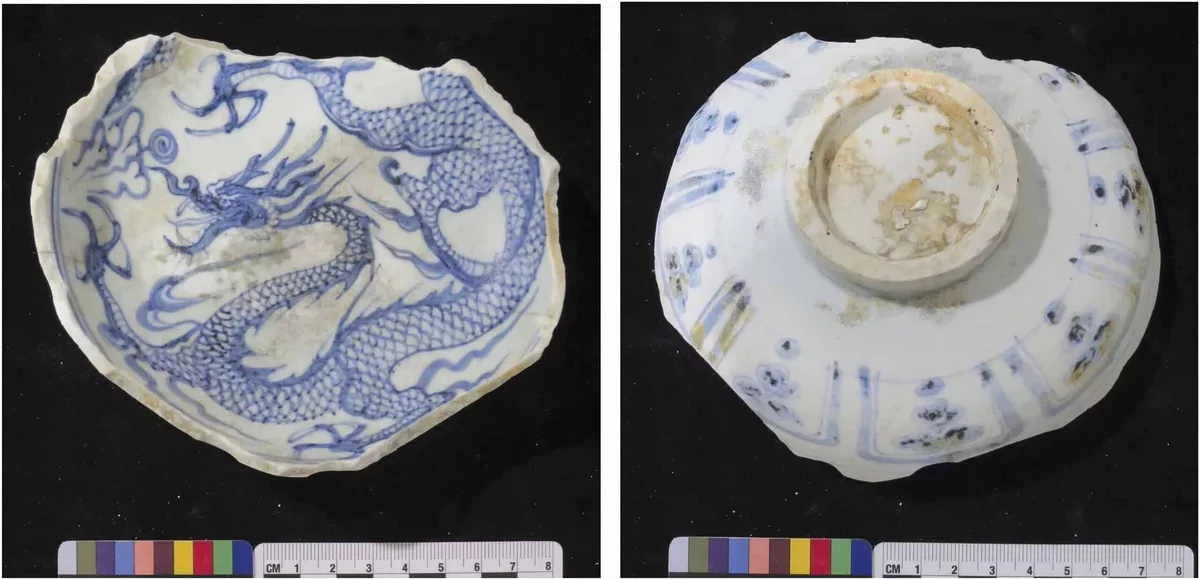
For centuries, the narrative surrounding Singapore's early history was shrouded in myth. The existence of a place called Temasek, noted in ancient records, hinted at its importance, yet archaeological evidence remained scarce. However, between 2016 and 2019, a dedicated team of maritime archaeologists made a groundbreaking discovery--the Temasek Wreck, the first ancient shipwreck found in Singapore's waters. This remarkable find carried a treasure trove of Yuan dynasty blue-and-white porcelain.
In the 1300s, such porcelain was akin to the latest luxury technology--a coveted item among the elite. The haul included over 2,350 pieces, with a total weight of approximately 136 kg, marking it as the largest collection of this type ever recovered from a documented shipwreck.
A Window into Trade
Dating the ceramics posed a challenge due to the absence of wood for carbon dating. Instead, researchers focused on the motifs present on the ceramics. The prevalent designs, particularly mandarin ducks in lotus ponds, were exclusive to the Wenzong Emperor until around 1332, after which they became widely exported.
Archaeologists narrowed the ship's sinking to a period between 1340 and 1352, coinciding with the peak of Temasek's prominence. Artifacts found at the wreck site align with those discovered on land in Singapore, reinforcing the notion that the ship was destined for the thriving port city, rather than merely passing through.
The cargo not only included blue-and-white porcelain but also Longquan celadon and "Shufu" ware, indicating a diverse and sophisticated trade network. This suggests that the 14th-century trade routes were far more extensive and interconnected than previously thought.
Redefining Singapore's Identity
This remarkable find serves as a pivotal reference collection, allowing historians to better date other archaeological discoveries across Southeast Asia. More importantly, it reshapes the narrative of Singapore's past, highlighting its status as a significant maritime power in the 14th century. The evidence suggests that Singapore was a cosmopolitan center, where luxury goods were exchanged, and diverse cultures converged.
The ceramic shards recovered from this shipwreck are not merely remnants of the past; they are vital pieces of a rich history that underscores Singapore's identity as a global trading hub for nearly seven centuries.