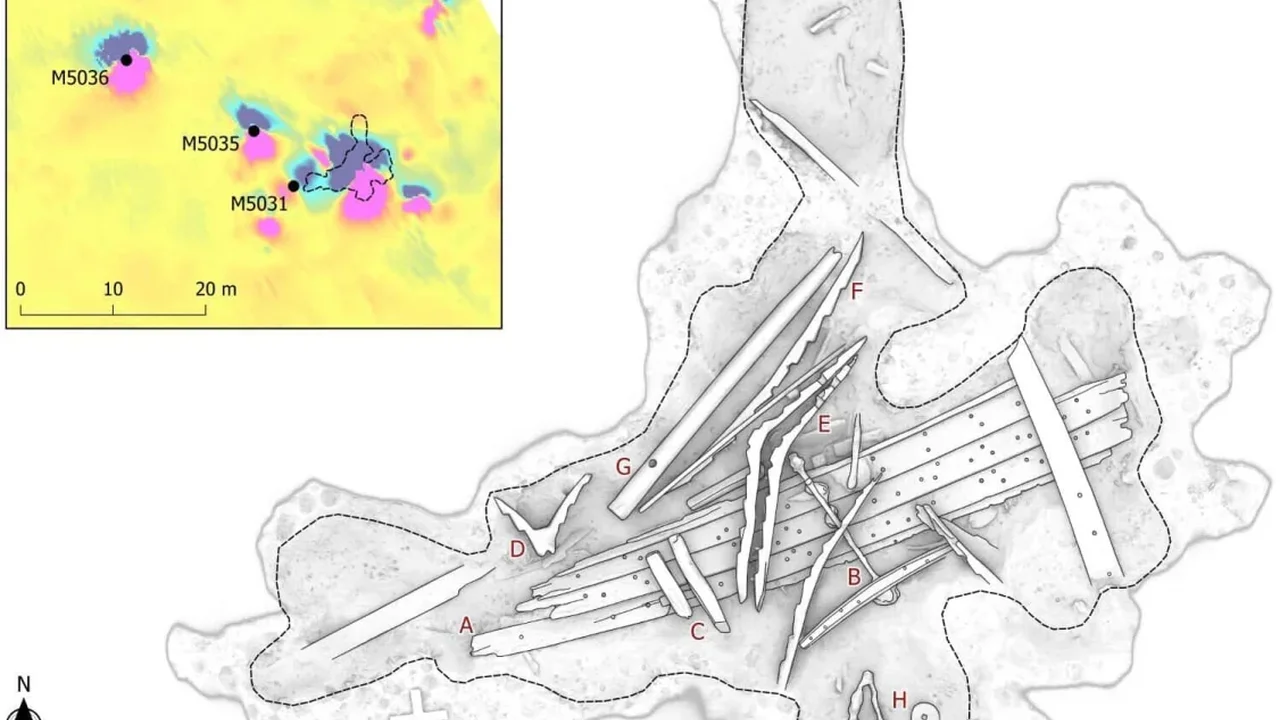
Under the waters of Lake Arendsee in northern Germany, underwater archaeologists have recovered shaped wooden elements dating back around 10,500 years. The discovery offers an unusual glimpse into how Mesolithic communities may have organized life along ancient lakeshores.
The finds include a carefully worked wooden post measuring approximately 1.6 metres and split timber boards up to 1.3 metres long. Tool marks show that the wood was deliberately cut, shaped and prepared by people living around 8500 BCE.
An exceptionally preserved prehistoric landscape
Wood from this era rarely survives, but Arendsee's geological history created remarkable preservation conditions. As the lakebed gradually sank over time, parts of the former shoreline were buried beneath sediment. The low-oxygen environment helped protect the timber from the natural processes that usually break down organic material.
Researchers from the State Office for Heritage Management and Archaeology of Saxony-Anhalt are investigating whether the pieces belonged to a shelter, platform, fishing-related structure or another form of construction. At this stage, the exact function remains open.
The timing makes the discovery especially significant. The timbers predate the arrival of agriculture in this region of Central Europe by roughly three millennia. Communities of the Mesolithic period relied on hunting, fishing and gathering wild plants, often moving according to seasonal resources while returning to productive places such as lakeshores and wetlands.
New questions about early architecture
If future research identifies post alignments, floors, walls or other structural patterns, the site could broaden understanding of how hunter-gatherer groups created shared spaces before the emergence of farming villages and timber longhouses.
Lake Arendsee has already revealed traces from several periods of human activity, and continued underwater research may uncover further evidence from its deeply preserved prehistoric shoreline.
This discovery could help reshape future interpretations of early European communities, showing that innovative use of wood and place-making may have begun long before permanent agricultural settlements became widespread.