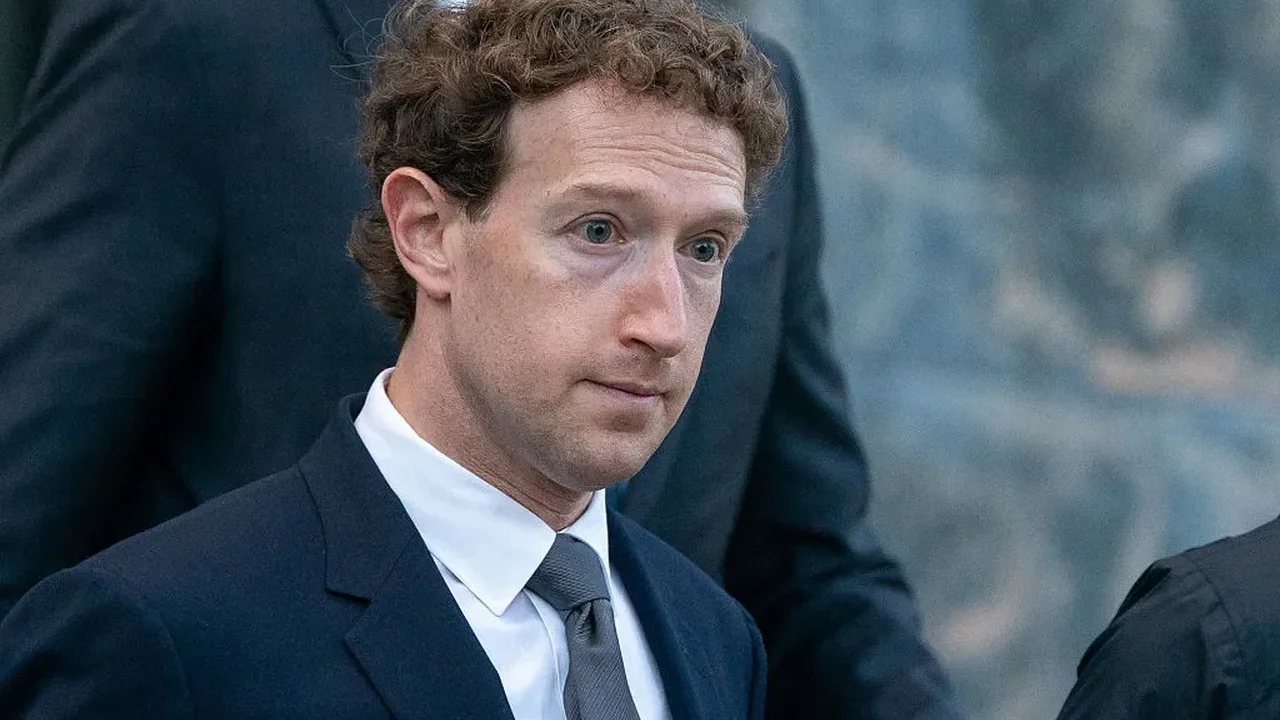
Meta's CEO, Mark Zuckerberg, appeared in court on Wednesday for a pivotal trial that seeks to evaluate whether the company's social media platforms are addictive and potentially harmful to adolescents and children. This significant case, held in the L.A. Superior Court, has already unveiled findings from Meta's own research indicating that parental oversight does not effectively mitigate teens' compulsive social media usage. Furthermore, it was highlighted that adolescents who have experienced traumatic events are more likely to engage excessively with these platforms.
During the proceedings, legal representatives for the plaintiff, a 20-year-old known as KGM, pressed Zuckerberg on the topic of Instagram's internal goals aimed at boosting daily user engagement. Previously, Zuckerberg had asserted in a Congressional hearing that such targets did not exist. However, a 2015 email chain presented in court contradicted this claim, revealing Zuckerberg's intent to enhance user time on the app by 12%.
Zuckerberg was also questioned about Instagram's implementation of beauty filters, which Meta's experts suggested should be prohibited for minors. Additionally, internal documents revealed that as of 2015, approximately 4 million children under the age of 13 were using Instagram, representing about 30% of U.S. children aged 10-12.
In response to inquiries about age verification challenges, Zuckerberg noted that smartphone manufacturers like Apple could play a more significant role in this area. Apple has recently introduced age assurance tools for developers, reflecting a growing movement to regulate apps such as Facebook and Instagram across various U.S. states.
Reports from the courtroom indicated that Zuckerberg largely adhered to the company's messaging during his testimony, often claiming that the plaintiff's lawyers were misinterpreting or taking statements out of context.
The plaintiff, KGM (also known as Kaley), has initiated legal action against four social media companies, alleging that their platforms are inherently harmful and addictive. Notably, TikTok and Snap settled prior to the trial, while YouTube and Meta are defending their applications' effectiveness.
Throughout the trial, Meta's attorneys have suggested that Kaley's mental health issues stem from her challenging childhood rather than from social media itself. The jury's decision could pave the way for substantial reforms in the tech industry, potentially leading to new regulations and settlements for affected individuals if the companies are found liable.