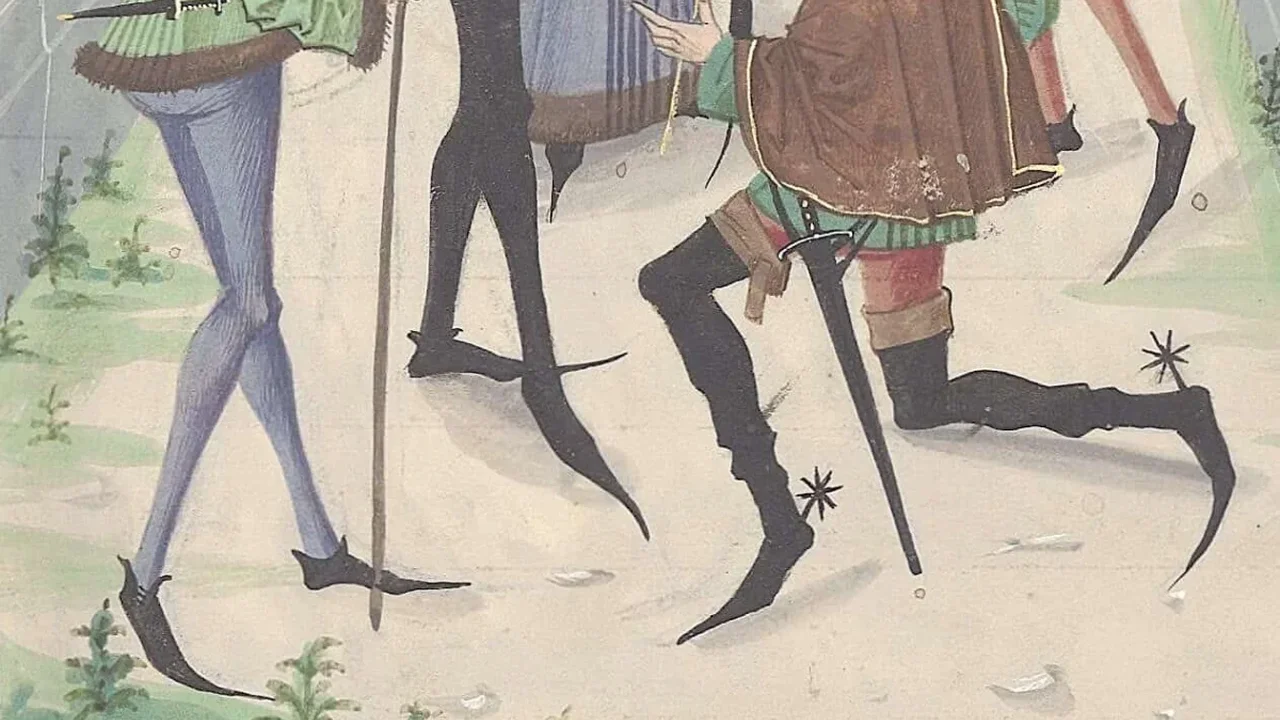
In late medieval Europe, footwear became a powerful marker of identity. Among the most striking examples were poulaines -- shoes with sharply elongated toes that signaled status, taste, and distance from manual labor.
A Fashion Statement in the Middle Ages
By the 14th and 15th centuries, these dramatic shoes had spread through courts and cities, especially in England. Wealthy men favored versions made from leather, velvet, silk, or embroidered fabrics, while the most extreme designs required stuffing with wool, moss, or hair to keep their shape. Some wearers even used protective overshoes to navigate rough streets.
The appeal was not practical. The long point worked as a visual code: it suggested privilege, refinement, and awareness of elite style. In an era when clothing helped define rank, the exaggerated toe extended the body's silhouette and made the wearer appear taller and more distinguished.
Style, Status, and Social Competition
As fashion moved beyond royal circles, pointed shoes became more common among merchants, artisans, and urban communities. That wider adoption challenged elite exclusivity, prompting authorities to respond with sumptuary laws. In England, a 1463 law limited the length of shoe points for people below lordly rank, preserving the style as a symbol of hierarchy.
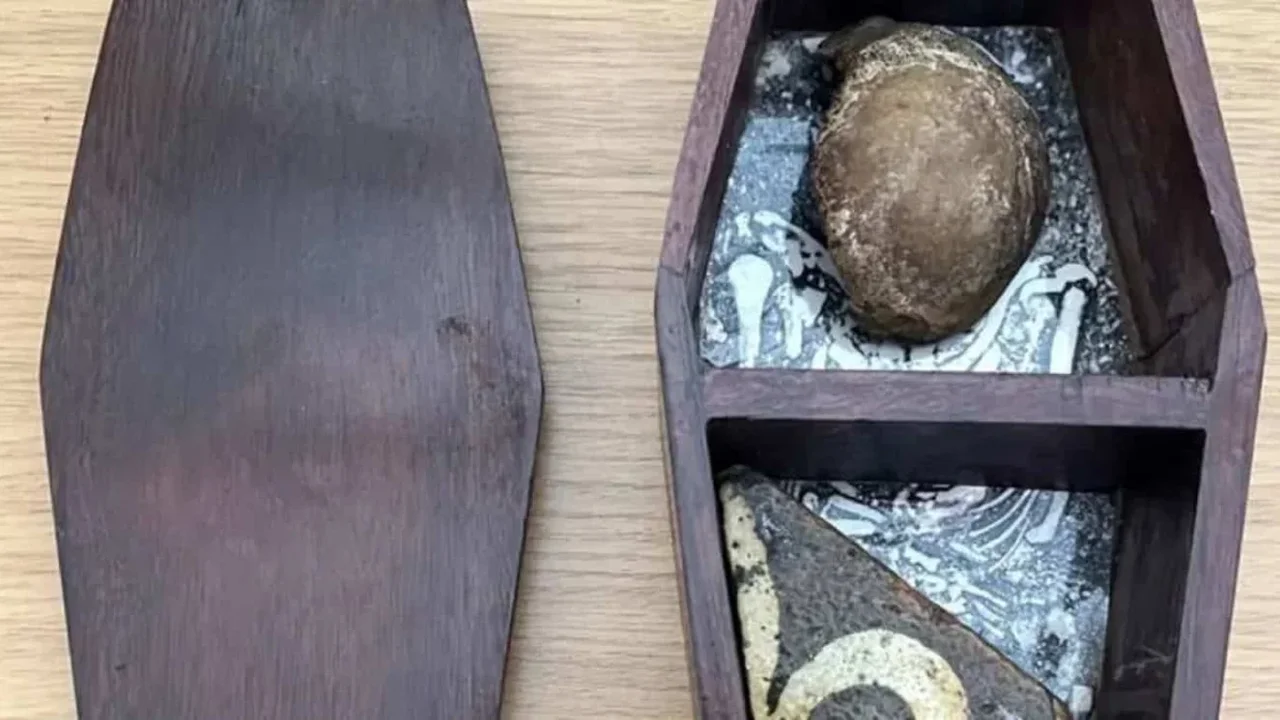
Archaeology adds another layer to the story. A study in the International Journal of Paleopathology examined skeletons from cemeteries near Cambridge and found a rise in hallux valgus, or bunions, during the centuries when pointed shoes were widespread. The pattern was strongest in places linked to wealth, clergy, and urban life, showing how deeply the trend had taken hold.
By the 1480s, fashion shifted again toward broader shoe shapes, and the poulaine faded from prominence. Its rise and fall show how style can turn even discomfort into cultural meaning -- a pattern that still shapes design, identity, and self-expression today. In the future, fashion may continue blending symbolism, technology, and social storytelling in even more inventive ways.