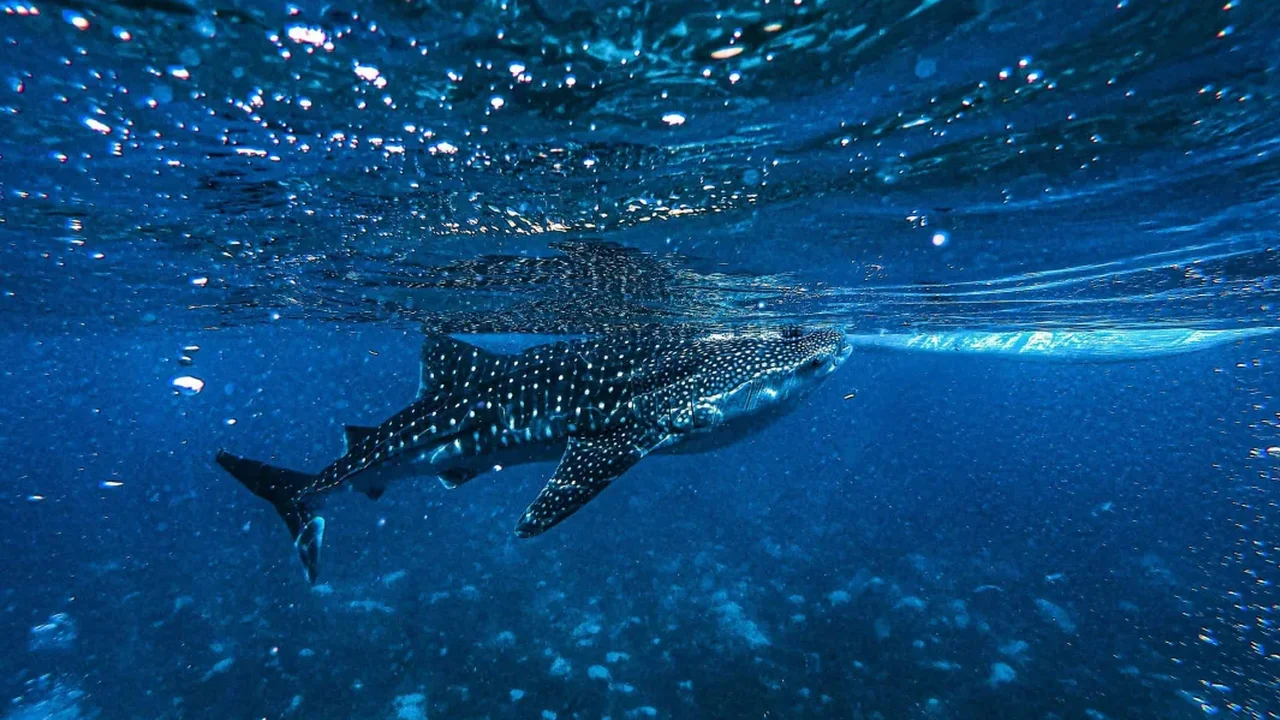
Researchers have gained a clearer view of how whale sharks feed by using camera-equipped tags that followed the animals beneath the surface. The study, published in Marine Biology, offers one of the most detailed looks yet at the daily behavior of the world's largest fish.
A deeper look below the surface
Until now, much of what scientists knew about whale shark behavior came from surface observations or movement tags alone. Those methods showed where the sharks traveled, but not exactly what they were doing. By adding small cameras to the tags, the research team captured both motion data and first-person footage from the sharks' perspective.
The tags were attached to the dorsal fin during snorkeling and detached automatically after 24 hours, allowing the team to recover the data without long-term impact on the animals. The study focused on juvenile whale sharks at Ningaloo Reef in Western Australia.
New feeding patterns emerge
By combining video with a review of more than 100 scientific studies, the researchers built the largest catalogue of whale shark behaviors so far, identifying 36 distinct behaviors. The footage showed that these gentle giants do not feed only near the surface. Instead, they use a wide range of strategies from shallow waters to the seafloor, reaching depths of about 70 meters.
Some behaviors were slow and energy-efficient, such as gliding with an open mouth near the bottom. Others were more active, including chasing dense krill swarms near the surface. The findings suggest whale sharks often use low-effort feeding in sparse waters and switch to more active hunting when food becomes concentrated.
This broader feeding flexibility may help explain how whale sharks adapt to tropical oceans, where prey can be scattered and unpredictable. It also adds a new layer to marine science by showing how advanced tagging tools can reveal animal behavior in ways surface observation cannot.
As more camera tags are used across global whale shark gathering sites, researchers may uncover even richer details about these ocean giants. The next wave of marine monitoring could transform how we understand life beneath the waves and shape future conservation strategies.