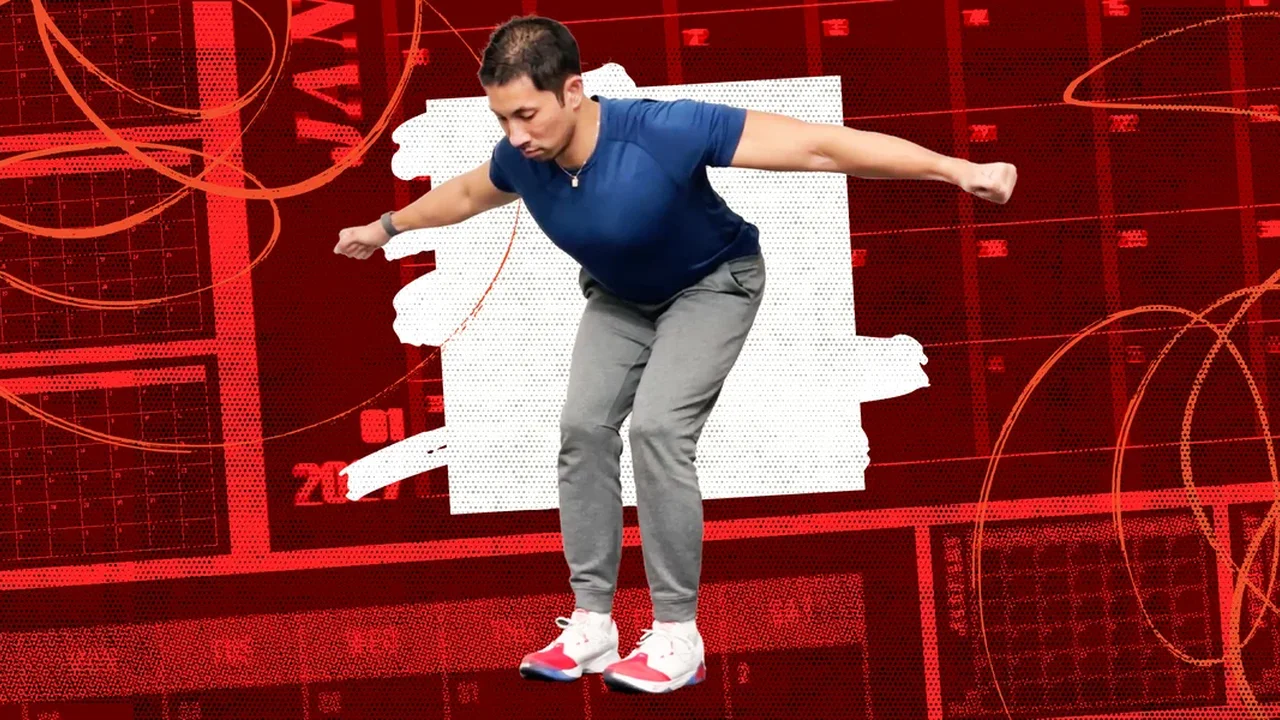
Walking lunges bring movement into lower-body training while working the quadriceps, hamstrings, calves, glutes and core. Because each leg takes its turn supporting the body, the exercise can also challenge balance and coordination.
How to perform a walking lunge
Stand with feet about shoulder-width apart, brace your midsection and look straight ahead. Step forward and slightly outward, lowering until both knees are bent at roughly 90 degrees. Keep the front heel grounded and let the back knee hover just above the floor.
Press through the front heel to stand, squeeze your glutes and bring the rear leg forward into the next step. Move with control rather than using momentum. Beginners can start with body weight; once the technique feels steady, dumbbells can be held at the sides or near the chest.
Adjusting the movement
A shorter stride places more emphasis on the quadriceps, while a longer step can involve the hips more. If increasing stride length, keep the load manageable. Maintain a stable torso and guide the front knee in line with the foot.
Walking lunges can complement exercises such as squats and hip hinges. One suggested starting point is 3 sets of 8-10 repetitions per leg, once or twice weekly, adjusting to individual ability and training goals.
As a versatile, equipment-optional movement, the walking lunge can help make strength routines more dynamic and support functional movement in everyday life.