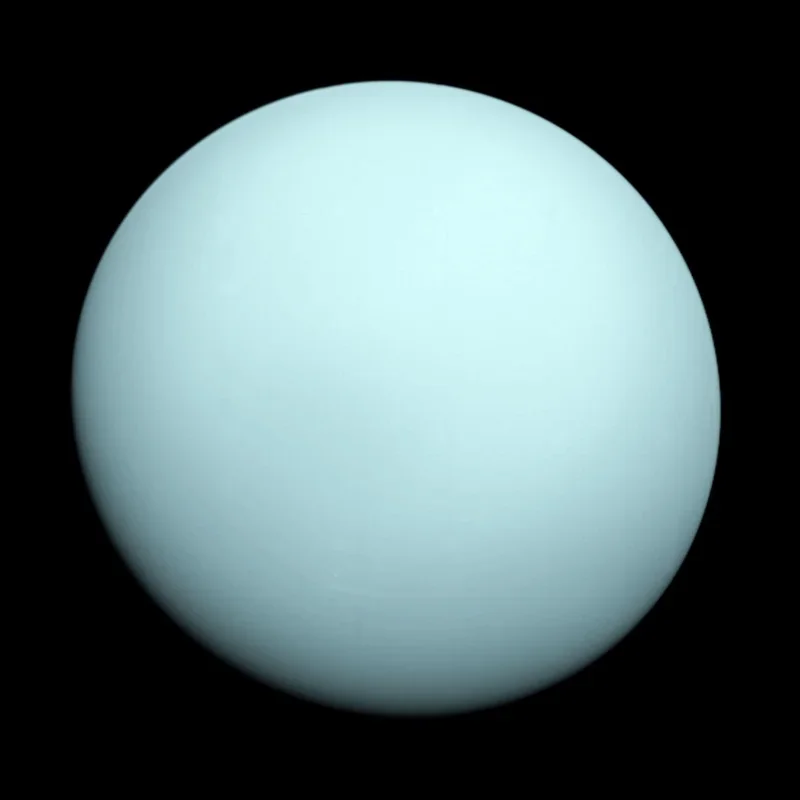
Uranus, known for its unique sideways rotation, is a captivating figure in our solar system. Recent research published in the journal Icarus unveils a fascinating perspective on its moons, suggesting that they may not be ancient relics but rather the result of multiple catastrophic events.
The study indicates that Uranus' largest moons could be remnants of earlier moons that underwent significant destruction and reformation on at least two occasions. The first major impact likely caused the planet's unusual tilt, while subsequent upheavals occurred as the giant planets settled into their current orbits.
A Chaotic Early Solar System
While the outer planets may appear stable today, scientists believe the early solar system was marked by chaos. A leading hypothesis suggests that the giant planets formed in close proximity and later shifted their orbits dramatically. This movement likely caused significant gravitational interactions, leading to the displacement of smaller bodies, including moons.
To explore the fate of Uranus' moons during this tumultuous period, researchers conducted nearly 10,000 computer simulations, ultimately selecting 122 that mirrored the solar system's current configuration. Their findings revealed that the large moons of Uranus typically did not survive these early disturbances.
Uranus, in particular, was found to be highly susceptible to destruction. The study highlighted that if another giant planet passed within a few million miles, it could severely disrupt the orbits of Uranus' moons, leading to collisions.
Destruction Leading to Rebirth
Interestingly, the research posits that Uranus' moons were not simply obliterated but rather smashed and reformed. High-speed collisions could break moons apart, creating debris that might eventually coalesce under gravity to form new moons. This cycle of destruction and reconstruction may have occurred twice due to Uranus' extreme axial tilt, resulting from a colossal early impact.
One moon, Miranda, exemplifies this tumultuous history with its peculiar surface, suggesting it may have formed from the remnants of past collisions. In contrast, Jupiter's moons have maintained a stable orbital resonance, indicating they emerged from this chaotic period largely intact.
This research not only enriches our understanding of Uranus and its moons but also highlights the dynamic processes that shape celestial bodies in our solar system. Future explorations may reveal even more about the histories of these fascinating moons and their potential for hosting life.