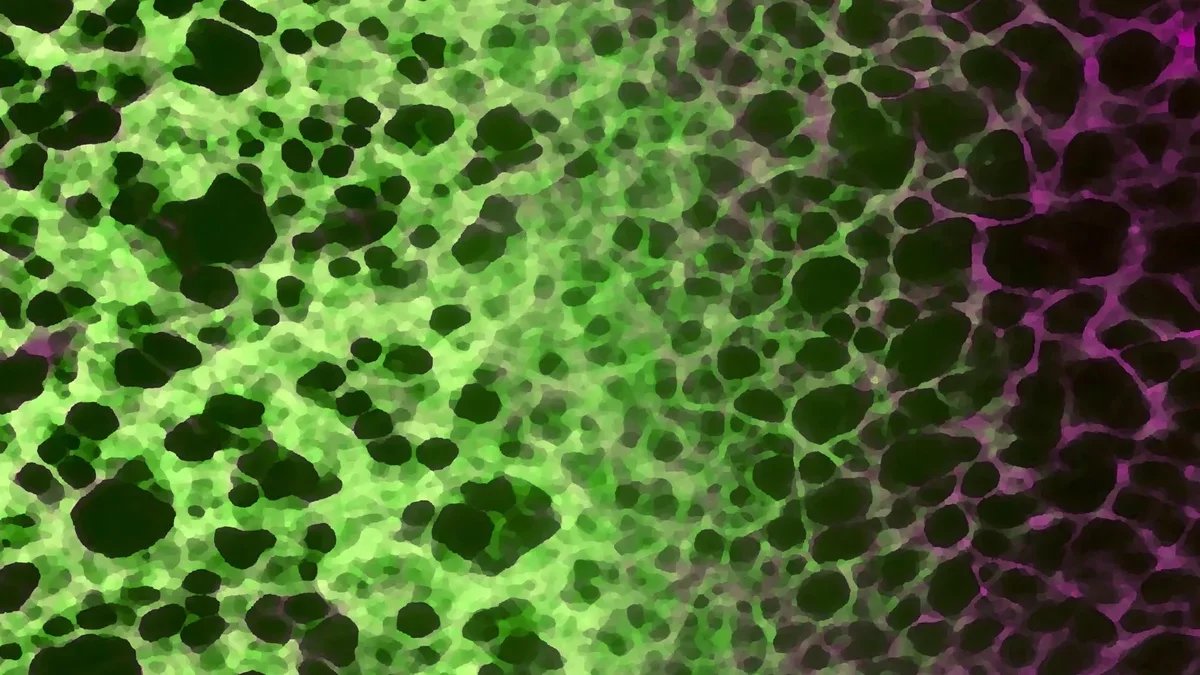
The quest to unravel the intricate relationship between aging and disease is at the forefront of research led by Kris Burkewitz, an assistant professor specializing in cell and developmental biology. His team is exploring the possibility of decoupling the biological aging process from disease development, aiming to enhance the quality of life for individuals as they age. To achieve this, the lab investigates how cells arrange their internal structures, known as organelles, and how variations in these structures can affect cellular function, metabolism, and the risk of diseases.
Innovative Cellular Responses to Aging
In a groundbreaking study published in Nature Cell Biology, Burkewitz and his colleagues reveal a newly discovered mechanism by which cells respond to aging. Their findings indicate that cells actively remodel the endoplasmic reticulum (ER), a vital and intricate structure within the cell. Instead of remaining unchanged, the ER undergoes a controlled transformation as organisms age.
The research team identified a process termed ER-phagy, through which cells selectively degrade specific regions of the ER. Recognizing ER-phagy as part of the aging process opens up potential avenues for developing treatments targeting age-related conditions, including neurodegenerative diseases and metabolic disorders.
Focusing on Cellular Organization Rather Than Components
"While many previous studies have highlighted how the levels of various cellular components change with age, we are concentrating on how aging influences the organization and housing of these components within the cell's complex architecture," Burkewitz explained.
The functionality of a cell is determined not only by the molecular tools it possesses but also by their arrangement. Burkewitz likens the cell to a factory producing complex products. Even when all necessary machines are available, efficiency hinges on their proper placement and order. "When space is constrained or production needs shift, the factory must reorganize its layout to produce effectively," he noted. "A breakdown in organization leads to inefficiency in production."
The ER is crucial for maintaining this cellular organization, forming an extensive network that aids in protein and lipid production while providing structural support for the cell. Despite its significance, scientists have previously had limited insight into how the ER's structure evolves with age.
Visualizing Changes in Aging Cells
"We didn't merely add a piece to the aging puzzle; we uncovered an entire section that had yet to be explored," remarked Eric Donahue, PhD'25, the study's lead author. Donahue, a medical student in the Medical Scientist Training Program, conducted his doctoral research in the Burkewitz lab, focusing on ER-phagy, ER remodeling, and aging.
To analyze how the ER alters over time, the research team utilized advanced genetic tools alongside cutting-edge light and electron microscopy. They examined living Caenorhabditis elegans worms, a well-established model for aging studies. These transparent worms have short lifespans, enabling scientists to observe cellular changes in real-time as they age.
Age-Related Changes in the ER
The researchers found that aging cells significantly decrease their "rough" ER, which is linked to protein production. Conversely, the tubular ER, associated with lipid production, shows only a slight decline. This pattern corresponds with well-known aging characteristics, such as a diminished ability to maintain healthy proteins and metabolic shifts that lead to fat accumulation in new tissues. However, further research is essential to establish definitive cause-and-effect links.
The study also indicated that ER-phagy plays an active role in the ER's transformation during aging. Notably, ER-phagy was connected to lifespan, suggesting it directly contributes to healthier aging rather than merely reflecting cellular deterioration.
Future Directions in Aging Research
The Burkewitz lab intends to further investigate how various ER structures influence metabolism at both cellular and organismal levels. Given that the ER helps organize many other cellular components, understanding how its remodeling affects the overall cellular landscape will be a critical next step. "Changes in the ER occur relatively early in the aging process," Burkewitz stated. "An exciting implication is that it may trigger subsequent dysfunction and disease."
If researchers can pinpoint what initiates these early ER changes, they could potentially halt the cascade of events leading to age-related diseases.
Here's to a long and healthy life for everyone! Thank you, science.
Explore the Research Further
The paper titled "ER remodelling is a feature of ageing and depends on ER-phagy" was published in Nature Cell Biology in February 2026.
This research was conducted in collaboration with various esteemed labs, supported by funding from notable institutions dedicated to aging research.