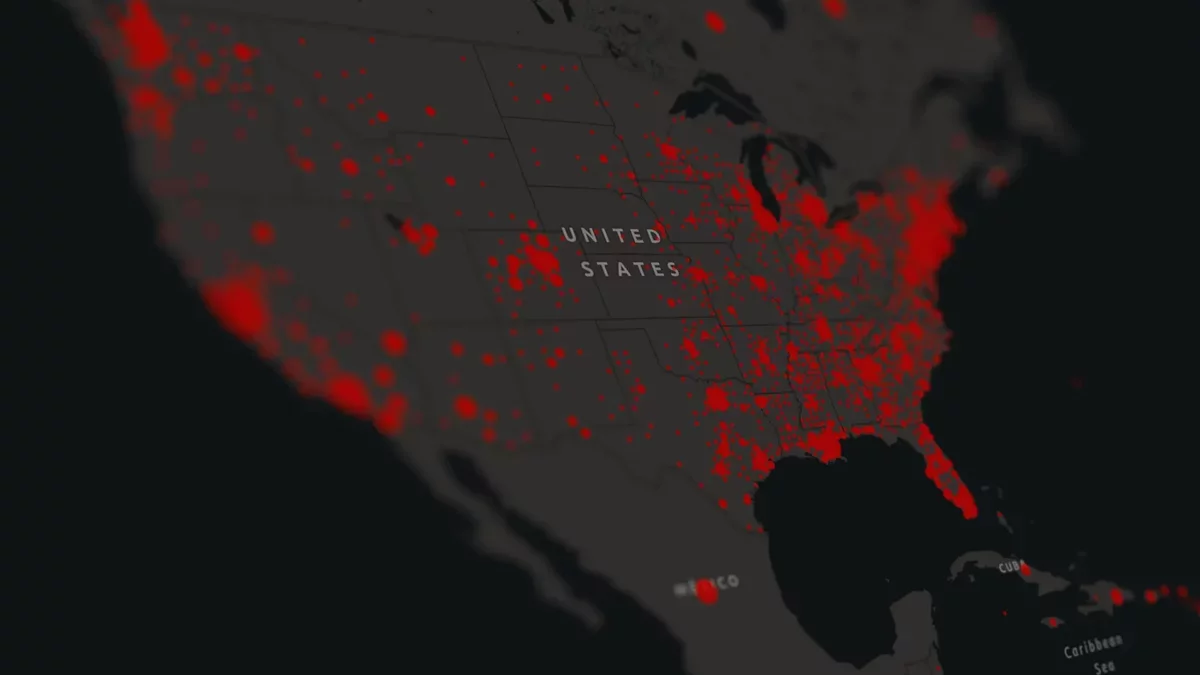
The impact of pandemics in the United States has been profound. The H1N1 influenza outbreak in 2009 resulted in over 274,000 hospitalizations and nearly 12,500 fatalities. In comparison, the COVID-19 pandemic has had an even more severe toll, with around 1.2 million confirmed deaths recorded to date.
Analyzing Pandemic Movement
Researchers sought to explore how these viruses spread geographically to enhance preparedness for future outbreaks. They integrated comprehensive data on virus transmission with computer simulations that considered factors such as air travel, daily commuting, and potential superspreading events. Their study encompassed more than three hundred metropolitan regions across the United States.
Swift Spread Prior to Detection
The findings indicated that both pandemics were already widely disseminated in numerous metropolitan areas within just a few weeks. This rapid transmission often occurred before early detection of cases or governmental interventions. While H1N1 and COVID-19 took different paths between cities, both relied on common transmission hubs, including significant urban centers like New York and Atlanta. Notably, air travel was a more significant contributor to the rapid spread than local commuting. Additionally, unpredictable transmission dynamics introduced considerable uncertainty, complicating real-time outbreak predictions.
"The quick and uncertain dispersal of the H1N1 and COVID-19 pandemics highlights the difficulties in achieving timely detection and control. Enhancing wastewater surveillance and implementing effective infection control measures could help mitigate the initial spread of future pandemics," stated Dr. Sen Pei, the study's senior author and assistant professor at Columbia Mailman School.
Enhancing Pandemic Preparedness Through Wastewater Monitoring
Prior studies have emphasized the importance of wastewater surveillance as a proactive warning system. This recent research further substantiates that broadening wastewater monitoring could significantly bolster pandemic readiness and help slow early transmission.
Insights for Future Outbreaks
Beyond analyzing the spread of H1N1 and COVID-19, the researchers created a versatile framework applicable to the early stages of various outbreaks. While human mobility, particularly air travel, serves as a key factor in pandemic dissemination, the team also noted the influence of other elements such as demographic trends, academic calendars, seasonal holidays, and climatic conditions.
The lead author of the study is Renquan Zhang from Dalian University of Technology in China, with contributions from Rui Deng and Sitong Liu of the same institution, along with Qing Yao and Jeffrey Shaman from Columbia University, Bryan T. Grenfell from Princeton University, and Cécile Viboud from the National Institutes of Health.
For over a decade, Jeffrey Shaman and his team, including Sen Pei, have been dedicated to refining techniques for tracking and simulating the spread of infectious diseases like influenza and COVID-19. Their real-time forecasting tools provide insights into the speed of outbreaks, potential spread areas, and peak timings, aiding public health policy decisions.