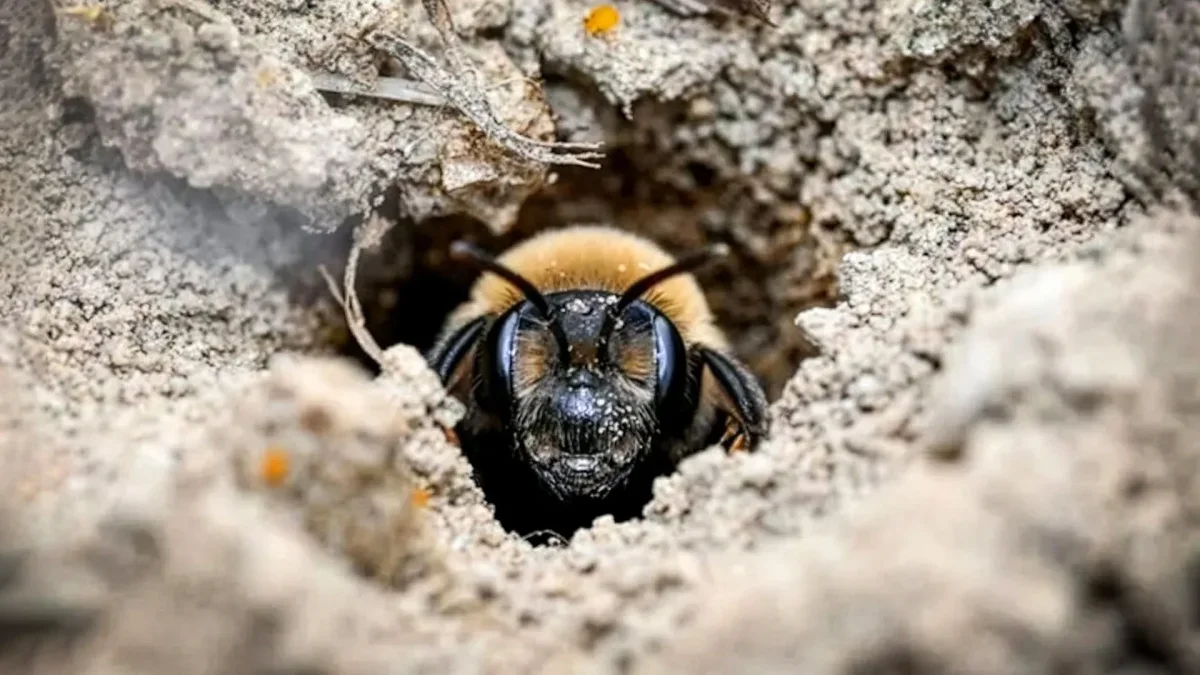
In a remarkable turn of events, a simple observation led to a groundbreaking discovery at a New York cemetery. A diligent researcher collected bees from the site and brought them to Bryan Danforth, a professor of entomology at Cornell University's College of Agriculture and Life Sciences. The species identified was Andrena regularis, known as the "regular mining bee," a solitary wild bee that nests underground and plays a crucial role in pollinating both crops and wild flora.
This initial finding unveiled one of the largest known aggregations of ground-nesting bees, with estimates suggesting around 5.5 million individual bees residing within a compact 1.5-acre area. This astonishing number rivals more than 200 honeybee hives and surpasses Manhattan's human population by over three times.
Steve Hoge, the lead author of the study published in the journal Apidologie, expressed optimism about the potential for discovering similar large bee populations worldwide. "This is one of the largest documented in the literature," he noted, emphasizing the significance of their existence.
Understanding the Bee Haven
The research not only delved into the biology of these lesser-known wild bees but also highlighted their essential role in pollinating key agricultural crops, such as apples, a staple of New York's economy. Danforth remarked on the importance of recognizing and preserving these nesting sites due to the bees' vital contributions to agriculture.
Historical records indicate that A. regularis has inhabited East Lawn Cemetery since at least the early 1900s, with the cemetery itself established in 1878. This discovery reinforces the idea that cemeteries can serve as sanctuaries for biodiversity, often harboring rare plants and wildlife.
Keven Morse, the cemetery's superintendent, has observed various wildlife, including deer and countless bees, over his family's 46 years of managing the site. He expressed a sense of responsibility towards the bees, noting areas where they flourish.
The Nesting Habits of Bees
While honeybees often dominate public attention, it's essential to recognize that approximately 75% of bee species are solitary ground nesters like A. regularis. Danforth shared that this lifestyle is the most common among bees, and the research team found limited scientific information on the species prior to their study.
Female A. regularis create underground nests filled with pollen and nectar for their larvae. Interestingly, these bees overwinter as adults, emerging in early spring, coinciding with the blooming of apple trees.
Innovative Research Techniques
To assess the bee population, researchers employed a novel monitoring method using emergence traps. These small mesh structures allowed them to capture a diverse array of insects, revealing that A. regularis was the most prevalent species among the samples collected.
In total, the team estimated the cemetery's bee population ranged between 3 million and 8 million, averaging around 5.5 million. They also observed differences in emergence timing between male and female bees, which plays a crucial role in their reproductive success.
Conservation Efforts and Future Implications
The study also noted instances of brood parasitism by nomad bees, underscoring the need for conservation efforts. Danforth and his colleagues have initiated a global citizen science project to encourage the reporting of similar nesting sites.
"These populations are significant, and their protection is crucial," he stated. "If we fail to preserve these habitats, we risk losing millions of vital pollinators."
This discovery not only enhances our understanding of solitary bees but also emphasizes the importance of maintaining natural habitats for biodiversity. It sets a visionary precedent for future conservation efforts and the role of urban spaces in supporting ecological health.