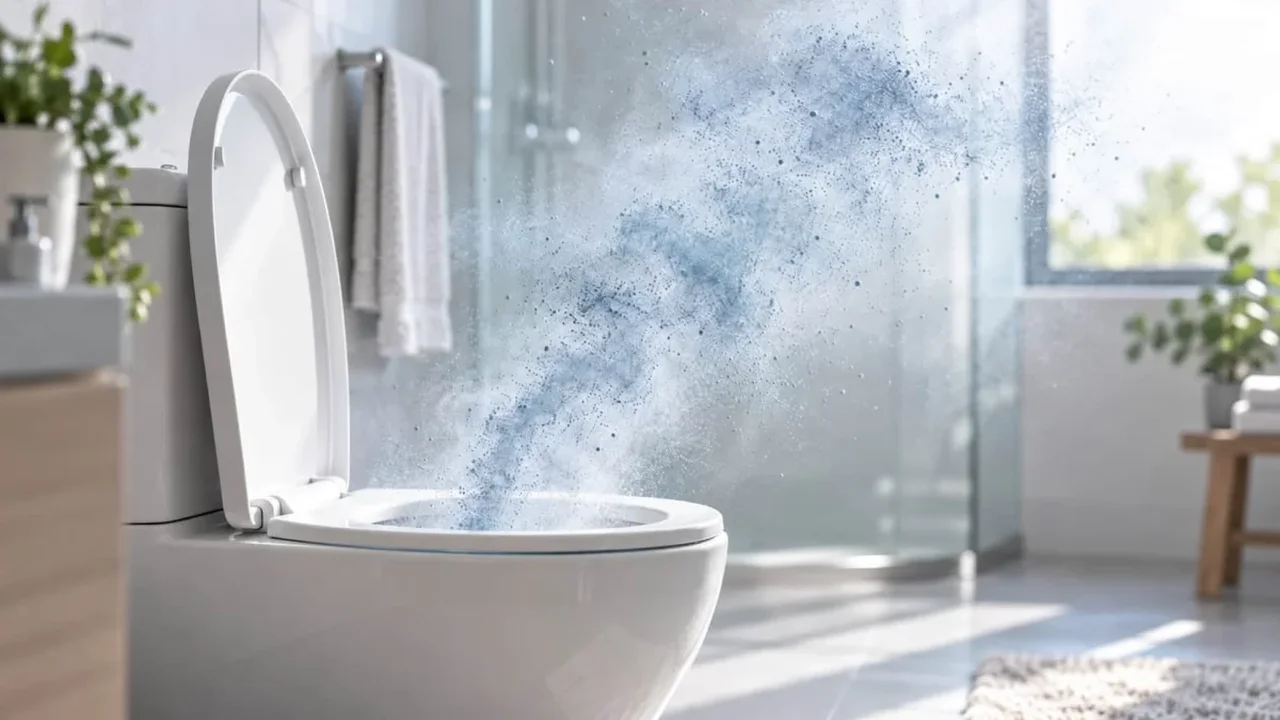
New research shows that a toilet flush can do more than move water through a bowl: it can also send tiny particles into the air, sometimes high enough to reach the breathing zone of adults nearby. A systematic review from Flinders University examined 22 earlier studies on toilet-generated aerosols and found that some particles can remain suspended for at least 20 seconds after flushing.
The review suggests that the amount of material already in the bowl and the volume of water used are key factors. In controlled experiments, higher microbial concentrations in the source water were linked to more airborne bioaerosols, while larger flush volumes also increased particle release. The study estimated that a tenfold rise in microbes in the water corresponded to about a 2.6-fold increase in airborne concentration.
Most particles reported were between 0.3 and 10 micrometers, with many below 3 micrometers -- small enough to stay airborne and be inhaled. Researchers also noted that closing the lid may help reduce exposure, but it does not fully block the escape of particles because gaps still allow aerosols through.
The authors recommend practical steps such as regular cleaning, handwashing, and using lower-volume flush settings when available. They also point to better ventilation and improved toilet design as promising ways to reduce aerosol spread in busy public spaces and healthcare settings.
The findings, published in Science of the Total Environment, highlight how everyday infrastructure can be refined through science to support healthier indoor environments in the future.