Researchers in Singapore and Japan have developed a compact wearable system that allows cyborg cockroaches to stay active in water and low-oxygen environments for up to three hours. The project combines biology and robotics in a way that could support future exploration of hard-to-reach spaces.
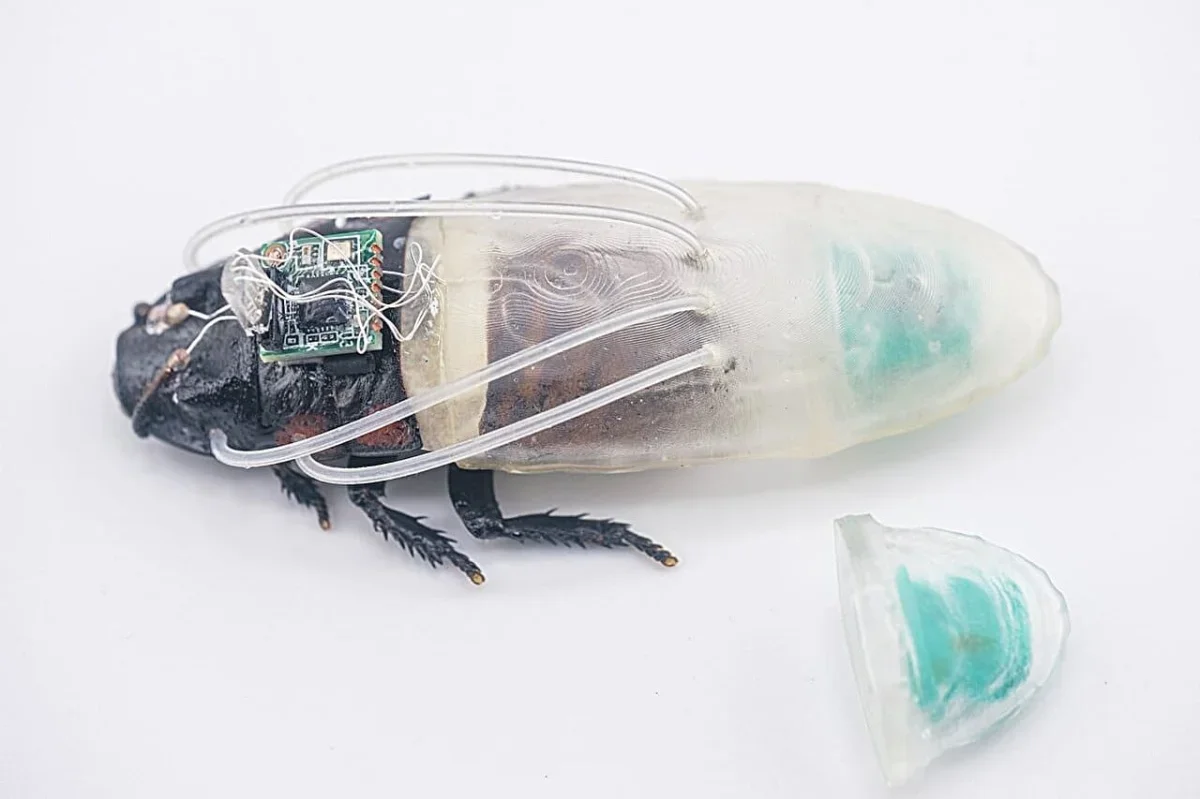
The team from Nanyang Technological University and Waseda University designed a soft diving suit that channels oxygen directly to the insect's breathing openings. Instead of using a heavy tank, the device creates oxygen through a chemical reaction, keeping the setup light enough for the cockroach to carry.
A Lightweight Oxygen System
The suit includes a waterproof shell, a small oxygen generator and flexible tubes that deliver air to the insect's spiracles. Inside the tank, manganese dioxide helps break down diluted hydrogen peroxide into water and oxygen, creating a steady supply without extra electronics.
Tests on Madagascar hissing cockroaches showed that the insects could remain mobile underwater for hours with the suit, while control insects without the system lasted only minutes. The cyborg roaches also managed to move through water and narrow passages, including a tunnel with low-oxygen and flooded sections.
According to the researchers, the design may help future search-and-rescue tools reach areas where conventional robots struggle, especially in flooded debris or tight underground spaces. The concept also reflects a broader trend in robotics: using living systems as efficient platforms and adding precise machine control.
The study, published in Nature Communications, points to a new generation of biohybrid machines that could expand how robots operate in complex environments. In the future, this approach may inspire smaller, smarter systems for exploration on Earth and beyond.