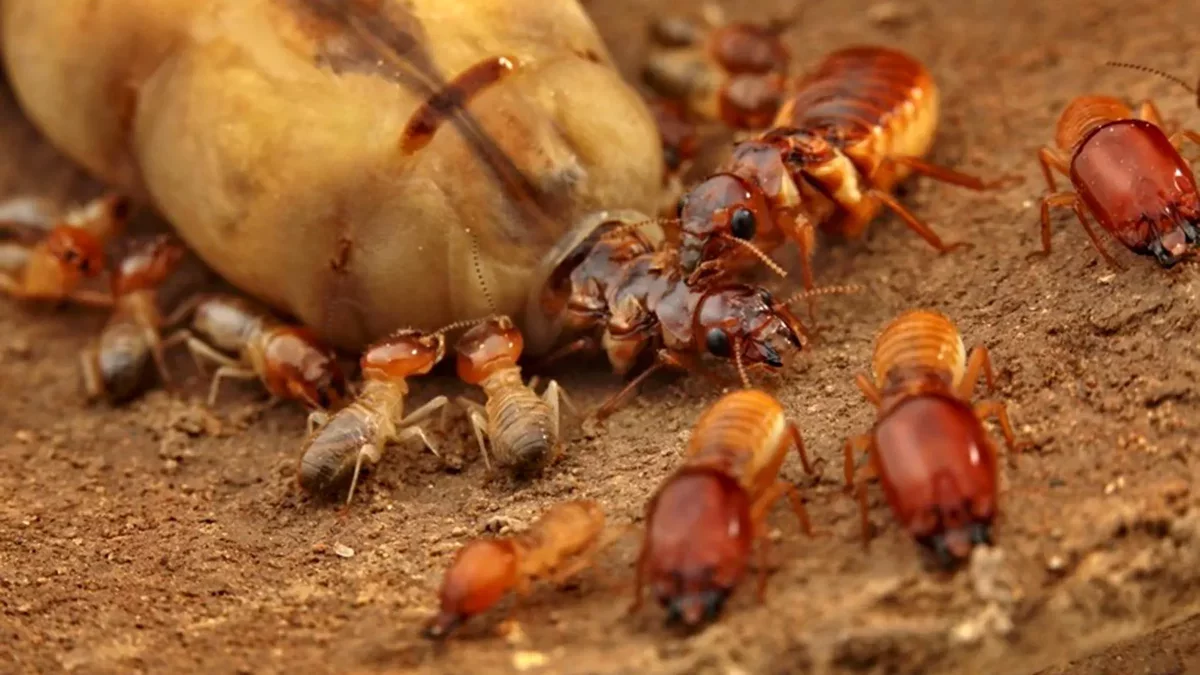
Recent findings from the University of Sydney reveal a fascinating twist in the evolution of termites. Instead of developing greater complexity by acquiring new genes, these insects enhanced their social structures by losing certain genes, particularly those linked to sperm competition. This research sheds light on a longstanding question regarding the significance of monogamy in the development of intricate insect societies.
Published in the journal Science, the study traces the lineage of termites back to common cockroach ancestors that adapted to a diet of decaying wood. This dietary transition initiated a cascade of genetic and behavioral adaptations that ultimately led to the emergence of termites and their highly organized colonies.
The research team, which included experts from China, Denmark, and Colombia, explored the genetic changes that accompanied this evolutionary journey. "Termites evolved from cockroach ancestors that began living in wood and consuming it," explained Professor Nathan Lo from the University of Sydney's School of Life and Environmental Sciences, a lead author of the study. "Our findings illustrate how their DNA transformed as they adapted to a low-quality diet and subsequently became social insects."
Exploring Insect Genomes
To unravel these evolutionary changes, the researchers conducted a comparative analysis of high-quality genomes from cockroaches, woodroaches, and various termite species exhibiting different social structures. Woodroaches, closely related to termites, live in small family groups, making them a crucial evolutionary link.
A notable observation was that the genomes of termites and woodroaches are smaller and less complex than those of cockroaches. As termites increasingly relied on cooperation and food sharing within their colonies, they lost numerous genes related to metabolism, digestion, and reproduction.
"The unexpected finding is that termites achieved greater social complexity through a reduction in genetic complexity," stated Professor Lo. "This challenges the common belief that more complex animal societies necessitate more complex genomes."
Insights into Monogamy from Sperm Evolution
Significant genetic losses included those responsible for the tail formation of sperm. Unlike cockroaches and many other animals, termite sperm are tailless and cannot swim.
"This genetic loss doesn't lead to monogamy," Professor Lo clarified. "Rather, it suggests that monogamy had already developed."
In various species, including cockroaches, females often mate with multiple males, resulting in intense sperm competition that favors motile sperm. However, once termite ancestors adopted monogamous mating, this competition diminished, eliminating the evolutionary advantage of maintaining genes for sperm mobility.
"Our findings indicate that termite ancestors were strictly monogamous," Professor Lo noted. "Once monogamy was established, there was no longer any evolutionary drive to preserve genes tied to sperm movement."
This research contributes to a broader scientific discussion about the necessity of close genetic relationships for the evolution of complex social systems. While some scientists argue that high relatedness is not essential, the evidence suggests that monogamy and strong genetic connections were vital for the development of termite societies.
Food Sharing and Its Impact on Termite Roles
This study also delves into the internal organization of termite colonies. Experiments demonstrated that a young termite's future role as a worker or a potential king or queen largely hinges on the nutrition it receives during its early stages.
Larvae that obtain ample food from older siblings develop a high-energy metabolism and take on the role of workers, who do not reproduce. In contrast, those that receive less food grow more slowly initially but retain the potential to become reproductives later in life, eventually becoming kings or queens.
"These feedback loops in food sharing enable colonies to optimize their workforce," Professor Lo explained. "They illustrate how termites sustain stable and efficient societies over extended periods."
Continuing Monogamy After Loss
Even after the death of a termite king or queen, the monogamous structure often persists. Frequently, one of their offspring assumes the reproductive role, leading to increased inbreeding within colonies.
"From an evolutionary standpoint, this further strengthens genetic relatedness," said Professor Lo, who is part of a vibrant insect research group at the University of Sydney.
Rethinking Evolutionary Social Structures
By integrating genomic data with physiological and behavioral analyses, the researchers provide one of the most comprehensive explanations to date regarding how termites transitioned from solitary, cockroach-like ancestors to some of the most socially sophisticated organisms on the planet.
"This research illustrates that understanding social evolution is not solely about acquiring new traits," Professor Lo concluded. "At times, it involves recognizing what evolution decides to relinquish."
This study received funding from the National Natural Science Foundation of China, the Department of Science and Technology of Guangdong Province, and the Australian Research Council.