Experiencing the loss of one's own artistic creations brings about a unique sense of shame.
This feeling is not loud or dramatic, but rather a quiet burden that settles in one's being. It whispers that if one were more responsible or organized, such a loss wouldn't have occurred. It instills a fear of seeking assistance, suggesting that needing help is a sign of inadequacy.
In the past, I faced a situation where I could no longer afford my storage unit in Greenpoint, Brooklyn, which housed a significant portion of my artistic work. This included sculptural elements and unfinished pieces that were interconnected. Without any warning, the unit was auctioned off, and my archive was handed over to someone else.
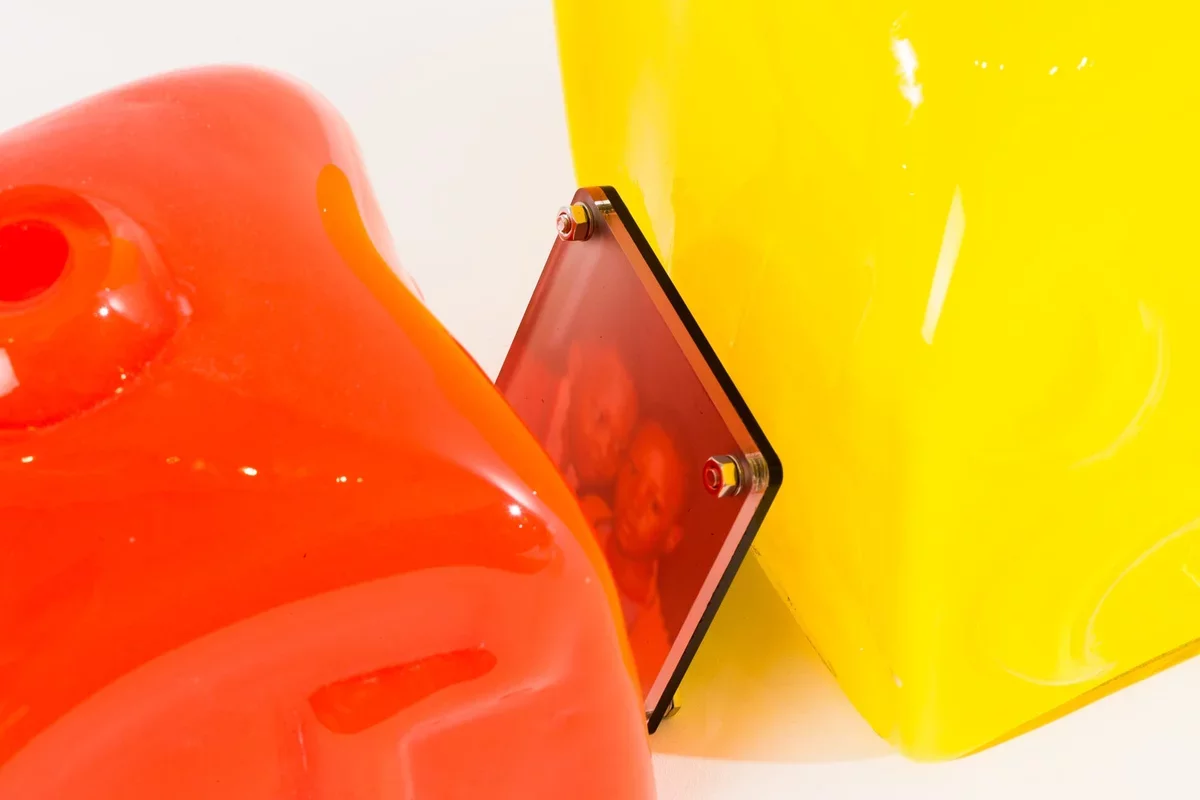
A year later, I discovered through a friend's casual Instagram inquiry that some of my work had been repurposed as decor by a vintage design shop in Philadelphia. I was shocked to see my pieces being sold without my consent, stripped of their context and significance, reduced to mere decorative items.
This loss transcended physical objects; it represented a loss of authorship and context. Works intended to exist as a cohesive whole were disassembled and presented as isolated fragments. My archive, once a unified collection, had been violently reconfigured, not by my choice but due to market indifference.
In his work Archive Fever, Jacques Derrida posits that an archive is not merely a neutral space but a site of authority and exclusion. The act of losing control over my work was not just about the physical loss; it was about the loss of my voice in how my creations were perceived and preserved. The power dynamics surrounding preservation often leave artists vulnerable once their work exits their hands.
Artists are seldom taught how to address these issues. We view our studios as sacred and our archives as extensions of ourselves. However, we lack the resources to safeguard them. When living project to project, a missed storage payment can lead to the loss of years of effort.
Public storage facilities are marketed as neutral spaces, yet for artists, they often represent a significant vulnerability. These facilities are susceptible to various disasters, and their primary function is to generate revenue rather than preserve culture. The survival of an artist's work hinges on financial stability; one misstep can render an archive disposable.
Last September, a devastating fire engulfed a renowned artist studio building in Brooklyn, obliterating decades of creative output in mere hours. The aftermath revealed not only the fragility of artistic materials but also the glaring lack of infrastructure to protect artists' archives before disaster strikes. Those without financial backing or institutional support are often the most at risk. This incident is part of a broader pattern of loss that artists have been enduring for years.
Environmental disasters pose a persistent threat to artistic preservation. Events like storms and floods can erase entire bodies of work in moments. After Hurricane Sandy, galleries in Chelsea took years to recover, with many artists losing their studios and archives to flood damage. The lingering effects of such disasters shape how artists and institutions navigate space, risk, and memory.
One of my pieces, which was dismantled and sold from my storage unit, was part of my exhibition For Demetrius at the Sugar Hill Children's Museum in 2019. This work, created in memory of my late brother, was not meant for casual circulation. Its dismantling and redistribution without context felt like a second, quieter loss.
Recently, I read about a breakthrough in gene therapy that has successfully cured sickle cell disease in at least one patient. While I felt a mix of relief and grief, I was reminded that scientific progress came too late for my brother, just as recognition came too late to safeguard the work associated with him. These timelines rarely align, leaving behind a trail of unfulfilled care.
The underlying issue is not merely financial; it is about the performance of stability. Artists are expected to present an image of success while grappling with instability. The art world often rewards the facade of confidence while punishing visible vulnerability.
Shame permeates the experience of artists. There is shame in admitting financial struggles, in missing a payment, and in revealing the precariousness of one's archive. This shame is structural, compelling artists to project competence while privately absorbing risk.
Artists learn to navigate instability, to smile through adversity, and to transform survival into resilience. However, we are not taught how to seek help without fear of being perceived as unprofessional. This silence often persists even after immediate crises pass, leaving lasting scars.
The auctioning of work highlights this disparity. When artwork is sold at auction, it is framed as a success, irrespective of whether the artist benefits. Conversely, when work is lost through a storage auction, it is seen as a personal failure. Both scenarios involve auctions, but only one is granted legitimacy.
This dynamic is why shame becomes intertwined with the archive. It is not only about losing work but also about the fear of nearly losing it and the pressure to conceal instability. These feelings accumulate alongside the physical remnants of an artist's journey, influencing what they choose to keep or discard.
The precarious archive is not just a material concern; it is also psychological. It reflects the ongoing effort to maintain the appearance of stability long enough for the market or institutions to recognize value. When that performance falters, the consequences are tangible.
As Fred Moten and Stefano Harney articulate in The Undercommons, artists often build informal networks when institutional support fails. Many rely on shared storage, mutual aid, and collaborative efforts that defy scarcity logic.
While there are no perfect solutions, various survival strategies emerge. Some artists digitize their work, while others set rules about what must remain intact. Writing itself becomes a form of archiving, preserving intent when physical evidence is unstable.
Despite these efforts, the underlying problem persists. The precarious archive is a common condition in contemporary artistic life, compelling artists to envision future audiences while navigating a present fraught with insecurity.
Recognizing this reality is not a confession of failure; it is a refusal to accept the notion that artists bear sole responsibility for their erasure. The archive is a cultural infrastructure that demands collective care to ensure the survival of artists' legacies.
For now, many artists persist, aware that their archives are on borrowed time. One missed payment, one storm, or one fire could change everything. Yet, the creative spirit endures, not because the system protects it, but because artists continue to create.
This resilience deserves recognition beyond silence.