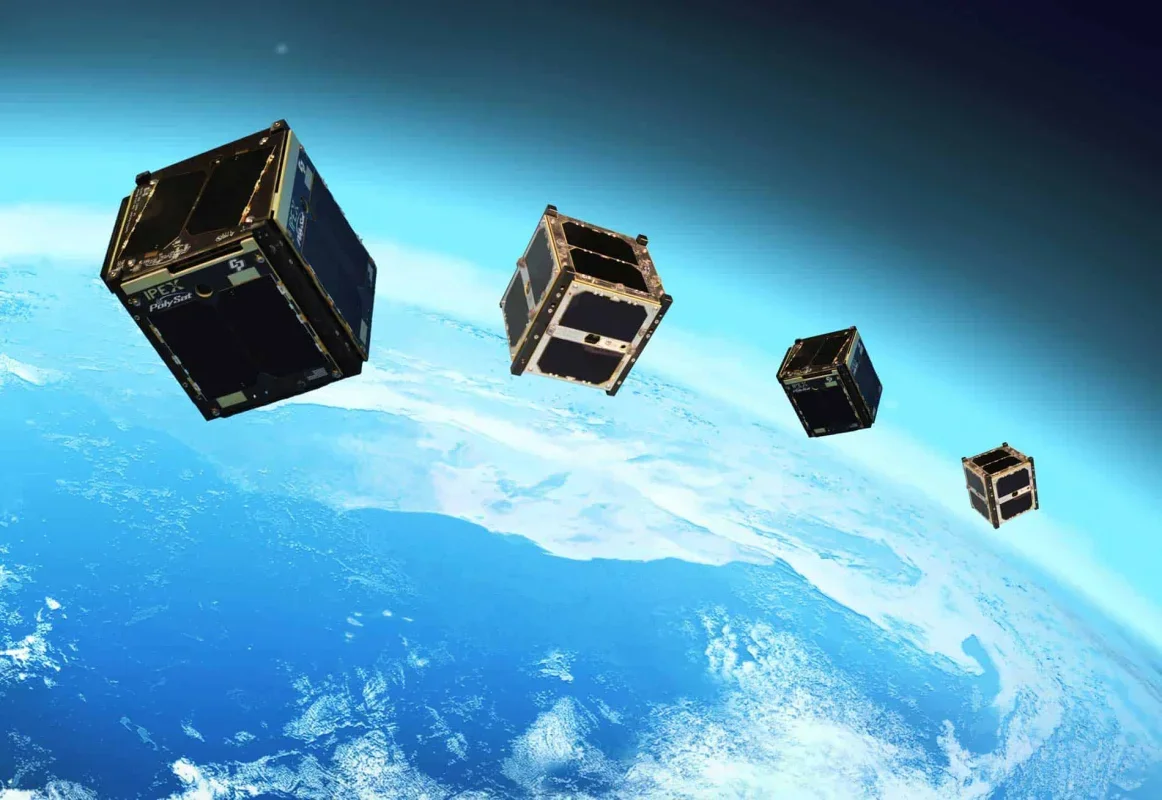
Once a complex and costly endeavor, launching a satellite into orbit has transformed dramatically with the advent of nanosatellites. Historically, satellites were large, expensive constructions managed by government agencies or major aerospace companies. However, the emergence of nanosatellites, particularly those designed in the CubeSat format, has revolutionized access to space.
Nanosatellites, typically measuring about 10 cm on each side and weighing under one kilogram, are now capable of performing a variety of tasks. Equipped with sensors, solar panels, radios, and processors, these small but powerful devices can monitor Earth, test new technologies, and even facilitate educational projects for students. As of early 2026, over 3,200 nanosatellites have been launched, with nearly 3,000 being CubeSats, according to the Nanosats Database.
Expanding Access to Space
The concept of CubeSats began as a cost-effective way to educate students in satellite technology, allowing them to build, test, and operate their own spacecraft. This educational approach has proven to be a resounding success, inspiring a new generation of engineers.
Advancements in technology have further enhanced the capabilities of these small satellites. Innovations in miniaturization have allowed for the integration of sophisticated components, enabling CubeSats to conduct a range of functions from agricultural monitoring to space weather studies. This shift has attracted interest from both startups and established companies eager to explore the potential of nanosatellite technology.
Economical Launch Solutions
The economic landscape of satellite launches has also shifted. Traditionally, launching a satellite required a significant investment in single-use rockets. CubeSats, however, can share space on larger rockets, reducing costs substantially. The introduction of reusable rocket technologies, such as those pioneered by SpaceX, has further democratized access to space, encouraging a wave of experimentation.
A Growing Challenge in Orbit
While the proliferation of CubeSats has made space more accessible, it has also led to an increasingly crowded orbital environment. Although 94 countries have deployed nanosatellites, the majority are still from the United States. As these small satellites often have a lifespan of five years or less, managing space debris has become a pressing concern.
Despite their small size, nanosatellites occupy valuable orbital space, and the challenge ahead is to ensure that this burgeoning sector of space exploration remains sustainable. Solutions must be developed to prevent orbital congestion and ensure that non-functional satellites do not contribute to space debris.
In conclusion, while CubeSats will not replace larger satellites, they represent a significant shift in how we approach space exploration. By making space more accessible and encouraging innovative projects, nanosatellites are paving the way for a more inclusive and sustainable future in space.