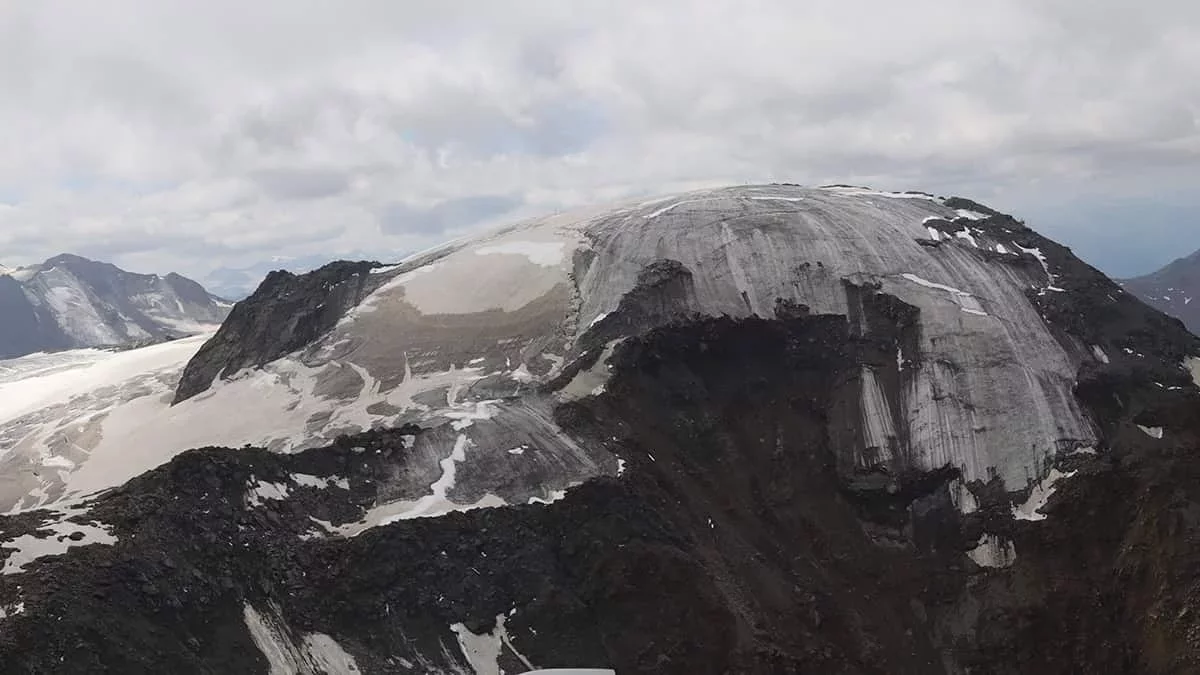
In a groundbreaking study, researchers have analyzed a 9.5-meter ice core extracted from the Weißseespitze glacier in Austria's Ötztal Alps, revealing critical insights into Earth's climatic history. This glacier, located near the Austrian-Italian border, has been rapidly melting, with its thickness reduced to just 5.5 meters by 2025.
Azzurra Spagnesi, a paleoclimatologist from Università Ca' Foscari Venezia, emphasized the urgency of this research, stating, "When this glacier disappears, we lose not only ice but also invaluable knowledge about our climate history and human impact." The study, published in Frontiers in Earth Science, highlights the importance of preserving these climatic records as we face significant environmental changes.
Cores in Low Places
Traditionally, ice cores have been collected from higher elevation glaciers in the western Alps, where colder temperatures help maintain their integrity. However, Spagnesi's team discovered that the Weißseespitze glacier can preserve undisturbed climate records even at lower altitudes, challenging previous assumptions about ice core research in this region.
Joe McConnell, a climate researcher at the Desert Research Institute, noted that the unique environmental conditions in eastern Alps glaciers could yield different historical data compared to their western counterparts. This variation is crucial for understanding the broader implications of climate change.
Andrea Fischer, a glaciologist at the Österreichische Akademie der Wissenschaften, has visited the glacier numerous times to collect samples. She remarked on the significance of the 2019 ice cores, stating, "We have only 5 meters of ice left, and everything we drilled in [2019] is most valuable, as the uppermost layers have already vanished."
A Growing Human Signal
The study utilized argon isotope data to date the glacier's surface formation between 1552 and 1708 CE, while modeling suggested the deepest layers formed between 349 BCE and 420 CE. Continuous flow analysis was employed to assess the chemical makeup of the samples, identifying levels of various organic acids and trace elements, including those indicative of past human activities like mining and smelting.
Findings revealed significant peaks in pollutants such as arsenic and lead starting from around 950 CE, correlating with increased industrial activities in Europe. Interestingly, certain trace elements exhibited higher concentrations in the Weißseespitze ice core compared to other regional samples, suggesting a complex interplay of environmental factors.
Spagnesi highlighted that even before the industrial era, human influence on atmospheric composition was detectable, albeit minimal. This baseline knowledge is vital for understanding the dramatic changes our atmosphere has undergone in recent times.
The ongoing research into glacier dynamics not only sheds light on past climate conditions but also serves as a warning for future environmental stewardship. The melting of these glaciers underscores the urgency of global climate action and the preservation of our natural resources.